11/9/26

For Immediate Release: Fifty Years After Studying with Rabbi Joseph B. Soloveitchik, Scholar Publishes Groundbreaking Graphic Novel and Companion Book

Fifty Years After Studying with Rabbi Joseph B. Soloveitchik, Scholar Publishes Groundbreaking Graphic Novel and Companion Book


TEANECK, NJ — Fifty years after sitting in the legendary shiur (lecture hall) of Rabbi Joseph B. Soloveitchik at Yeshiva University, Teaneck author, playwright, and scholar Tzvee Zahavy has announced the dual publication of two complementary works honoring the revered Jewish thinker: the graphic novel The Amazing Rav and the narrative analytical work 16 Rides to LaGuardia with Joe Solo.


Both titles, now available on Amazon, examine the multidimensional life and thought of the Rav—from his formative years navigating 1920s Weimar Berlin to the personal, reflective moments of his later life.


While the wider Jewish world knows Rabbi Soloveitchik as the formidable rosh yeshiva and elder statesman of modern Jewish philosophy, Zahavy’s new releases explore the personal, visual, and dialogic dimensions behind the intellectual giant:


  • The Amazing Rav: A Graphic Novel brings the Rav’s early intellectual odyssey into dynamic sequential art. The work depicts the young Joseph Dov Soloveitchik walking the streets of Berlin, studying neo-Kantian philosophy at Friedrich-Wilhelms-Universität, and debating in the beit midrash of Rabbi Chaim Heller. By translating dense epistemological breakthroughs into visual storytelling, the graphic novel makes the Rav’s foundational journey accessible to readers of all backgrounds.

  • 16 Rides to LaGuardia with Joe Solo pairs narrative depth with rigorous historical scholarship. Structured around sixteen imagined car rides across New York City—navigating highway traffic and the Triborough Bridge en route to airport departure gates—the book provides an intimate, conversational look into the Rav’s mind. Complete with 51 detailed endnotes, archival timelines, and philosophical reflections, it captures the warmth, humor, and intellectual dialectic of a mentor sharing a ride with his driver.


"These projects were born from a single, continuous creative synergy where text, image, and memory nourished each other," said Zahavy. "Drafting the visual panels for the graphic novel clarified the philosophical dialogue in 16 Rides, while archival research grounded the artwork. It took fifty years of reflection, the maturation of personal scholarship, and modern digital publishing tools to bring these two formats together."


Both books are designed to engage long-time students of the Rav’s philosophy as well as a new generation seeking an approachable, vivid gateway into one of the twentieth century's greatest minds.


The Amazing Rav and 16 Rides to LaGuardia with Joe Solo are available in print and digital editions on Amazon. For excerpts, review copies, and author appearances, visit tzvee.com. The Trilogy


The Synergy of My Two New Books About Rav Soloveitchik

From the Beit Midrash to the Page: 50+ Years After the Rav’s Shiur

Fifty three years ago, I sat among rows of eager talmidim in the shiur of Rabbi Joseph B. Soloveitchik—the Rav. Like everyone in the room, I was captivated by his dialectical brilliance, his mastery of Brisker conceptual analysis, and his unique ability to hold philosophical loneliness and halakhic rigor in breathtaking tension. For decades, those memories, texts, and lingering echoes lived within me as an intellectual anchor.


Now, half a century later, that lifelong encounter has culminated in two very different yet deeply intertwined creative projects: my graphic novel, The Amazing Rav, and my narrative analytical work, 16 Rides to LaGuardia with Joe Solo.


Looking at them side by side, people can ask how an academic and a disciple arrives at two distinct formats—one visual, sequential, and dramatic; the other narrative, conversational, and anchored in historical and philosophical research. The truth is, they were not created in isolation. They were born of a single, continuous creative synergy where text, image, memory, and history continuously nourished one another.


The Spark: Giving Form to an Intellectual Odyssey

When reflecting on the Rav’s legacy, the world rightly remembers the towering rosh yeshiva of Washington Heights and Boston—the elder statesman of modern Jewish thought. Yet behind the venerable figure was a young thinker whose journey began in Eastern Europe and wound through the vibrant, intellectually charged atmosphere of 1920s Weimar Berlin.


To tell that story faithfully, I found myself wrestling with two distinct impulses:


  1. The Visual and Dramatic Dimension: How do you bring to life the young Joseph Dov Soloveitchik walking the rain-slicked streets of Dorotheenstraße, studying neo-Kantian philosophy at Friedrich-Wilhelms-Universität, or grappling with ideas in the beit midrash of Rabbi Chaim Heller?


  1. The Intimate, Conversational Dimension: How do you convey the human warmth, the wit, and the subtle dialectic of a mentor sharing his thoughts across an ordinary, unscripted setting?


The Synergy of Two Mediums

The development of The Amazing Rav and 16 Rides to LaGuardia became a dual engine where each project resolved the challenges of the other.


  • Sequential Art as Conceptual Clarification: In The Amazing Rav, sequential art forced an economy of expression and visual staging. Translating complex philosophical transitions—such as the epistemological shifts of the Berlin thesis or the emotional solitude of modern man—into visual panels required distilling ideas to their emotional and intellectual essence. Staging scenes in 1929 Berlin seminar rooms or New England winters provided the sensory atmosphere that purely textual analysis often leaves to abstraction.


  • Narrative Depth and Historical Grounding: While the graphic novel demanded visual immediacy, 16 Rides to LaGuardia provided the expansive canvas for voice, memory, and scholarship. Framing the Rav’s reflections through the conceit of sixteen journeys—navigating the Triborough Bridge, highway traffic, and airport departure gates in a vintage Lincoln Continental—allowed for an intimate dialogic rhythm. The narrative gave room for archival context, philosophical depth, and the quiet spaces between destination points.


  • The Interlocking Loop: Every visual panel drafted for The Amazing Rav sharpened a dialogue beat in 16 Rides. Conversely, every archival note, historical citation, and draft revision in 16 Rides dictated the lighting, framing, and architectural accuracy in the graphic novel. The visual world grounded the text, and the textual dialogue animated the illustrations.


Fifty+ Years in the Making

It is tempting to think of creative work as an instantaneous burst of inspiration. But bringing these books to fruition fifty years after sitting in the Rav's shiur taught me that some ideas require decades of fermentation.


They required the passage of time: the maturation of one's own scholarly voice, the advent of modern publishing and creative technologies that empower independent authors to merge visual and textual storytelling, and the perspective that comes only from looking back across a lifetime of learning.


Both The Amazing Rav and 16 Rides to LaGuardia with Joe Solo seek to honor the multidimensional humanity of Rabbi Soloveitchik. Whether through the vibrant panels of a graphic novel or the quiet back-and-forth of an airport ride, the goal remains identical: to ensure that the depth, courage, and vitality of the Rav’s thought continue to engage, challenge, and inspire a new generation.


1/24/26

My Great Grandfather was Harris Epstein the Great Inventor of a Patented Folding Umbrella, Extension Ladder and more


I am named after my great-grandfather, Harris (Tzvee) Epstein, aka, Epstein the Inventor, who lived in New York City and Spring Valley. I probably inherited my technical curiosity from him.

He was the inventor and patent holder of many practical items, a folding umbrella, an extension ladder, a double sided toothbrush, a vegetable grater and more.

Here are of his patents with their links from Google Patent search: 

FOLDING UMBRELLA Patent number: 1666692 Filing date: Jan 29, 1927 Issue date: Apr 17, 1928

SIGNALING APPARATUS US Pat. 1060898 - H. EPSTEIN. SIGNALING APPARATUS, APPLICATION PILED JAN. 26, 19.11. Patented May 6,1913.

EXTENSION LADDER US Pat. 949529 - Filed Feb 10, 1909

VEGETABLE GRATER US Pat. 1799963 - Filed Apr 4, 1930... UNITED STATES PATENT OFFICE HARRIS EPSTEIN, OF ROCKAWAY BEACH, NEW YORK VEGETABLE GRATER

GAS-CONTROLLING DEVICE US Pat. 968457 - Filed Jan 11, 1910

TOOTH BRUSH Patent number: 1111144 Filing date: Oct 4, 1913 Issue date: Sep 22, 1914

Papa Epstein, as he was called by his grandchildren, sure would have liked the age of the personal computer and the Internet, especially the iPad and smart phone.

Was Benoît Mandelbrot Jewish?

Yes, Benoît Mandelbrot was a Jew. The Times obituary says he, "was born on Nov. 20, 1924, to a Lithuanian Jewish family in Warsaw. In 1936 his family fled the Nazis, first to Paris and then to the south of France..."  Wikipedia says that in France, "He was helped by Rabbi David Feuerwerker, the Rabbi of Brive-la-Gaillarde, to continue his studies." Mandelbrot is the Yiddish word for almond bread, the Jewish biscotti.

The Times says, "Dr. Mandelbrot coined the term 'fractal' to refer to a new class of mathematical shapes whose uneven contours could mimic the irregularities found in nature." Mandelbrot's discoveries profoundly influenced mathematics and the sciences and numerous disciplines beyond.

Talmudic Chaos v. Halakhic Linearity in the Logic of Judaism

In 2011 I published an article, "In Search Of The Logic Of Judaism: From Talmudic Chaos To Halakhic Linearity," which you can download and read from the link here.   


I used mathematical ideas to differentiate the linear organization of the halakhah from non-linear thinking of the Talmud. Our abstract says: 

In this paper I examine some common views of scholars concerning the idea of the halakhah in Judaism. I then explain why their methods failed to account for the main philological and historical evidence regarding the term from the Talmudic texts. Then I suggest as a heuristic explanation that the logic of the Talmud defies linearity and can be discussed productively using chaos theory.

The authors in this volume cover varied topics with sophistication and erudition. The publisher's page provides details about the book, as copied below. 

11/14/25

Thanksgiving Sermon of Rabbi Zev Zahavy from 1943

Here is my dad's incredible inspiring and uplifting sermon from 1943 for the holiday of Thanksgiving. It was a dark year in the history of humankind. Yet Rabbi Zahavy found ways to weave together precepts from our classical Jewish tradition to give hope and optimism to those who faced the bewildering frightening world of 1943.

I read this sermon every year and it inspires me more each time. My father was an impresario of the rabbinic pulpit.

Click here for the original text of Rabbi Zev Zahavy's 1943 Thanksgiving Sermon, published by the RCA, Rabbinical Council of America.

From the Manual of Holiday and Occasional Sermons, published in 1943 by the Rabbinical Council of America. This publication contains various sermons for Jewish holidays like Rosh Hashanah, Yom Kippur, and Succoth, as well as other occasions. Specifically, the excerpts detail the full text of a sermon titled “Reasons for Thanksgiving Today” by Rabbi Zev Goldstein, which discusses why American Jews should observe the Thanksgiving holiday, even amid the second World War. The sermon explores themes of gratitude, faith, and hope during a period of global crisis, referencing the importance of thanking G-d for safety, recovery from illness, and freedom from servitude.

Here is a link to the video overview from NotebookLM (2025 - my dad would've liked this).  
And here is the link to the notebook itself. Or click below and watch. Expand it to full screen for greatest enjoyment!


A big hat tip to Zechariah for finding this and sending it to us.
This sermon for Thanksgiving Day discusses the following main points:
* **The Importance of Thanksgiving:** The sermon emphasizes the significance of Thanksgiving as a time for reflection and gratitude, especially during challenging times.
* **Reasons for Thanksgiving:** It explores the four reasons for giving thanks mentioned in the Talmud: safe passage across the ocean, completing a journey through the wilderness, recovery from illness, and release from servitude.
* **Challenges to Gratitude:** The sermon acknowledges the difficulties in finding reasons for gratitude in the face of war, suffering, and injustice.
* **The Jewish Perspective on Suffering:** It highlights the Jewish tradition of finding meaning and expressing gratitude even in difficult circumstances, drawing on the example of Rabbi Akiva.
* **Hope and Faith in the Future:** The sermon emphasizes the importance of maintaining hope and faith in the future, even during times of crisis.
* **A Prayer for a Better Future:** It concludes with a prayer for a future characterized by peace, justice, and freedom.
Overall, the sermon encourages listeners to find reasons for gratitude and to maintain hope for a better future, even in the face of adversity.

Deep Dives Podcasts into Jewish Scholarship

All new - a lively discussion of the book "God's Favorite Prayers" and the research of Tzvee Zahavy and samples of the professor's research. Deep Dives into the distinguished scholarship of Tzvee's esteemed teachers, Rabbi J. B. Soloveitchik, Professor Haym Soloveitchik, Rav Aharon Lichtenstein and Professor Jacob Neusner. With appreciation to the incredible NotebookLM.

Popular Podcast: Rabbi Joseph Baer Soloveitchik's 1932 doctoral dissertation, "Pure Thinking and the Constitution of Being in Hermann Cohen’s Work," critically analyzes the epistemology and metaphysics of the prominent neo-Kantian philosopher Hermann Cohen. The unpublished English translation text includes a foreword by the translator, Tzvee Zahavy, providing biographical context for Soloveitchik's time in Berlin and Cohen's intellectual significance. The dissertation itself, as suggested by Mark Smilowitz's overview, examines Cohen's "scientific idealism," which posits that objects are constituted by thought, particularly mathematical thought. Soloveitchik's work identifies limitations in Cohen's system, particularly in accounting for individual experience, sensation, and consciousness, hinting at Soloveitchik's own developing philosophical positions like epistemological pluralism. The text also features excerpts from Soloveitchik's dissertation chapters, such as those discussing the law-scientific character of thinking, consciousness, and the concept of being and reality within Cohen's framework. Ultimately, the sources offer insight into a significant engagement with neo-Kantian philosophy and the early intellectual development of a major 20th-century Jewish thinker.


Is Caroline Kennedy's Husband Edwin Schlossberg Jewish?

Yes, Edwin Arthur Schlossberg is a Jew.

All four of Schlossberg's grandparents were Russian (Ukrainian) Jews born near Poltava and arrived in the United States at Ellis Island.

In 1986 Schlossberg married Caroline Kennedy, the daughter of President John F. Kennedy and Jacqueline Kennedy Onassis at Hyannis Port when Caroline was 28 and Ed was 41.

Their afternoon wedding ceremony was held at the Church of Our Lady of Victory in Centerville, Massachusetts and did not include a mass.

How Jewish is Schlossberg? Nate Bloom refers to "American Legacy: The Story of John and Caroline Kennedy" by C. David Heymann as follows:
Heymann writes that Schlossberg was raised in a "devout Orthodox Jewish family" that belonged to a modern Orthodox synagogue in Manhattan. He attended Hebrew School and had a bar mitzvah ceremony.

11/13/25

Thanksgiving Turkey Drumstick Jack-O-Lantern Pumpkin Pie Table Song - A Lone Pumpkin Grew

Thanksgiving is upon us soon and we sing traditional holiday songs at our Thanksgiving dinner.

Here are the words to one of our classic favorites...

Oh a lone pumpkin grew on a green pumpkin vine.
He was round
he was fat
he was yellow.
"I'm determined to become a useful fellow."

So he raised up his head
when the cook came around
and at once he was chosen the winner.
His fondest wish came true
and the glory of the great thanksgiving dinner...

For the glory of the jack is in the lantern
as he sits up on the gatepost oh so high;
and the glory of the turkey is the drumstick
but the glory of the pumpkin is the pie.

Here we are singing the song in 2006:


Here's a YouTube 2009 home video of the song -- we don't know the folks -- it sounds like our familiar melody and we endorse it.

9/26/25

A Happy St. Patrick's Day Recollection: When a Little Boy Met the Jewish Lord Mayor of Dublin Ireland


One St. Patrick's day, when I was a little boy, I met Bobby Briscoe, the Jewish Lord Mayor of Dublin Ireland, at my father's synagogue in New York City on East 67th Street.


I vividly remember his top hat and the big medal around his neck which swung out at me when he bent down to shake my hand. 

It was a grand day for the Jewish and the Irish!

The New York Times wrote up the visit. A wonderful New York story of a previous innocent age. 

New York Times. Published: March 17, 1957

BRISCOE ATTENDS PRE-PURIM RITES 
Lord Mayor Prays at Altar in Traditional Shawl - Pays Visit to Cardinal
By IRVING SPIEGEL ·

The Lord Mayor of Dublin devoted forty minutes yesterday morning to being plain Robert Briscoe and worshiping in the Orthodox Jewish faith of his ancestors.

He prayed at a Sabbath of Remembrance and pre-Purim service at Congregation Zichron Ephraim, 163 East Sixty-seventh Street. With the prayer shawl he brought with him for the service around his shoulders, he received the Orthodox honor, aliyah - an invitation to the altar.

Then he recited the traditional prayers in Hebrew before and after readings from the Torah. The aliyah was also extended to City Council President Abe Stark and Kings County District Attorney Edward S. Silver, who had of accompanied Mr. Briscoe to the synagogue.

Because of a heavy schedule, Mr. Briscoe and his group did not stay for the entire service. Rabbi Zev Zahavy, spiritual leader of the congregation said that the Lord Mayor's presence at the services was "an inspiration to all Jews in America and throughout the world."

In keeping with the Orthodox custom of not riding on Saturday, the Lord Mayor and his group walked from the Pierre Hotel, where he is staying, to the synagogue. In addition to Mr. Silver and Mr. Stark, Mr. Briscoe was escorted by two detectives of Jewish and Irish extraction, Ely Kerner and John O'Hagan.

Wears Kelly Green Tie

The Lord Mayor wore a cut-away coat, a black topper, a Kelly green tie with a golden harp embroidered in it.

As he strode up Fifth Avenue to attend synagogue services. he passed a group of policemen awaiting their parade assignments and remarked: "Top o' the morning. It's a fine day."

He paused to talk to a group of policewomen. Holding his prayer shawl, he told one young policewoman that, if she saw her commanding officer, "tell him I'm on my way to say my prayers."

Leaving the synagogue, he stopped at Engine Company 39, at 157 East Sixty-seventh Street, and told Lieut Joseph Kennedy, the commander: "No fires today, it's St. Patrick's Day."

Earlier in the morning, he had visited Cardinal Spellman at the Roman Catholic prelate's reidence at 452 Madison Avenue. Mr. Briscoe delivered a personal greeting in behalf of Archbishop John Charles McQuade of Dublin, and gave the Cardinal forty-five sets of Rosary beads, three boxes of chocolates and a glass bowl - all products of Ireland.

Cardinal Spellman told his guest: "There has not been as much excitement here since the Dionne quintuplets." Mr. Briscoe remarked that he was going to attend synagogue services.

"Be sure to leave all those Rosary beads here," the Cardinal replied with a laugh.

Mr. Briscoe laughed. "That's very good, very good," he said.

He returned to the Pierre, but not before being hailed by storekeepers, taxicab drivers and pedestrians. There was a brief rest and then he set out for the synagogue. Mr. Briscoe had originally intended to attend services at Congregation Rodeph Sholom on West Eighty-third Street but decided against it because of the long walk.

He returned to the hotel at noon for a brief visit with James A. Farley, chairman of the parade, and out again - this time for the St. Patrick's Day Parade with a ringing declaration of: "What a beautiful day!"

And fast forward to 2025 - my son and two grandsons are lifting a pint to celebrate the family ties in Dublin - visiting to cheer on the Minnesota Vikings football team!


9/21/25

Is Jimmy Kimmel Jewish?

No, comedian Jimmy Kimmel is not a Jew. He is a Catholic. Wikipedia explains, "He is Roman Catholic and, as a child, served as an altar boy. Kimmel is of German and Irish descent on his father’s side and Italian descent on his mother’s side."

Kimmel was a smash hit host of the 2017 Oscars show.

Kimmel performed 4-28-2012 at the White House Correspondents' dinner where he poked fun at Washington politicians.

Kimmel had a relationship with the Jewish comedian Sarah Silverman that started in 2002. Wikipedia reports:
She referred to the relationship in some of her comedy, "I'm Jewish, but I wear this Saint Christopher medal sometimes; my boyfriend is Catholic — but you know... it was cute the way he gave it to me. He said if it doesn't burn a hole through my skin, it will protect me." In July 2008, Vanity Fair reported that the couple had split, ending their relationship of five years. However, in October 2008 it was revealed by Fox News and People magazine that they were on "the road back to being together." The couple attended the wedding of Howard Stern and Beth Ostrosky together, but split again in March 2009.

[Repost from 2017]

4/27/25

Transgender Kids, Covert Convert Bat Mitzvah and Vintage Necktie Aliyah Quandary - Dear Rabbi Zahavy - Your Jewish Standard Talmudic Advice for July 2017 (A classic oldie but goodie column!)

Dear Rabbi Zahavy Your Jewish Standard Talmudic Advice Column

Dear Rabbi Zahavy,

I recently asked my friend how her young grade-school kids — a boy and girl — were doing. She replied that they are fine, and they have new names. The boy now has a girl’s name and the girl has a boy’s name. I asked why? She matter-of-factly replied that they both are transgender.

I was dumbfounded to hear this. I said nothing to her. Should I ask her more about this? Should I discuss this with a responsible authority?

Worried About Trans Kids

Dear Worried,

Yes, you have every right to ask the parent for more details, and to seek out, with sensitivity, more information on this topic from friends or experts or from your own counselors. The mother makes no secret of the facts. She is open and proud of her children and their gender identities.

Gender dysphoria is a seriously hot topic this year in social and political discussions, and in the media (2017). You will find many experts and pundits out there willing to share advice and counsel on the subject.

7/18/24

Life Advice from a Long-time Swimmer: Swim 100 laps every day

The Tosefta quotes Rabbi Meir (2nd century CE Talmudic scholar) saying that everyone should strive to recite 100 blessings each day. It then goes on to enumerate them - mostly in daily prayers.

Let's play with the word for blessings. They are berakhot ברכות in ancient Hebrew. Okay then. In modern Hebrew the laps that one swims in a pool are called berechot בריכות. A blessing is a berachah and a pool - and a lap in a pool - is a berechah.

I playfully read the ancient Talmud this way: Don't say 100 berakhot (blessings), say 100 berechot (laps).
Footnote about Meir from Wikipedia: Meir was buried in a standing position near the Kinneret. It is said that he asked to be buried this way so when the Final Redemption occurs, Rabbi Meir would be spared the trouble of arising from his grave and could just walk out to greet the Jewish Messiah. He requested that he be buried in Israel by the seashore so that the water that washes the shores should also lap his grave (Jerusalem Talmud, Kelaim 9:4).
And so I have crafted some Talmudic encouragement for myself to swim 100 laps a day. On many days each year, I do get to that goal.

Here are a few of my past reflections on swimming...

7/10/24

Yahrzeit of my mother Edith Zahavy

We are observing today the 26th Yahrzeit of my mother Edith Zahavy (aleha hashalom).

We miss her so very much. She would have loved to see the progress of her children and grandchildren and great-grandchildren, and take pride in all of their accomplishments. She would have loved to read books to her great-grandchildren and to watch them play and grow.

She was born in NYC and attended the public schools in Washington Heights. She watched from her classroom window as they built the George Washington Bridge.

She graduated from Hunter High School, Hunter College and went on to a career in public service at the OPA and then into the field education. 

Together with my dad, she founded the Park East Day School when my father was rabbi at the Park East Synagogue, then called Congregation Zichron Ephraim. She subsequently taught in NYC public schools for many years.

She is interred on Har Hamenuchot in Jerusalem. Her beautiful memorial photo site is here.

4/14/24

Understanding the Extensive Connections Between Religions and Terrorism?

In light of the awful terrorist attacks that have been launched once again in Israel I thought it urgent to repost this item.

What are the connections between religions and terrorism? 

That's a big question. I tried to answer, explain and understand it in the past through my extensive scholarly research and my academic teaching.

Here is a selected list of my blog posts of study resources in the analysis of the connections between terrorism and religion (compiled when I taught a course on religion and terrorism at FDU a few years ago). Click on each one to read it.
  1. Questions about American Christian Terrorism
  2. Religion and Jewish Terrorists (and see the JTA report)
  3. What is a Religious Culture of Violence and Terror? 
  4. Who were Shoko Asahara and the Buddhist Aum Shinrikyo Religious Terrorists? 
  5. How did Religion Motivate Sikh Terrorists? 
  6. What is the Logic of the Theater of Religious Terror? 
  7. Why Do Religious Terrorist Martyrs say that they aim to kill the demons? 
  8. What do Sexuality and Humiliation have to do with Terrorism? 
  9. Will the War Against Religious Terrorism Ever End? 
  10. From Kahane to Osama: How Do Men Make Religious Terrorism Into Cosmic War? 
  11. How can we end religious terrorism and achieve the peace of God? 
  12. Concluding Questions on Religion and Terrorism

I have studied this subject at great length and taught courses in the area because I believe that understanding can help us resolve tragic conflicts. 
I also believe in the power of prayer to help us bring peace to the world.
I recommend to you all of my books: My Home Page

3/2/24

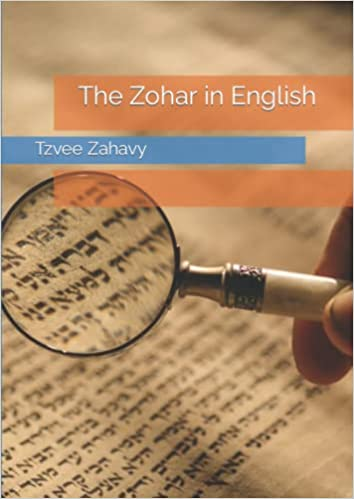
Best Seller: Elegant new 750 page edition of "The Zohar in English"

Often the Best Seller #1 in Zohar 

The Zohar in English Paperback!


The Zohar is called the greatest work of Jewish Mysticism. From the Middle Ages to today people of all faiths have studied and pored over the Zohar to explore the mysteries of God and the universe and to seek knowledge of when the redemption of the world will arrive.

The Zohar is a mystical novel whose hero is Rabbi Simeon son of Yohai, a rabbi and disciple of Rabbi Akiva from second century Israel. The original Aramaic work describes how Rabbi Simeon and his companions wander through the hills of Galilee, discovering and sharing mystical secrets of the Torah.

This large format 750 page edition presents the entire work in one volume in eloquent English as translated by several great scholars of the 20th century.


  • Amazon Best Seller