Showing posts with label israel. Show all posts

7/18/24

Life Advice from a Long-time Swimmer: Swim 100 laps every day

The Tosefta quotes Rabbi Meir (2nd century CE Talmudic scholar) saying that everyone should strive to recite 100 blessings each day. It then goes on to enumerate them - mostly in daily prayers.

Let's play with the word for blessings. They are berakhot ברכות in ancient Hebrew. Okay then. In modern Hebrew the laps that one swims in a pool are called berechot בריכות. A blessing is a berachah and a pool - and a lap in a pool - is a berechah.

I playfully read the ancient Talmud this way: Don't say 100 berakhot (blessings), say 100 berechot (laps).
Footnote about Meir from Wikipedia: Meir was buried in a standing position near the Kinneret. It is said that he asked to be buried this way so when the Final Redemption occurs, Rabbi Meir would be spared the trouble of arising from his grave and could just walk out to greet the Jewish Messiah. He requested that he be buried in Israel by the seashore so that the water that washes the shores should also lap his grave (Jerusalem Talmud, Kelaim 9:4).
And so I have crafted some Talmudic encouragement for myself to swim 100 laps a day. On many days each year, I do get to that goal.

Here are a few of my past reflections on swimming...

7/10/24

Yahrzeit of my mother Edith Zahavy

We are observing today the 26th Yahrzeit of my mother Edith Zahavy (aleha hashalom).

We miss her so very much. She would have loved to see the progress of her children and grandchildren and great-grandchildren, and take pride in all of their accomplishments. She would have loved to read books to her great-grandchildren and to watch them play and grow.

She was born in NYC and attended the public schools in Washington Heights. She watched from her classroom window as they built the George Washington Bridge.

She graduated from Hunter High School, Hunter College and went on to a career in public service at the OPA and then into the field education. 

Together with my dad, she founded the Park East Day School when my father was rabbi at the Park East Synagogue, then called Congregation Zichron Ephraim. She subsequently taught in NYC public schools for many years.

She is interred on Har Hamenuchot in Jerusalem. Her beautiful memorial photo site is here.

9/11/22

Will the War Against Religious Terrorism Ever End?

Will the War Against Religious Terrorism Ever End? (Repost for 9-11-2022)

I always feel deep sadness as I recall - as if it was this morning - that awful day 21 years ago when I saw the planes fly into the towers from my vantage on a hill in across the river in Jersey City. 

Mark Juergensmeyer, in Terror in the Mind of God, lays out five ways that the reign of religious terror can come to an end. Let's consider each. First consider the end will come with the forceful eradication of the terrorists, what appears to have been the US response to the 9/11 attacks, continued with the more recent killing of OBL.

Juergensmeyer outlines,
The first scenario is one of a solution forged by force. It encompasses instances in which terrorists have literally been killed off or have been forcibly controlled. If Osama bin Laden had been in residence in his camp in Afghanistan on August 10, 1998, along with a large number of leaders of other militant groups when the United States launched one hundred Tomahawk cruise missiles into his quarters, for instance, this air strike might have removed some of the persons involved in planning future terrorist acts in various parts of the world.

8/3/22

My July Dear Rabbi Talmudic Advice Column: Raging over Rabbis in Randolph

Dear Rabbi Zahavy: Your Talmudic Advice Column (July 2014)

Dear Rabbi,

I read about rabbis in Israel who offer cures, amulets, talismans and the like to their followers. They attend family events of their followers and give advice to businessmen. The rabbis receive fees for these services, sometimes lavish donations. Some of these rabbis have become quite rich, even multi-millionaires. Forbes has published a list of the richest Israeli rabbis! I personally think these guys are despicable con men who use religion to prey on vulnerable people in need of help. Shouldn’t we do something to stop these people?

Raging over Rabbis in Randolph

Dear Raging,

Whoa! It is hard to ask a rabbi to condemn a rabbi. On the one hand, we rabbis need to stick together. If you attack one of our colleagues, common sense dictates that we ought to step up to defend him. However, on the other hand, you are right in your inquiry. If we find that a professional colleague is a fraud, it makes good sense for us to step up to discipline him, lest our whole profession be tarnished.

We rabbis derive our authority primarily from our study and special knowledge of rabbinic literature including Talmud, Codes, Responsa and yes, also from Kabbalah. Secondarily, many Jews believe that some or all rabbis have special charisma, which is power that derives from their closeness to the sacred and from their more direct link to God. This latter belief is more common in the Hasidic and Sephardic communities.

And you no doubt realize that, on the one hand, if you are affiliated with any form of organized religion, that you already are paying significant amounts to rabbis for their services. Nearly all rabbis serving in a professional capacity in America are paid – some quite handsomely. You may derive personal benefits from their services. Some provide solace and counseling in a professional manner based on academic training. I assume that you have no problem with that means of livelihood and you do not consider such practitioners to be con men.

But on the other hand, you may be rightfully indignant if a rabbi exploits his station to demand from his reverential flock exorbitant fees for whatever it is that he offers: presence at events, blessings, advice and the like.

In this case, since you don’t seem to know directly the rabbis that you question, you need to step back and ask if you are incensed specifically about these charismatic holy men making too much money. And you need to consider what provokes you to conclude that they are fakers and charlatans who exploit the weak and helpless. There are many testimonies from their followers praising and thanking these holy men. Celebrity charismatic rabbis, who earn the big bucks for providing the cures and remedies that you dislike, also can and do alleviate much suffering among their followers.

If a rabbi breaks the law by committing fraud or engages in an outright scam, you are justified to call him a con man. But if he engages in legal activities that are within the professional parameters of what rabbis do, you have little basis to label him a fake.

Nevertheless, you may choose to disapprove of extremes of rabbinical activity. For a religious believer, like yourself, if you believe a rabbi's activities are outrageous, you are entitled to your subjective opinion to declare a flashy healer a fake, while you continue to deem the other more modest counselors legitimate.

I do hope that you find helpful this brief Talmudic analysis and (rabbinic) advice for the day-to-day reality of our contradictory world, where one person's holy man may be another person's con man.

The Dear Rabbi column offers timely advice based on timeless Talmudic wisdom. It aspires to be equally respectful and meaningful to all varieties and denominations of Judaism. You can find it here on the first Friday of the month. Send your questions to DearRabbi@jewishmediagroup.com

7/18/22

Shall we fast and mourn on Tisha B'Av? No!

No. I believe we should abolish the practice of fasting to commemorate the destruction of the Jerusalem Temple on the ninth day of the month of Av, known as Tisha B'Av.

Now before you convene a synod to excommunicate me, know that I am in good company. In the third century CE the greatest Tanna, Rabbi Judah the Prince, tried to abolish Tisha B'Av.

My son Yitz called my attention to this passage below which records the rabbi's action [Soncino Babylonian Talmud (2012-04-25). Megillah and Shekalim (Kindle Locations 739-743). Kindle Edition.] and to Tosafot's glosses (at Megillah 5b) which reject the premise that someone could entertain the notion of abolishing Tisha B'Av.
R. Eleazar said in the name of R. Hanina: Rabbi planted a shoot on Purim, and bathed in the [bathhouse of the] marketplace of Sepphoris on the seventeenth of Tammuz and sought to abolish the fast of the ninth of Ab, but his colleagues would not consent. R. Abba b. Zabda ventured to remark: Rabbi, this was not the case. What happened was that the fast of Ab [on that year] fell on Sabbath, and they postponed it till after Sabbath, and he said to them, Since it has been postponed, let it be postponed altogether, but the Sages would not agree.
Of course, if Rabbi Judah the Prince (compiler of the Mishnah) once tried to abolish Tisha B'Av but the sages would not agree to it, I do not expect that the sages of our times will agree with me to abolish Tisha B'Av.

Yet here is why they should.

I concur that as a culture we need to remember the calamities of the past so that we can be vigilant and prevent the calamities of the future. But we need effective ritual memories that are clear and unequivocal. Tisha B'Av commemorates that the city of Jerusalem and the Temple in it were destroyed.

Because the city has been rebuilt in modern Israel, this befogs the symbolism of the past destruction and renders it less effective.

I have been mulling over this issue for thirty years or more. In 2012 I mused as follows (with a few edits added).

Is Tisha B'Av relevant? No I do not think that the fast of Tisha B'Av is relevant anymore. I need a holiday from Tisha B'Av.

That day was for a long time a commemoration through fasting and prayer over the destroyed city of Jerusalem and the Temple. I visited Jerusalem in May of 2011 (ed.: and again in 2013, and many more times since then) and can attest that the city is not desolate. It is without reservations, glorious.

Who then wants the bleak story to be told? Archetypally the militant "celebrity" archetype wants to keep recalling defeat, destruction and desolation, to spur team Jews on to fight the foes and to triumph at the end of time. That scheme may work for that archetype as long as the facts of reality do not fly smack in the face of the narrative. And when they do, what then? The narrative loses its force. It becomes absurd.

I cannot imagine Jerusalem in ruins. Period. And indeed, why should I perpetuate an incendiary story of gloom and doom into a diametrically opposite positive world of building and creativity? The era of desolation has ended.

For over twenty-five years, I've been lamenting the irony of lamenting over a city that is rebuilt. It's more rebuilt now -- way more -- than it was twenty five plus years ago. What do I do then about Tisha B'Av, the Jewish fast day of lament and mourning? Here is what I said those many years ago.

5/8/22

What were the two worst Jewish prayer decisions?


At its establishment, Chief Rabbi Herzog prescribed that the Prayer for the State of Israel be recited after the Torah reading in the synagogue on Sabbaths and Festivals. This was Jewish prayer mistake number one. He incorrectly mandated that this particular recitation remain unimportant, peripheral, second rate, and really not a part of the davening. It was a quick and dirty innovation. And it was wrong.
  • First off, on account of its placement, the prayer is often recited by the gabbai, not the hazzan.
  • Second, the prayer is frequently recited in a monotone, not chanted, and from the side of the bimah, not from the front and center of the synagogue.
  • Third, the prayer is recited after the Torah reading and before the Musaf service - in a liminal area - between the established parts of the davening. It seems to me to be placed in a tertiary context that makes it even less prominent in the liturgy than the personal mesheberach blessings recited for individuals who receive aliyot to the Torah.
You don't have to be an expert in Jewish liturgy to conclude that this prayer is generally presented as an afterthought, recited quickly, and that it has been pasted in to our davening. In fact in many synagogues, the text is not printed in the prayerbook, It is actually pasted into the back cover of the siddur. It is high time for some prayer-book reform. We ought to be inserting a real prayer for the modern state of Israel into the crux of the actual prayer services of our tradition. We perhaps should have the chazzan chant it properly from the bimah. We perhaps should have the congregation join in responsively or together with the chazzan in singing the prayer with joy. Perhaps we should say this prayer three times a day - every day - in our Amidah or after the Alenu. For sure we must not equivocate about the State of Israel. It is real. We live in Teaneck. Most of our friends have been to Israel. Most of our community members have been inspired by the State and its history. We ourselves have lived there and visited there many times. The State of Israel is a factual, powerful, pervasive, long-lasting creator of religious moods and motivations. Yes it is time to promote the thanksgiving, praise and petition concerning the modern State of Israel as a real and central theme of all of our synagogue prayers. It is time to correct the error of the former Chief Rabbi and promote the Prayer for the State of Israel to a much more prominent place in our liturgy. At its establishment, Chief Rabbi Herzog prescribed that the Prayer for the State of Israel contain the phrase, "the beginning of the blossoming our redemption." This was Jewish prayer mistake number two. The State of Israel is the redemption of the Jewish people. Not the "beginning of the redemption." Not the "beginning of the blossoming of the redemption." It is the actual, historical, theological, political, social and cultural redemption of the Jewish people. Anyone who denies this is not in touch with reality. Anyone who hedges about it with language that is wishy-washy and ambivalent and preliminary - is just a redemption denier. We Jews of all denominations must say the Prayer for the State of Israel more frequently, more centrally and more forcefully. Meanwhile, we do not know how to cure these errors. Here for information purposes, is the current flawed prayer in translation.
Our Father in Heaven, Rock and Redeemer of the people Israel; Bless the State of Israel -- the beginning of the blossoming our redemption. Shield it with Your love; spread over it the shelter of Your peace. Guide its leaders and advisers with Your light and Your truth. Help them with Your good counsel. Strengthen the hands of those who defend our Holy Land. Deliver them; crown their efforts with triumph. Bless the land with peace, and its inhabitants with lasting joy. And visit all our Brethren of the house of Israel, in all the lands where they are scattered, and bring them rapidly to Zion, Your city and to Jerusalem, where Your name lives, as it says in the Torah of Moses, Your servant: ‘Even if your dwelling is at the end of the sky, God will congregate you from there, and bring you from there, and will bring you toward the land that Your forefathers inherited and you will inherit it.’ Dedicate our hearts to love and worship Your name and to keep all that is in Your Torah, and send us the son of David, the Messiah of Your justice, to redeem those who wait for Your salvation. Appear with the glory and the pride of Your strength, in front of all the inhabitants of the Universe, and all those who have breath will say: “The God of Israel is the King, and He reigns over all.” Amen.

[Blogged previously in 4/2007.]

10/17/21

Is the Film "The Endless Summer" Jewish?

My favorite movie is Bruce Brown's, The Endless Summer. No, it wasn't Jewish at all that is, until I made it into a metaphor for my quest for perfect Jewish spirituality and the inspiration for my book cover (see below). I haven't found any other Jewish connections to the film or the poster.
Vanity Fair has a story about the famous iconic Endless Summer movie poster. "One Summer, Forever: The Endless Summer poster is 50 years old, and it hasn't aged a minute. Kitchen-table project turned pop-culture phenomenon, the Day-Glo movie promo created by John Van Hamersveld for his friend Bruce Brown’s 1964 documentary is still selling the dream—on T-shirts, TV shows, beer bottles, and dorm walls. Lili Anolik looks back at the moment an iconic image was born, the social upheaval it presaged, and the surfer-dude-slash-designer whose life it changed."

In 1966 I saw a film that documented two boys seeking simple perfection in a quasi-mystical sport. IMDB sums up, "Brown follows two young surfers around the world in search of the perfect wave, and ends up finding quite a few in addition to some colorful local characters."

The film spoke to me, as it did to many others of a more idealistic age. The essence of surfing of course is the wave. And the lover of surfing no doubt wants to embark on the quest for the best wave. To experience the performance of the essence is to find the perfect wave.

Brown's two surfer dudes found one in South Africa, see the video clip below.

4/12/21

Yahrzeit of Rav Aharon Lichtenstein, great Torah Sage and the Quintessential Scribe

My teacher and rebbe Rav Aharon Lichtenstein passed away six years ago.

He was awarded the Israel Prize 2014 in Jewish religious literature.

He was one of the finest teachers that I studied with in college - a genius as an educator and a sincere and compassionate human being. He is the person that I chose to personify the quintessential scribe personality of prayer in my book "God's Favorite Prayers (p. 71 ff)." Here is the excerpt.

The Scribe’s Prayers


I had the privilege of studying in Rav Aharon Lichtenstein’s Talmud shiur (class) for two years, 1966-1968. Each December, he invited us talmidim (disciples) to his house for latkes (potato pancakes) on Hanukkah. There, in his apartment, we sat with his little kids and his wife Tovah, daughter of Rav Joseph B. Soloveitchik. The latkes were good and the Lichtensteins appeared to be a regular family. For some reason, that surprised me.

Once, during the years that I was in his shiur, while I was out with some of the guys playing basketball on the courts between the Yeshiva College dorms, Rav Aharon, a lanky, thin and tall man, came walking by. One of us had the chutzpah to ask him to join the ball game. He said okay and he played aggressively—and just like a regular guy. For some reason, that blew my mind.

And, one year, in our student play, the Yeshiva College Purim shpiel, a satiric revue for the holiday, I played the role of Rav Aharon. In my performance, I hemmed and hawed and exaggerated my rebbe’s mannerisms much more than I should have. And there in the audience sat my rebbe, laughing heartily along with us. For some reason, that really blew my mind.

12/16/20

The Celebrity Archetype in Jewish Prayer: A chapter from my book "God's Favorite Prayers"

A chapter from my book.

The Celebrity’s Prayers

Aleinu

(Hebrew: עָלֵינוּ, “upon us”) or Aleinu leshabei'ach (“[it is] upon us to praise [God]”), meaning “it is upon us or it is our obligation or duty to praise God.” A Jewish prayer recited at the end of each of the three daily services. It is also recited following the New Moon blessing and after a circumcision is performed.

—Wikipedia, Aleinu


M

y quest for perfect prayer and for spiritual insights evolved, not just at synagogues on the ground but also one time during my davening on a jumbo jet flight at an altitude of 39,000 feet and a speed of 565 miles per hour. That is where, by happenstance on an airplane in 1982, I met Rabbi Meir Kahane, an American-Israeli Orthodox rabbi, an ultra-nationalist writer and political figure and, later, a member of the Israeli Knesset.

I recognized Kahane right away when I saw him on the flight. He was a famous New York Jew. In the 1960s and 70s, Kahane had organized the Jewish Defense League (JDL). Its goal was to protect Jews in New York City's high-crime neighborhoods and to instill Jewish pride. Kahane also was active in the struggle for the rights of Soviet Jews to emigrate from Russia and to immigrate to Israel. By 1969, he was proposing emergency Jewish mass-immigration to Israel because of the imminent threat he saw of a second Holocaust in an anti-Semitic United States. He argued that Israel be made into a state modeled on Jewish religious law, that it annex the West Bank and Gaza Strip and that it urge all Arabs to voluntarily leave Israel or to be ejected by force.

It was then, by coincidence, that I traveled with Kahane on a long Tower Air flight to Israel. As was common on flights to Israel, a few hours after takeoff, Jewish men gathered at the back of the plane. As the sun became visible in the Eastern sky, they formed a minyan, kind of an ad hoc synagogue. In this unusual and somewhat mystical setting, I prayed the morning services with the rabbi and others at the back of the jumbo jet.

7/29/20

Jerusalem and Tisha B'Av - 1986 v. 2020 - How times change!

Today I published my thoughts for Tisha B'Av 2020 - see it as an op-ed in the Jerusalem Post. I say Jerusalem's destruction symbolizes the sufferings of our pandemic world today.

Tisha B'Av has serious meaning for us this year. For many years I did not think that was true.

Thirty-two years ago, on August 13, 1986, I wrote an op-ed that was published in the Jerusalem Post saying that Jerusalem is not desolate. My underlying point was that when we pray, it’s false to say that Jerusalem today is in ruins.

The title that the editors assigned to the op ed was, “Some prefer to give it a new meaning,” although that’s not exactly what I said. Here is the editorial:

“I shall be fasting this week [for Tisha B’Av]. But this year, more than ever before, I feel silly mourning over the destruction of Jerusalem. I really do not know what to do when it comes time to listen to and recite for myself the classical laments for the fast of Tisha B’Av. Much of what we say about Jerusalem in the synagogue is just not true anymore.

“It is obvious to anyone and everyone that Jerusalem does not lie in ruins. On the contrary, this is my fourth extended visit to Jerusalem in the last seven years. Over the last seven years I have watched as buildings spread out from the center of town to the new neighborhoods. Now Jerusalem sprawls across the hills of Judea, south and north from Gilo to Ramot and beyond.

“On the ninth day of Av this year the observant Jews of Jerusalem will congregate in synagogues throughout the city to mourn and lament. What they say inside these halls will not reflect the reality immediately outside them.

“And so this year I have resolved to add a few silent paragraphs to my prayers. Then when I leave the synagogue and step out into the rebuilt city of our people, I will feel that I have been candid in my meditations and forthright in my worship. I shall say something like this:

“‘Jerusalem is not desolate. It stands glorious above our Land. Our capital looks down on the miracle of the modern state of our people, rebuilt by the sweat and labor of our brethren and sisters. A thousand settlements testify to our return and we are homeless no more.’

“‘The inhabitants of Jerusalem are not homeless. Beautiful buildings abound, apartments, condominiums, villas, large and small. Hotels and hostels, old and new. Whosoever wishes may come and live here. Whosoever is hungry shall find sustenance here.’

“‘Enemies do not govern our land. The Knesset, the site of our self-government, stands at the center of our new metropolis, a vibrant testimony to our freedom. Independent and sovereign, we struggle with each other and with the states of the world, and somehow, we manage to live in harmony among ourselves, and to survive in the swirling community of nations.’

“‘Yes, the Temple was destroyed. But we have built other edifices in its stead. Long ago, in another age, our national center was taken from us by forces we could not resist. But now we have built new structures where we symbolize and express our spirit, our minds and our creative energies, and most of all, our freedom.’

“‘A great synagogue and many more stand in our capital. They serve as the many beating hearts of our spiritual organs. In dozens of yeshivot, teachers build the religious minds of our youth. Schools abound. When school is in session, wherever you turn there are children on their way to classes from kindergartens to high schools, soaking up the knowledge of our world.’

“‘A great Hebrew University answers to the essence of our wider educational appetites, in the capital of our nation. In its laboratories, classrooms and libraries, students try to unravel the mysteries of nature and society and strive to construct a new and better order.’

“‘The Israel Museum, the Bezalel School, the Jerusalem Theatre and other institutions small and large. cater to our cultural needs. In Jerusalem we display our past and our present. We sing and dance and we mourn no more. We paint and draw and sculpt and adorn the urban hub of our people, the crown of our land.’

“‘As we watch, day-by-day, luxury hotels go up and up. Lush green gardens bloom before us. We repose in parks and swimming pools. We find our needs in supermarkets, bakeries and department stores. And we indulge our extravagances in shops and markets, elegant restaurants and offbeat cafes.’

“‘The city of Jerusalem has been rebuilt. Still, the work is never done. And the struggle will not end. But: our city is not desolate. How can we mourn? We must, yes, we are obliged, indeed, it is the highest duty, for us to celebrate. For with God’s help, but in accordance with our own will and with our own hands, we have raised Jerusalem beyond its highest heights. Never before in all of our history has this city attained such glory.’

“And so that is what I shall add as I conclude my lamentations on Tisha B’Av this year. I shall be cheerful this year, and I will not mourn. But I shall do so silently, because this is my own private devotion. Will others join me?”

7/23/20

Pandemic Lamentations: My Jewish Standard Dear Rabbi Zahavy Column for July 2020

Dear Rabbi Zahavy,

These past few months in 2020 have been such a sad time of worldwide suffering, specifically due to the impact of the covid-19 virus. On the upcoming Tisha B’Av fast day (the ninth day of Av, which this year begins on the evening of July 29 and ends at sundown on July 30), would it be appropriate to make note of what is going on around us and perhaps to recite prayers to lament and to seek consolation for our present sufferings? How would that work for us?

Lamenting in Leonia


Dear Lamenting,

Yes, that surely is appropriate to do. Though our world of 2020 seems distant from the ancient times of Tisha B’Av, in 70 C. E., when Jerusalem and the Temple were destroyed, the underlying human conditions of life have not changed. Sadly, this year we have come to the point where right now we face extraordinary suffering, trauma, and destruction, on the personal, communal, and global level.

To make for yourself a meaningful Tisha B’Av 2020, you will need to creatively repurpose our old and established rituals, which were instituted after the destructions of 70 C.E. Under the circumstances, you should go for it, and create a new set of lamentations for yourself.

2/6/20

Times: How did Jewish Actor Kirk Douglas Quit Smoking Cigarettes?

Kirk Douglas passed away at 103 today. He quit smoking cigarettes years ago. His story is below, reposted from 2010... Please, if you smoke, stop today!

On occasion, we suggest to people we know who smoke cigarettes, and sometimes even to random smoking strangers, that today is the perfect day to quit smoking cigarettes.

Here is Kirk Douglas' first person account from the Times in 2003 of why today is the best day of your life to quit smoking cigarettes. (Yes he was Jewish, born born Issur Danielovitch, now 92 years old. He played the Jewish Col. David 'Mickey' Marcus in the film, "Cast a Giant Shadow.")

If you do smoke cigarettes, please do quit today.
My First Cigarette, and My Last
By KIRK DOUGLAS
BEVERLY HILLS, Calif.

My father, a Russian peasant, came to this country in 1910. Like all of his pals, he smoked. It's hard for me to picture my father without a cigarette in his mouth.

10/5/19

Ten years later I still agree. Here is what is wrong with our Jewish prayer book commentaries

After reading in a June 2009 morning at KJ some initial and random comments in the new Koren-Sacks Siddur, I was reminded of what in the past I have found lacking in prayerbook commentaries.

They are not complicated enough.

They portray our services as if they are beautifully woven together and, in the case of the longer services, as if they unfold in a gentle rising crescendo of drama from initial inspiring prayers, through more meaningful and expressive liturgies to our culminating praises and petitions.

When you read our most popular prayer book commentaries, you think the correct background music for our prayers would be say something soothing and nearly seamless, like Beethoven's Moonlight Sonata.

I have logged many davening hours and I never saw the Orthodox Jewish services projecting this sort of connected and calm mood.

No I've always thought the services were at best symphonies with abruptly varying movements, often characterized by stark contrasts and even at times by cacophony.

Our Siddur is in fact a complex composite document that evolved over many centuries. Many hands had a role in expressing the values and beliefs that our collective prayers represent. By its own definition, such a work should not be a smooth fabric.

A few times I have attempted to say just this in the modes of expression that characterized our scholarly writings. For instance in a paper I wrote, "The Politics of Piety: Social Conflict and the Emergence of Rabbinic Liturgy," I summarized at the outset a major theme of our more lengthy arguments as follows,
Prayer services do not emerge spontaneously or arbitrarily in a vacuum. They are the public pronouncements of the central values and concepts of the religious leaders who initially propounded them and are social rituals that often emerge out of intense conflict and hard-fought compromise. Specific historical, social, and political conditions contributed to the distinct origin of two major rabbinic services. In the crucial transitional period after the destruction of the Temple, the Shema emerged as the primary ritual of the scribal profession and its proponents. The Tefillah at this formative time was a ritual sponsored mainly by the patriarchal families and their priestly adherents. Compromises between the factions of post-70 Judaism later led to the adoption of the two liturgies in tandem, as the core of public Jewish prayer. But this came about only after intense struggles among competing groups for social and political dominance over the Jewish community at large and concomitantly for the primacy of their respective liturgies. The political, social, and even economic dimensions of the religious life of the synagogues were crucial to the formation of nascent rabbinic Judaism.
I think this is what brings our Siddur alive. It's a story of sharply competing ideas and values all striving for attention within a closed but utterly vibrant religious world. That's the story I'd like to see in some variant form in our prayer book commentaries. It's the narrative of a dialectical theological universe of debate and dispute over which notion we ought to employ to express our most urgent needs before our creator. For instance, do we put our scribal needs at the top of our agenda? Or do we cast our priestly yearnings at the top of our list?

In our Siddur we see a constant flow of traffic, changing of lanes, jostling for position of values and notions, ideas and concepts. And more than this, we see layer upon layer of meaning imposed upon our every practice and festival. Sacred time in our prayer book has mystical, agricultural, historical and Torah-logical importance, all at once. And all of us see different angles of this "lasagna" of religious life.

(When I start using such metaphors, that means uh-oh, I must be getting hungry and it's time to wrap up the post.)

See these among my published writings for more details.

8/10/19

My Jewish Standard - Dear Rabbi Zahavy - Talmudic Advice Column for July 2018 - Let's Fix The Ninth of Av

My Jewish Standard - Dear Rabbi Zahavy - Talmudic Advice Column for July 2018 - Let's Fix The Ninth of Av

Dear Rabbi Zahavy,

Our U.S. government recognized Jerusalem as capital of Israel on May 14, 2018, and dedicated its embassy there, moving it from Tel Aviv. I don’t understand how we can continue to commemorate the 9th day of Av as a sad fast day that memorializes Jerusalem as a destroyed desolate city, when the facts of today totally contradict that. Doesn’t the reality of today’s circumstances make it time to abolish the fasting and mourning of that day?

Puzzled in Paramus

Dear Puzzled,

We need to ask in general — why should we cede to religion the ability to legislate our emotions? What is the benefit of making people sad and mournful through rituals? Religion can do this, to a degree. By requiring fasting, by forbidding weddings from taking place, banning music for three weeks, by prohibiting haircuts and shaving, religion can try to manipulate moods and motivations. But why?

6/5/19

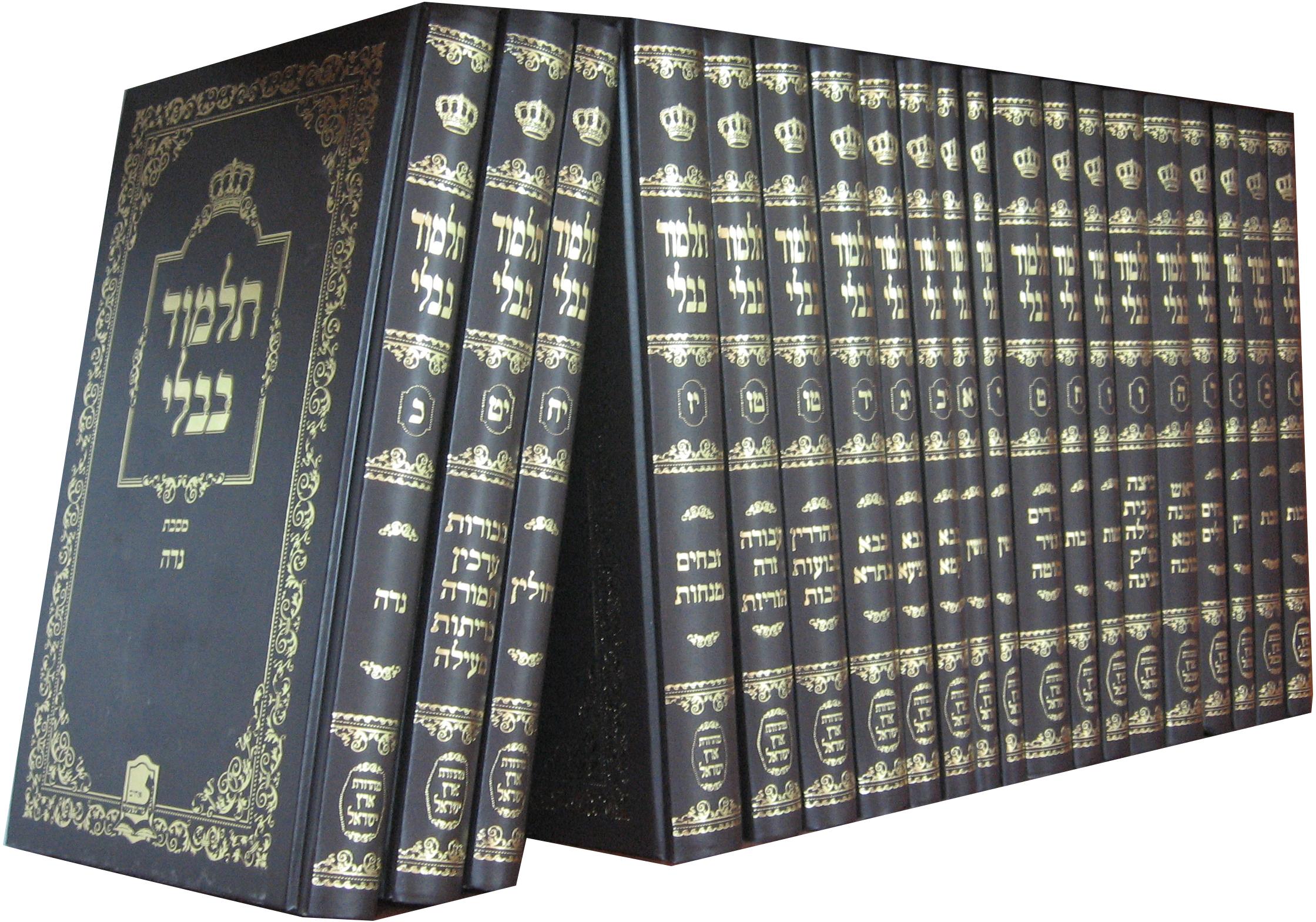
Free download files of the Babylonian Talmud in English

I am proud to provide for you as a gift, a download of the complete Babylonian Talmud English translation.

The Talmud in English is online and free at my site, Halakhah.com, http://www.halakhah.com/ - serving up 60,000+ downloads each month.

TRANSLATED INTO ENGLISH WITH NOTES, GLOSSARY AND INDICES UNDER THE EDITORSHIP OF RABBI DR. I. EPSTEIN B.A., Ph.D., D. Lit. FOREWORD BY THE VERY REV. THE LATE CHIEF RABBI DR. J. H. HERTZ. INTRODUCTION BY THE EDITOR.

This set contains the Sedarim (orders, or major divisions) and tractates (books) of the Babylonian Talmud, as translated and organized for publication by the Soncino Press in 1935 - 1948.

My site has the entire Talmud edition in PDF format and  about 8050 pages in HTML format, comprising 1460 files — of the Talmud.

I recommend that on your web site or blog you add a link to this site http://www.halakhah.com.

Highlights include: A formatted 2-column PDF version of the Talmud at Halakhah.com.

    5/30/19

    My Existentialist Zionism Answer in my Dear Rabbi Zahavy - Jewish Standard Talmudic Advice Column for May 31, 2019

    Dear Rabbi Zahavy - Jewish Standard Talmudic Advice Column for May 31, 2019

    Dear Rabbi Zahavy,

    I visited Israel recently, and from what I saw I admired the continued growth of the country. But at the same time, I felt a deep apprehension about the manifold internal and external dangers that it faces. I am worried that Israel has lost its way and is no longer serving to fulfill its Zionist missions. How can I regain my confidence in the present vitality and the future prospects of the State of Israel?

    Fearful in Fair Lawn

    Dear Fearful,

    I too have spent a lot of time in Israel of late and I do share your concerns. It’s a complex country of more than nine million inhabitants. It faces many internal conflicting points of view and differing aspirations. And yes, it is beset by the external challenges of hostile foes who seek to damage or even destroy the state.

    But my take on the situations it faces is positive and confident, and not simply by virtue of any of the classical definitions of Zionism. I have a personal and original take on the matter.

    Let me explain first a bit about the historical context of past Zionist visions and then tell you how I now formulate my own conception of Zionism for the modern State of Israel.

    The great historians of Zionism tell us about its major forms: political Zionism, socialist Zionism, cultural Zionism, and religious Zionism. I respect and venerate all the past great Zionist thinkers and activists. To some degree the modern state is the successful expression of the four classical forms of Zionism. And to some extent it represents a failed or incomplete implementation of each of them.

    6/8/18

    Was Charles Krauthammer Jewish?

    Was columnist and Fox TV commentator Charles Krauthammer Jewish? Yes he was a Jew.

    In JPost interview Krauthammer reflected on his Talmudic upbringing. He described himself in the interview we cite here as not very religious:
    As for my own practice, it's fairly minimal, but I go on the required days. I go to Yizkor, those kinds of things. I once described to a friend my Jewishness - I said, I'm a Jewish Shinto. I believe in ancestor worship. That's the heart of my Judaism.
    We disagreed with most of what neoconservative Charles Krauthammer said about foreign policy. But from the excellent interview he gave to the Jerusalem Post, "The unfashionable Charles Krauthammer," we learned that his eloquent argumentation skills derive in part from his Orthodox Talmudic education.
    Can you talk a little bit about your own Jewish upbringing and sense of Jewishness, and how that influences you? ...
    I grew up in a Modern Orthodox home. I went to Jewish day school right through high school, so half of my day was spent speaking Hebrew from age six to 16. I studied thousands of hours of Talmud. My father thought I didn't get enough Talmud at school, so I took the extra Talmud class at school and he had a rabbi come to the house three nights a week. One of those nights was Saturday night, so in synagogue Saturday morning my brother and I would pray very hard for snow so he wouldn't be able to come on Saturday night and we could watch hockey night in Canada. That's where I learned about prayer...
    He suffered a tragic swimming accident when in medical school which left him paralyzed.

    He was the subject of a Fox News program and was on Jon Stewart's show to promote his book, Things That Matter: Three Decades of Passions, Pastimes and Politics.


    Here is the entire article. It is no longer available at jPost.

    "The unfashionable Charles Krauthammer"

    5/27/18

    Philip Roth was Attacked and Excommunicated at Yeshiva University in 1962


    VI. The Holocaust in the Discourse of Popular American Jewish Culture

    The role of the Holocaust in the civil discourse of American Jews comes more sharply into focus through critiques in contemporary imaginative fiction. It plays an important role in popular Judaic non-systemic (counterculture) folk representations. Consider the blunt example of the writings and experiences of Philip Roth. (Cf. Young, pp. 109-112, for further discussion of Roth.)
    Roth in The Facts: A Novelist's Autobiography (New York, 1988, pp. 127-130) recounts an anecdote that he calls his "excommunication" at a Yeshiva University symposium on fiction he participated in New York in 1962. At this "trial" he tells us he was grilled mercilessly by a moderator and audience who began after him with the question: "Mr. Roth, would you write the same stories you've written if you were living in Nazi Germany?" As framed, the query was merely a cloak for a dagger aimed at the heart of Roth's literary expressions. The questioner transparently meant, "Are you not a self-hating Jew?" Roth was so shaken by the attack, he could not respond at the time. Instead, he says, he has given his answer many times over in the fiction he has published, in his discourse, since that incident.

    Of course, Roth could have answered easily and obviously. He was a product of Jewish cultural processes over several generations in an American democracy. He wrote for an American non-racist audience. He was nurtured on the great achievements of English literature. Jews within German society had no such nurture and faced an openly hostile racist culture. Roth could only have written his oeuvre for us. We read him, understand him, despise him or laugh with him and respond to his characters and caricatures.

    Through his fiction he challenges the basic discursive truths of Judaic life and, in my view, allows us to better judge their cultural value and purpose. Roth's recent parody of Holocaust memory within American Judaism and the Zionist setting was also one of his most radical. In The Counterlife he developed the following.

    The book's protagonist Nathan Zuckerman finds himself on a jet flight from Israel sitting next to Jimmy Lustig, of the West Orange Lustigs. Jimmy is a psychotic reversioner returning from study in the Diaspora Yeshiva. He plans to hijack the plane to Germany and issue a press release aimed at "regeneration for the Jews," (Philip Roth, The Counterlife, New York, 1988, pp. 188-9)

    FORGET REMEMBERING
    I demand of the Israeli Government the immediate closing and dismantling of Yad Vashem, Jerusalem's Museum and Remembrance Hall of the Holocaust. I demand this in the name of the Jewish future. THE JEWISH FUTURE IS NOW. We must put persecution behind us forever. Never must we utter the name "Nazi" again, but instead strike it from our memory forever. No longer are we a people with an agonizing wound and a hideous scar. We have wandered nearly forty years in the wilderness of our great grief. Now is the time to stop paying tribute to that monster's memory with our Halls of Remembrance! Henceforth and forever his name shall cease to be associated with the unscarred and unscarable Land of Israel!
    ISRAEL NEEDS NO HITLERS FOR THE RIGHT TO
    BE ISRAEL!
    JEWS NEED NO NAZIS TO BE THE REMARKABLE
    JEWISH PEOPLE!
    ZIONISM WITHOUT AUSCHWITZ!
    JUDAISM WITHOUT VICTIMS!
    THE PAST IS PAST! WE LIVE!
    In the novel, but a few pages later, Jimmy backs off. The press-release was just an irrepressible, offensive Jewish joke. As Jimmy says, "Come on, you think I'd be crazy enough to f--k around with the Holocaust? I was just curious, that was all. See what you'd do. How it developed. You know. The novelist in me." (Ibid., p. 193)

    Roth's artifice is an inversion of remembrance. He casts the scene in terms of the most visible contemporary context of political violence - airline hijacking. Roth pits recent reversionary forms of Judaism against accepted American communal forms, and against State-sponsored monumental discourse. These fictive memories have undoubtedly been shaped and cultivated under the repression of the corporate personality of the system of civic American Judaism. Roth's characters express as their response a fierce struggle over the acceptance or rejection of the central belief system.

    Cited from my,
    Judaisms and Memories: Systemic Representations of the Holocaust -- keynote address, Conference on the Effects of the Holocaust on the Humanities, University of Minnesota, March, 1989.

    - repost from 4/25/06

    4/12/18

    Mixed Up in Mea Sharim Wants to Join the IDF - Dear Rabbi Zahavy - My Jewish Standard Talmudic Advice Column - April 2018

    Dear Rabbi Zahavy - Your Talmudic Advice Column

    Dear Rabbi Zahavy,

    I live in Israel and I learn Talmud at a black-hat yeshiva. I really want to go into the army, to serve in the IDF, because it is a universal requirement of the state and it provides a vibrant force to defend Jews against the array of Israel’s hostile enemies. Also, I have always felt that I was born to be a soldier. 


    My rebbe teaches us that full-time Torah study is the best way to protect and preserve the Jewish people. And he also calls the IDF the shmad apostasy army. He forbids his students from joining. I won’t go unless I have approval to do so from my religious mentor.

    What should I tell my rebbe to convince him to permit me to serve?

    Mixed Up in Mea Shearim, Israel


    Dear Mixed Up,

    Your predicament is a tough one. I can see how this dilemma can tear at your soul. On the one hand, you live in the heart of a community that teaches that the values of the Torah are sacred. You study in a yeshiva that is based on the premise that the mitzvah of talmud Torah — study of the sacred books — is paramount. One known metaphor that motivates you is this: If all the commandments and activities are placed on one side of a scale, and the commandment to study Torah on the other side, Torah study outweighs them all. Your community believes strongly in that value.

    And there are teachers in your community who embellish the value of keeping mitzvot and studying the sacred books with mystical claims. Some do say that God protects the Jewish people because of the virtue of the tzadikim — the saintly people who study the Torah and fulfill the 613 commandments.

    Your charedi community insulates you tightly from the general culture of the state. You live in a carefully crafted bubble that fences you off from all other surrounding communities, cultures, and worlds.

    I get it. I grew up in an Orthodox family and attended Yeshiva University from high school through rabbinical school — for 11 years. Okay, that environment is more porous. It is open to the study of general disciplines of knowledge. Still many of the rabbis who taught me strongly believed in insulating, segregating, and separating the sacred from the profane. Torah study was special and sacred. And secular subjects were to be tolerated, not venerated.

    12/31/17

    Is New Year's Eve Jewish?

    Is the celebration of New Year's Eve allowed in accord with the Jewish religion?

    No, not in Haifa, Israel, according to the rabbinate there. They say that a New Year's Eve party is an act of "Idol worship," as JTA reports:
    Haifa rabbinate forbids New Year’s Eve parties

    JERUSALEM (JTA) -- The Haifa rabbinate has warned local hotels and event halls that they could lose their kashrut supervision if they hold New Year's Eve parties on their premises.

    "No parties celebrating Christian New Year's Eve should be held on the premises, and our supervision will be further denied to those who disobey our instructions," read a letter from the rabbinate sent to area businesses, Ynet reported.

    The decision is based on a previous decision made by the Chief Rabbinate, the head of Haifa's Religious Council, Avi Weitzman, told Ynet.

    The Chief Rabbinate said that its kashrut supervisors could not be present to supervise the food at celebrations of Christian holidays, such as New Year's, and therefore the kashrut certificate would have to be revoked.

    “It is forbidden for a Jew to be present in a place where ‘idol worship’ is being conducted,” said a statement from the Chief Rabbinate, according to the Jerusalem Post.
    There are numerous reasons to argue that celebrations on this day at some point in history indeed were pagan festivals. December 31 was known as Saint Sylvester Day and January 1 was a time for the commemoration of Jesus’ circumcision. See this historical summary.

    Since today's secular New Year's celebrations mark the turning of the calendar to a new year and make no recognition of such pagan or Christian events, we respectfully disagree with the rabbis.