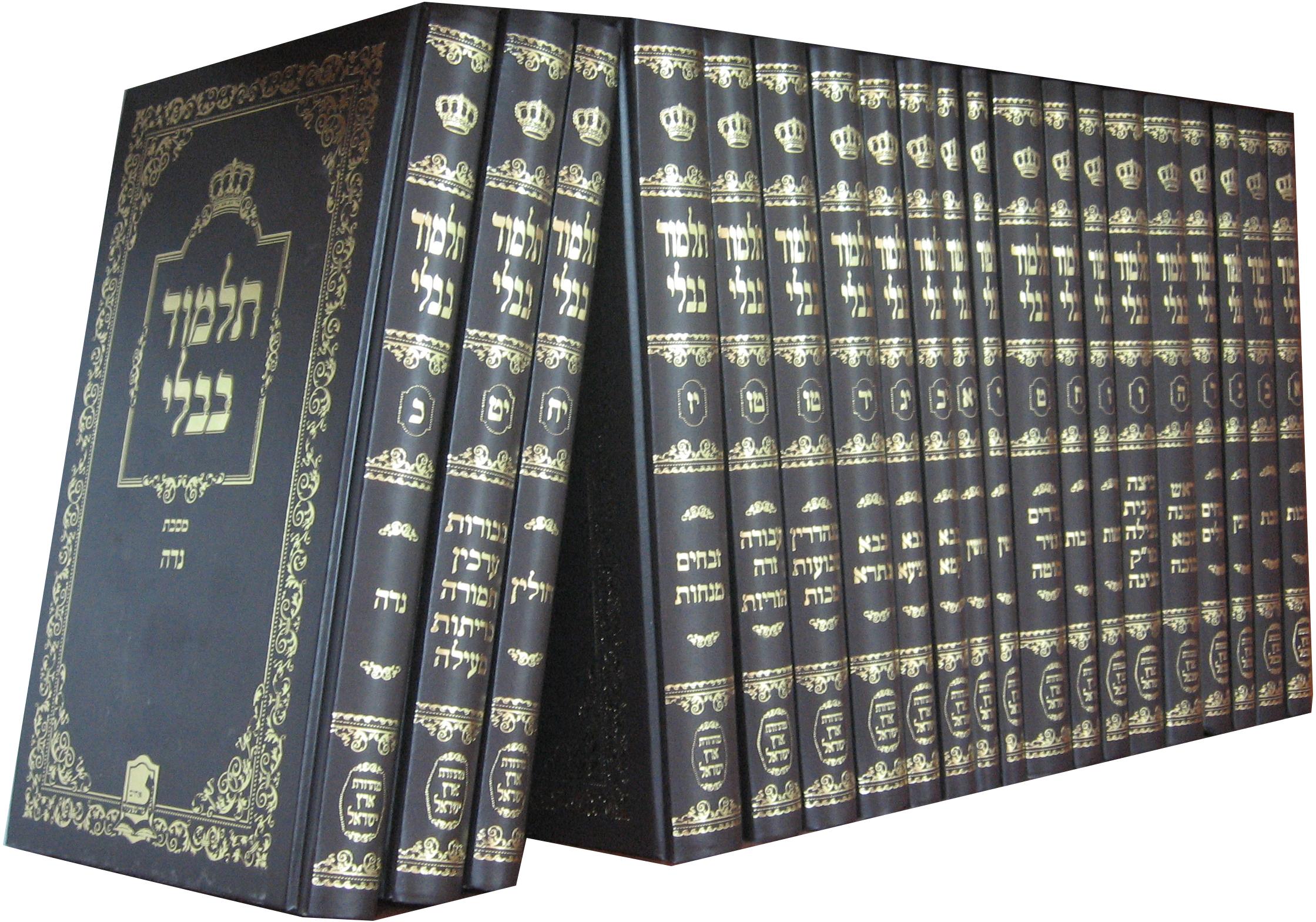
Showing posts with label hebrew. Show all posts

3/25/21

Download Online a Free Passover Seder Haggadah

Here are several of the best places you can go online to download a free Passover Haggadah for your Seder.
I give Chabad credit for a great resource if you want a wide selection of free Hebrew Haggadahs.  
Download Hebrew Haggadahs here.

My new Haggadah is not free - but it is really fantastic!
I thought you might be interested in this new for 2017 reprint of a classic haggadah with a foreword that I added - available from Amazon. - Tzvee

The Polychrome Historical Haggadah                            
The Polychrome Historical Haggadah 
by Jacob Freedman et al.
  Learn more                      
Library Makes 1,000 Rare Haggadahs Available Free Online
An illustration of King David praising G-d in a rare Haggadah published in 1710 in Frankfurt am Maine, Germany

The central Chabad-Lubavitch library in New York made 1,000 Passover Haggadahs, many of them rare, available on the Internet for browsing by the public. The Agudas Chasidei Chabad Library has one of the largest collections of the Passover orders of service in the world.

Housed at the Lubavitch World Headquarters, the library's Haggadah collection began years ago with a nucleus of some 400 volumes purchased on behalf of the Sixth Lubavitcher Rebbe, Rabbi Yosef Yitzchak Schneersohn, of righteous memory, by renowned collector and bibliographer Shmuel Wiener in 1924.

The posting at ChabadLibraryBooks.com represents close to half of the library's total Haggadah collection and is part of chief librarian Rabbi Sholom Ber Levine's goal of making the library more accessible to the public. All told, the library possesses more than 2,200 editions of the Haggadah. Although the rarest of the books, all handwritten, are not yet available, Levine is looking for ways to post them next year. Hebrew Books, directed by Chaim Rosenberg, collaborated on the project.

10/5/20

Jewish Black Magic: They Cursed Ariel Sharon with the Pulsa D'Nora in 2005 - and can it work in October 2020 for someone else?

I've spent years teaching numerous college courses on religion - always with the disclaimer that we will cover only the positive aspects of the subject. Religion used for evil, that is for war or other forms of harm, is a misuse and distortion of systems of faith.

Curses, I reasoned, were a misuse and distortion of religious practice.

Curses invoked before the Rabin assassination changed my mind about that. Prior to that tragic event, on the eve of Yom Kippur, a group of "Kabbalists" intoned the pulsa curse outside the Rabin residence. Once again, in the summer of 2005, another group gathered to invoke the curse against P.M. Ariel Sharon. It seemed to me that curses indeed were part of our religion - like it or not.

One blogger, Canonist, dealt briefly with the curse back in July 2005, complete with a link to the video of the curse "ceremony" and quotations from learned professors:
Praying for Ariel Sharon's Death

Yesterday's death-curse seems thus far to have gone unanswered by the Almighty, but we'll see. Generally speaking, I don't write much about Israel and the disengagement, but this latest is quite interesting. PaleoJudaica's got a great roundup, including descriptions of the pulsa de-nura ceremony, its detractors, and the threat of prosecution that've come out of it. Meantime, you can actually watch the ceremony in this video, which, with a bunch of people in sweats reading from photocopies, looks oddly like some run-of-the-mill Jewish ceremony, like burning chametz or somesuch. The video comes courtesy of Samuel Heilman, via a listserv to which he wrote, with the subject "Jewish Jihadists": "Lest any of you think that only Islamists have jihadists, see the video below in which so-called 'religious Jews' pray for Prime Minister Sharon's Death in a Pulsa De Nura." Bold words on both sides. Let's see what comes of them.
Erudite rabbis have written about the matter, explaining that magic is not a part of Judaism, as in the following:

10/5/19

Ten years later I still agree. Here is what is wrong with our Jewish prayer book commentaries

After reading in a June 2009 morning at KJ some initial and random comments in the new Koren-Sacks Siddur, I was reminded of what in the past I have found lacking in prayerbook commentaries.

They are not complicated enough.

They portray our services as if they are beautifully woven together and, in the case of the longer services, as if they unfold in a gentle rising crescendo of drama from initial inspiring prayers, through more meaningful and expressive liturgies to our culminating praises and petitions.

When you read our most popular prayer book commentaries, you think the correct background music for our prayers would be say something soothing and nearly seamless, like Beethoven's Moonlight Sonata.

I have logged many davening hours and I never saw the Orthodox Jewish services projecting this sort of connected and calm mood.

No I've always thought the services were at best symphonies with abruptly varying movements, often characterized by stark contrasts and even at times by cacophony.

Our Siddur is in fact a complex composite document that evolved over many centuries. Many hands had a role in expressing the values and beliefs that our collective prayers represent. By its own definition, such a work should not be a smooth fabric.

A few times I have attempted to say just this in the modes of expression that characterized our scholarly writings. For instance in a paper I wrote, "The Politics of Piety: Social Conflict and the Emergence of Rabbinic Liturgy," I summarized at the outset a major theme of our more lengthy arguments as follows,
Prayer services do not emerge spontaneously or arbitrarily in a vacuum. They are the public pronouncements of the central values and concepts of the religious leaders who initially propounded them and are social rituals that often emerge out of intense conflict and hard-fought compromise. Specific historical, social, and political conditions contributed to the distinct origin of two major rabbinic services. In the crucial transitional period after the destruction of the Temple, the Shema emerged as the primary ritual of the scribal profession and its proponents. The Tefillah at this formative time was a ritual sponsored mainly by the patriarchal families and their priestly adherents. Compromises between the factions of post-70 Judaism later led to the adoption of the two liturgies in tandem, as the core of public Jewish prayer. But this came about only after intense struggles among competing groups for social and political dominance over the Jewish community at large and concomitantly for the primacy of their respective liturgies. The political, social, and even economic dimensions of the religious life of the synagogues were crucial to the formation of nascent rabbinic Judaism.
I think this is what brings our Siddur alive. It's a story of sharply competing ideas and values all striving for attention within a closed but utterly vibrant religious world. That's the story I'd like to see in some variant form in our prayer book commentaries. It's the narrative of a dialectical theological universe of debate and dispute over which notion we ought to employ to express our most urgent needs before our creator. For instance, do we put our scribal needs at the top of our agenda? Or do we cast our priestly yearnings at the top of our list?

In our Siddur we see a constant flow of traffic, changing of lanes, jostling for position of values and notions, ideas and concepts. And more than this, we see layer upon layer of meaning imposed upon our every practice and festival. Sacred time in our prayer book has mystical, agricultural, historical and Torah-logical importance, all at once. And all of us see different angles of this "lasagna" of religious life.

(When I start using such metaphors, that means uh-oh, I must be getting hungry and it's time to wrap up the post.)

See these among my published writings for more details.

6/5/19

Free download files of the Babylonian Talmud in English

I am proud to provide for you as a gift, a download of the complete Babylonian Talmud English translation.

The Talmud in English is online and free at my site, Halakhah.com, http://www.halakhah.com/ - serving up 60,000+ downloads each month.

TRANSLATED INTO ENGLISH WITH NOTES, GLOSSARY AND INDICES UNDER THE EDITORSHIP OF RABBI DR. I. EPSTEIN B.A., Ph.D., D. Lit. FOREWORD BY THE VERY REV. THE LATE CHIEF RABBI DR. J. H. HERTZ. INTRODUCTION BY THE EDITOR.

This set contains the Sedarim (orders, or major divisions) and tractates (books) of the Babylonian Talmud, as translated and organized for publication by the Soncino Press in 1935 - 1948.

My site has the entire Talmud edition in PDF format and  about 8050 pages in HTML format, comprising 1460 files — of the Talmud.

I recommend that on your web site or blog you add a link to this site http://www.halakhah.com.

Highlights include: A formatted 2-column PDF version of the Talmud at Halakhah.com.

    6/8/18

    Was Charles Krauthammer Jewish?

    Was columnist and Fox TV commentator Charles Krauthammer Jewish? Yes he was a Jew.

    In JPost interview Krauthammer reflected on his Talmudic upbringing. He described himself in the interview we cite here as not very religious:
    As for my own practice, it's fairly minimal, but I go on the required days. I go to Yizkor, those kinds of things. I once described to a friend my Jewishness - I said, I'm a Jewish Shinto. I believe in ancestor worship. That's the heart of my Judaism.
    We disagreed with most of what neoconservative Charles Krauthammer said about foreign policy. But from the excellent interview he gave to the Jerusalem Post, "The unfashionable Charles Krauthammer," we learned that his eloquent argumentation skills derive in part from his Orthodox Talmudic education.
    Can you talk a little bit about your own Jewish upbringing and sense of Jewishness, and how that influences you? ...
    I grew up in a Modern Orthodox home. I went to Jewish day school right through high school, so half of my day was spent speaking Hebrew from age six to 16. I studied thousands of hours of Talmud. My father thought I didn't get enough Talmud at school, so I took the extra Talmud class at school and he had a rabbi come to the house three nights a week. One of those nights was Saturday night, so in synagogue Saturday morning my brother and I would pray very hard for snow so he wouldn't be able to come on Saturday night and we could watch hockey night in Canada. That's where I learned about prayer...
    He suffered a tragic swimming accident when in medical school which left him paralyzed.

    He was the subject of a Fox News program and was on Jon Stewart's show to promote his book, Things That Matter: Three Decades of Passions, Pastimes and Politics.


    Here is the entire article. It is no longer available at jPost.

    "The unfashionable Charles Krauthammer"

    3/30/18

    The Most Expensive Haggadah is the Sarajevo Haggadah

    What is the most expensive Haggadah in the world?

    The answer is -- the rare illuminated Sarajevo Haggadah which also is said to be one of the most beautiful manuscripts and one of the most valuable books in existence.

    My facsimile of The Sarajevo Haggadah that I bought a while back is awesome.

    If you are at all interested in this Haggadah, you must read People of the Book by Geraldine Brooks.

    Wikipedia explains:
    The Sarajevo Haggadah is an illuminated manuscript that contains the traditional text of the Passover Haggadah which accompanies the Passover Seder. It is the oldest Sephardic Haggadah in the world, originating in Barcelona around 1350. The Haggadah is presently owned by the National Museum of Bosnia and Herzegovina in Sarajevo, where it is on permanent display.

    The Sarajevo Haggadah is handwritten on bleached calfskin and illuminated in copper and gold. It opens with 34 pages of illustrations of key scenes in the Bible from creation through the death of Moses. Its pages are stained with wine, evidence that it was used at many Passover Seders. It is considered to be the most beautiful illuminated Jewish manuscript in existence and one of the most valuable books in the world. In 1991 it was appraised at US $700 million....more...
    You can view quite a few pages from the Sarajevo Haggadah here.  

    Or you can purchase a facsimile edition of your own here: The Sarajevo Haggadah.


    More posts about the Haggadah...

    1/1/18

    Is Pink Jewish?

    Yes, Pink is a Jew. The star performer dazzled everyone at the Grammy's with her singing, acrobatics and revealing performance in 2010 and again in 2014. Her mother is Jewish.

    A 2006 interview with Pink said about her plans for tattoos (which I do not think were carried out),
    Her Jewish mom will be honoured on her right arm, “with Hebrew writing and a cat ’cause she’s a snob and she’s a nurse and all that stuff,” she says cryptically. “And my dad is this country boy and he’s a wolf, or a tiger – I’m not sure which animal yet. And my mom grew up in Atlantic City so I’m gonna have all sort of casinos. And Carey has tattoos of Las Vegas casinos… Then for the country I want a spider’s web, Charlotte’s Web, all that stuff.”
    Wikipedia says, "Pink was born (1979) Alecia Moore in Doylestown, Pennsylvania, the daughter of Judith Moore, a nurse, and James Moore, Jr., a Vietnam veteran. Her father is Catholic and her mother Jewish, and her ancestors immigrated from Ireland, Germany, and Lithuania."

    I don't think she got the Hebrew tattoo.

    Pink's "Raise Your Glass" video below gets seriously into religion at about 2:00.


    [repost from 3/2011]

    8/25/17

    Moby Dick and My Babylonian Talmud Tractate Hullin Translation

    Who would not want their published work compared to that of Herman Melville's, Moby Dick?

    Yes, that is a documented fact. My translation of Talmud Bavli Hullin was cast in such a light in a review some time back.

    The work has been enhanced and republished now in two volumes for sale at Amazon: Hullin part 1 and Hullin part 2.

    And it is available as an ebook for kindle.

    Here is that wonderful review. Me and Melville!


    Ioudaios Review, VOLUME 2.024, NOVEMBER 1992, Reviewed by: Sigrid Peterson, Department of Religious Studies, University of Pennsylvania

    The Talmud of Babylonia.  An American Translation: Volume XXX.A: Tractate Hullin; Chapters 1-2.. Tzvee Zahavy, Translator. Brown Judaic Studies 253. Atlanta, GA: Scholars Press, 1992. Pp. xix + 238.

    “All may slaughter,” has to be one of the more memorable three-word opening lines ever invented – right up there with “Call me Ishmael.”  While the latter is the opening to Melville’s Moby Dick, the former is less readily identifiable. In fact, the words “All may slaughter” open and form the reiterated recall to the ground theme of Tzvee Zahavy’s modern English translation of Hullin, one of the Tractates of the Babylonian Talmud. On beginning Moby Dick, I am sure I would feel conscientious and obligated and virtuous and bored. Similarly, that was my expectation in opening Hullin on preparing to review it. That expectation has been dispelled by this accessible and fascinating portrayal of the world of the rabbis.

    5/10/17

    Is the Hullin Scroll the Oldest Talmud Manuscript Ever Found?

    What is the oldest known Talmud scroll?
    Scroll of tractate Hullin, Babylonian Talmud (CUL T–S MISC. 26.53.17), acknowledgment to Dr. S.C. Reif, Director of the Taylor-Schechter Genizah Research Unit at the Cambridge University Library, and the Syndics of the Library.

    I was delighted in December, 2009 to hear Professor Shamma Friedman speak at a Talmud department seminar at JTS. He spoke about a controversial scholarly issue: whether Maimonides intended his Mishneh Torah to replace the Talmud.

    This event reminded me of a Talmudic fact that Professor Friedman brought to light several years ago, i.e., that the Talmud was at an early time circulated in scroll form. He discussed this in his paper,  “An Ancient Scroll Fragment (Bavli Hullin 101a-105a) and the Rediscovery of the Babylonian Branch of Tannaitic Hebrew,” JQR 86:1 (1995), pp. 9–50.

    3/23/17

    Ten Tips for a Better Seder - with Trump Tips Added


    It's a great performance. A dramatic Off-Broadway revue.

    I have always had fun directing the reading of the Haggadah at the Seder. I learned this dramatic art as a child by watching my father (Rabbi Zev Zahavy) masterfully conduct the performance of the communal synagogue Seders as the rabbi of the Park East Synagogue in Manhattan. He did it right and authentic and dramatic.

    So in the spirit of the season of rebirth and freedom, let me offer you ten tips for your seder extravaganza - this year we must add Trump Tips.

    9/12/15

    The Most Popular Online Shofar Blowing Video


    An Amazing Shofar Ram's Horn Synagogue Service
    Rabbi Jonathan Ginsburg
    Uploaded to YouTube on Sep 20, 2007
    Sound - not that great
    Nearly 700,000 views
    That's a big shofar!

    7/4/15

    The Star Spangled Banner Hebrew Scroll from 1914

    It's not clear if there was a Hebrew version of the Star Spangled Banner in 1914. It's hard to tell from the brief description of the Smithsonian scroll. If anyone knows the content of the patriotic hymn of this historic scroll, please let me know.

    Smithsonian Mirror of America--"Star-Spangled Banner" scroll, 1914

    This scroll, donated to the Smithsonian in 1921, symbolizes how Jewish immigrants adapted their cultural traditions to fit their new lives in America. Inside the scroll are a patriotic hymn in Hebrew, written by the donor, Israel Fine; portraits of Washington and Lincoln; excerpts from Lincoln's second inaugural address; and the phrase 'E Pluribus Unum.' "

    6/29/15

    Yitzhak Zahavy's fantastic book, "Archaeology, Stamps and Coins of the State of Israel"

    A brilliant book. Available in Teaneck and worldwide on Amazon!

    Archaeology, Stamps and Coins of the State of Israel

    This book explains how archaeology is used in the politics and nationalism of the State of Israel through its stamps, coins and currency. Taking the reader from the pre-state years to the modern day, Archaeology, Stamps and Coins of the State of Israel catalogs and analyzes the Israeli government issued materials that employ archaeological motifs.


    Purchase this excellent book online or pick yours up today at the Judaica House on Cedar Lane in Teaneck, NJ.

    10/18/14

    My 2010 Analysis of a Book by Rabbi Barry Freundel, "Why We Pray What We Pray"

    Unfortunately the distinguished rabbi Barry Freundel was arrested and charged last week with crimes involving video voyeurism in the mikvah of his synagogue.

    Update: Is Freundel working on a new book: "Why we Prey?"

    In 2010 I wrote these nice comments and analysis below on a book he published, Why We Pray What We Pray through Urim Publications....

    The description from the publisher says:
    ''Why We Pray What We Pray'' details the various factors that influenced six important Jewish prayers and shaped how and when Jews recite them. This book shows that each prayer (Shema, Nishmat, Birkat HaHodesh, Anim Zemirot, Aleinu and Kaddish) has a complex history of which contemporary worshippers are mostly unaware. When we learn about the factors and forces that shaped these prayers and Jewish liturgy in general, our appreciation of what Jewish worship is all about becomes that much more profound. Why We Pray What We Pray also sets forth important moments in Jewish history with depth and detail.
    I am most impressed by the wide scope of the author's learning and by his accessible writing style. That desire to reach the reader comes through clearly in the author's chapter titles and in the presentation of their contents.

    6/22/14

    Is the Yo App Jewish?

    Yes, Bloomberg reported that the incredibly popular, quirky and eccentric Yo app was invented by Jews in Israel.

    Accordingly I'm awarding the app the Harris Epstein prize for great Talmudic inventions.

    Stephen Colbert joined the Yo revolution with this take on it.


    This reminds me of a song I heard as a kid at the first Broadway show I went to, "Milk and Honey". So I adapted the song lyrics for the app generation.

    Yo, Yo,
    You'll find Yo
    The nicest greeting you know;
    It means bonjour, salud, and skoal
    And twice as much as hello.
    It means a million lovely things,
    Like peace be yours,
    Welcome home.
    And even when you say goodbye,
    You say goodbye with Yo.

    It's a very useful word,
    It can get you through the day;
    All you really need to know,
    You can hardly go wrong,
    This is your home as long as you say:
    Yo,
    The nicest greeting I know;
    Yo,
    Means twice as much as hello.
    It means a million lovely things,
    Like peace be yours,
    Welcome home.
    And even when you say goodbye,
    If your voice has
    "I don't want to go" in it,
    Say goodbye with a little "hello" in it,
    And say goodbye with Yo.

    It's the most amazing thing
    That I think I've ever heard
    Wait till Berlitz hears of you
    All my foundering's done
    I'm a native with one little word

    Yo, Yo,
    I find Yo
    The nicest greeting you know;
    It means bonjour, salud, and skoal
    And twice as much as hello.
    It means a million lovely things,
    Like peace be yours,
    Welcome home.
    And even when you say goodbye...
    If your voice has
    "I don't want to go" in it,
    Say goodbye with a little "hello" in it,
    And say goodbye with Yo.


    6/9/13

    Is Economist Nouriel Roubini Jewish?

    Yes, famous economist Nouriel Roubini is a Jew.

    He was born in Istanbul, Turkey in 1959 to Iranian Jewish parents. He moved to Tehran, Iran, when he was two.  He is currently a U.S. citizen and speaks English, Farsi, Italian, and Hebrew.

    Roubini spent one year in college at the Hebrew University of Jerusalem before moving to Italy and receiving his B.A., summa cum laude in Economics from the Bocconi University  in Milan in 1982.

    He received his Ph.D. in international economics from Harvard University in 1988.

    June 7, 2013 he predicted that gold prices will drop 30% to below $1000.

    5/5/13

    Announcing a new Edition of Shoroshim by Reuven Brauner

    BIGGEST HEBREW VERB BOOK

    Shoroshim by Reuven Brauner may be the most comprehensive list of Hebrew Verb roots ever published with close to 3300 entries. The verb roots are presented with definitions, synonyms and derivative meanings in thesaurus form, laid out in a clear, delightful and aesthetic manner.

    SMART

    More than a conventional dictionary or lexicon, Shoroshim links different Hebrew word roots and shows how they derive from a "common" root form, often not obvious at first glance.

    CLEAR

    Unlike ordinary dictionaries which are cluttered with permutations and combinations of grammatical forms for the same root, Shoroshim efficiently cuts right to the root.

    Shoroshim provides easy guidelines to assist in the often complex and frustrating effort to determine a verb root.

    DEEP

    Shoroshim covers all periods in the development of the Hebrew language, from the Biblical period through modern Hebrew. Shoroshim includes a large number of obscure and obsolete roots, particularly helpful to the scholar and academic.

    FUN AND EASY

    Shoroshim is fun and easy to use, an indispensable quick reference source for all students and translators of Hebrew.

    EXCLUSIVE AND FREE

    Shoroshim is a seminal unique work, available only from Talmudic Books at Halakhah.com. Please visit to peruse and download the work.

    Enjoy and B'Hatzlahah!

    5/1/13

    Is the author and spiritual seeker Paulo Coelho Jewish?

    No Paulo Coelho is not a Jew. He was brought up Catholic and attended a Jesuit school in Brazil. Coelho is not a big fan of any organized religion. He speaks with lyrical disdain and disparagement in his books about the wisdom and ritual of religions.

    His current publication, Manuscript Found in Accra, is set in Jerusalem before a battle. The people in the book gather to ask about life so that they can learn enough to save "the soul of Jerusalem." The publisher tells us:
    July 14, 1099. Jerusalem awaits the invasion of the crusaders who have surrounded the city’s gates. There, inside the ancient city’s walls, men and women of every age and every faith have gathered to hear the wise words of a mysterious man known only as the Copt. He has summoned the townspeople to address their fears with truth:

    “Tomorrow, harmony will become discord. Joy will be replaced by grief. Peace will give way to war. . . . None of us can know what tomorrow will hold, because each day has its good and its bad moments. So, when you ask your questions, forget about the troops outside and the fear inside. Our task is not to leave a record of what happened on this date for those who will inherit the Earth; history will take care of that. Therefore, we will speak about our daily lives, about the difficulties we have had to face.”

    The people begin with questions about defeat, struggle, and the nature of their enemies; they contemplate the will to change and the virtues of loyalty and solitude; and they ultimately turn to questions of beauty, love, wisdom, sex, elegance, and what the future holds. “What is success?” poses the Copt. “It is being able to go to bed each night with your soul at peace.” ...

    Now, these many centuries later, the wise man’s answers are a record of the human values that have endured throughout time. And, in Paulo Coelho’s hands, The Manuscript Found in Accra reveals that who we are, what we fear, and what we hope for the future come from the knowledge and belief that can be found within us, and not from the adversity that surrounds us.
    This book is new age in every respect that we can think of especially in the way that it wanders through spiritual landscapes and themes without a care for a conventional framework of organization or presentation.

    One passage struck us because it sounded like the utter opposite of the philosophy of life and values that we heard espoused at Yeshiva University by our teacher the Rav, Rabbi Soloveitchik and by his followers.

    We will cite Coelho's passage and leave it without explanation; and we wish that understanding will flow to those who understand:
    Beauty is present in all creation, but the dangerous fact is that, because we human beings are often cut off from the Divine Energy, we allow ourselves to be influenced by what other people think... And we become ugly and embittered.

    At that moment, we can draw comfort from so-called wisdom, an accumulation of ideas put together by people wishing to define the world instead of respecting the mystery of life. This "wisdom" consists of all the unnecessary rules, regulation, and measurements intended to establish a standard of behavior. 
    According to that false wisdom, we should not be concerned about beauty because it is superficial and ephemeral. 
    That isn't true. All the beings created under the sun, from birds to mountains, from flowers to rivers, reflect the miracle of creation. 
    If we resist the temptation to allow other people to define who we are, then we will gradually be able to let the sun inside our own soul shine forth... (pp. 60-61)
    Back in 2011 we wrote about his previous book Aleph saying that the book... will greatly entertain the spiritual seeker. By that we mean if you are open to the concepts of past lives and the mystical energies of the universe, this book will speak to you. But even if you are such a seeker, you may feel, as we do, that at times the book overdoes some of its themes.

    Within the story Coelho provides some gems of writing. We identified with his metaphor of the Chinese bamboo plant since we had spent several years putting down the roots of our latest book. And now, that book (God's Favorite Prayers) has sprouted up boldly after its publication.

    Coelho explains that the Chinese Bamboo first, “...spends 5 years as a little shoot, using that time to develop its complex root system. And then from one moment to the next, it puts on a spurt and grows up to 25 meters high.”

    Within the narrative Coelho casts in what can be wonderful observations, if they resonate for you. On the life-value of mistakes he tells us, “...only mediocrity is sure of itself, so take risk and do what you really want to do. Seek out people who aren’t afraid of making mistakes and who, therefore, do make mistakes. Because of that, their work often isn’t recognized, but they are precisely the kind of people who change the world and, after many mistakes, do something that will transform their own community completely”.

    He does get this inspiring exhortation partly right. We'd say to seek out people who are afraid to make mistakes -- that is a human trait -- but who nevertheless go ahead and make them. And he does need to differentiate and specify what he means by "mistakes". He surely means the worthy and meaty and bold and creative mistakes, not the foolish ones. And then of course, we all need to know some definition of the notion of "transform" -- but we never do get that from most of those who throw out the idea. We just know that they mean that transformation is something good and different and fresh and original.

    It's all in a narrative that is highly intuitive and new age. And we get it and we like it. We also like the title.

    1/23/13

    DNAinfo.com Exposes Worst Scandal of the Brooklyn Yeshivas - Lack of Education for Boys


    They tell us who they are, "DNAinfo.com is New York's leading hyper-local news source, covering New York City's neighborhoods. We deliver up-to-the-minute reports on entertainment, education, politics, crime, sports, and dining. Our award-winning journalists find the stories — big or small — that matter most to New Yorkers."

    And in a series of reports by Sonja Sharp they expose the biggest scandal of all at Brooklyn's Yeshivas:
    Sonja quotes our friend Zalman Alpert, 
    In Orthodox Judaism, men are religiously required to study the Torah, and only they are believed to have the intellectual and spiritual capacity to parse the Talmud. Put simply, Jewish boys are too important to be bothered with frivolous concepts like geometry and grammar, experts on the communities said.

    “For a young Jewish teenager, it’s a waste of time because he’s supposed to be studying Talmud, Bible, Jewish codes,” said Zalman Alpert, a librarian at Yeshiva University and an expert on Brooklyn's Orthodox communities.

    “No matter which Orthodox community you’re talking about, the girls end up getting a better education in secular studies.”