Showing posts with label New York Jews. Show all posts

1/24/26

My Great Grandfather was Harris Epstein the Great Inventor of a Patented Folding Umbrella, Extension Ladder and more


I am named after my great-grandfather, Harris (Tzvee) Epstein, aka, Epstein the Inventor, who lived in New York City and Spring Valley. I probably inherited my technical curiosity from him.

He was the inventor and patent holder of many practical items, a folding umbrella, an extension ladder, a double sided toothbrush, a vegetable grater and more.

Here are of his patents with their links from Google Patent search: 

FOLDING UMBRELLA Patent number: 1666692 Filing date: Jan 29, 1927 Issue date: Apr 17, 1928

SIGNALING APPARATUS US Pat. 1060898 - H. EPSTEIN. SIGNALING APPARATUS, APPLICATION PILED JAN. 26, 19.11. Patented May 6,1913.

EXTENSION LADDER US Pat. 949529 - Filed Feb 10, 1909

VEGETABLE GRATER US Pat. 1799963 - Filed Apr 4, 1930... UNITED STATES PATENT OFFICE HARRIS EPSTEIN, OF ROCKAWAY BEACH, NEW YORK VEGETABLE GRATER

GAS-CONTROLLING DEVICE US Pat. 968457 - Filed Jan 11, 1910

TOOTH BRUSH Patent number: 1111144 Filing date: Oct 4, 1913 Issue date: Sep 22, 1914

Papa Epstein, as he was called by his grandchildren, sure would have liked the age of the personal computer and the Internet, especially the iPad and smart phone.

11/14/25

Is Caroline Kennedy's Husband Edwin Schlossberg Jewish?

Yes, Edwin Arthur Schlossberg is a Jew.

All four of Schlossberg's grandparents were Russian (Ukrainian) Jews born near Poltava and arrived in the United States at Ellis Island.

In 1986 Schlossberg married Caroline Kennedy, the daughter of President John F. Kennedy and Jacqueline Kennedy Onassis at Hyannis Port when Caroline was 28 and Ed was 41.

Their afternoon wedding ceremony was held at the Church of Our Lady of Victory in Centerville, Massachusetts and did not include a mass.

How Jewish is Schlossberg? Nate Bloom refers to "American Legacy: The Story of John and Caroline Kennedy" by C. David Heymann as follows:
Heymann writes that Schlossberg was raised in a "devout Orthodox Jewish family" that belonged to a modern Orthodox synagogue in Manhattan. He attended Hebrew School and had a bar mitzvah ceremony.

9/26/25

A Happy St. Patrick's Day Recollection: When a Little Boy Met the Jewish Lord Mayor of Dublin Ireland


One St. Patrick's day, when I was a little boy, I met Bobby Briscoe, the Jewish Lord Mayor of Dublin Ireland, at my father's synagogue in New York City on East 67th Street.


I vividly remember his top hat and the big medal around his neck which swung out at me when he bent down to shake my hand. 

It was a grand day for the Jewish and the Irish!

The New York Times wrote up the visit. A wonderful New York story of a previous innocent age. 

New York Times. Published: March 17, 1957

BRISCOE ATTENDS PRE-PURIM RITES 
Lord Mayor Prays at Altar in Traditional Shawl - Pays Visit to Cardinal
By IRVING SPIEGEL ·

The Lord Mayor of Dublin devoted forty minutes yesterday morning to being plain Robert Briscoe and worshiping in the Orthodox Jewish faith of his ancestors.

He prayed at a Sabbath of Remembrance and pre-Purim service at Congregation Zichron Ephraim, 163 East Sixty-seventh Street. With the prayer shawl he brought with him for the service around his shoulders, he received the Orthodox honor, aliyah - an invitation to the altar.

Then he recited the traditional prayers in Hebrew before and after readings from the Torah. The aliyah was also extended to City Council President Abe Stark and Kings County District Attorney Edward S. Silver, who had of accompanied Mr. Briscoe to the synagogue.

Because of a heavy schedule, Mr. Briscoe and his group did not stay for the entire service. Rabbi Zev Zahavy, spiritual leader of the congregation said that the Lord Mayor's presence at the services was "an inspiration to all Jews in America and throughout the world."

In keeping with the Orthodox custom of not riding on Saturday, the Lord Mayor and his group walked from the Pierre Hotel, where he is staying, to the synagogue. In addition to Mr. Silver and Mr. Stark, Mr. Briscoe was escorted by two detectives of Jewish and Irish extraction, Ely Kerner and John O'Hagan.

Wears Kelly Green Tie

The Lord Mayor wore a cut-away coat, a black topper, a Kelly green tie with a golden harp embroidered in it.

As he strode up Fifth Avenue to attend synagogue services. he passed a group of policemen awaiting their parade assignments and remarked: "Top o' the morning. It's a fine day."

He paused to talk to a group of policewomen. Holding his prayer shawl, he told one young policewoman that, if she saw her commanding officer, "tell him I'm on my way to say my prayers."

Leaving the synagogue, he stopped at Engine Company 39, at 157 East Sixty-seventh Street, and told Lieut Joseph Kennedy, the commander: "No fires today, it's St. Patrick's Day."

Earlier in the morning, he had visited Cardinal Spellman at the Roman Catholic prelate's reidence at 452 Madison Avenue. Mr. Briscoe delivered a personal greeting in behalf of Archbishop John Charles McQuade of Dublin, and gave the Cardinal forty-five sets of Rosary beads, three boxes of chocolates and a glass bowl - all products of Ireland.

Cardinal Spellman told his guest: "There has not been as much excitement here since the Dionne quintuplets." Mr. Briscoe remarked that he was going to attend synagogue services.

"Be sure to leave all those Rosary beads here," the Cardinal replied with a laugh.

Mr. Briscoe laughed. "That's very good, very good," he said.

He returned to the Pierre, but not before being hailed by storekeepers, taxicab drivers and pedestrians. There was a brief rest and then he set out for the synagogue. Mr. Briscoe had originally intended to attend services at Congregation Rodeph Sholom on West Eighty-third Street but decided against it because of the long walk.

He returned to the hotel at noon for a brief visit with James A. Farley, chairman of the parade, and out again - this time for the St. Patrick's Day Parade with a ringing declaration of: "What a beautiful day!"

And fast forward to 2025 - my son and two grandsons are lifting a pint to celebrate the family ties in Dublin - visiting to cheer on the Minnesota Vikings football team!


7/10/24

Yahrzeit of my mother Edith Zahavy

We are observing today the 26th Yahrzeit of my mother Edith Zahavy (aleha hashalom).

We miss her so very much. She would have loved to see the progress of her children and grandchildren and great-grandchildren, and take pride in all of their accomplishments. She would have loved to read books to her great-grandchildren and to watch them play and grow.

She was born in NYC and attended the public schools in Washington Heights. She watched from her classroom window as they built the George Washington Bridge.

She graduated from Hunter High School, Hunter College and went on to a career in public service at the OPA and then into the field education. 

Together with my dad, she founded the Park East Day School when my father was rabbi at the Park East Synagogue, then called Congregation Zichron Ephraim. She subsequently taught in NYC public schools for many years.

She is interred on Har Hamenuchot in Jerusalem. Her beautiful memorial photo site is here.

7/14/22

NYC Triathlon Swim: My Hudson River Diary 2013

New York City Triathlon, July 14, 2013, 6:45 AM

Minute Zero: Coming down the ramp onto the race-start-barge in the Hudson River at 99th Street.

Goggles, check; swim cap, check; stopwatch on zero, check. Interview with the race announcer over the public address, I’m Tzvee from Teaneck, New Jersey. Yes, it’s my first triathlon; yes, I’m on a relay team.

Line up, look into the river. Fourteen other swimmers in my wave and many of them sit down on the barge and jump in at the tone. So do I. It’s four feet from the barge to the water.

Minute One: I’m in the Hudson. It’s dark. I go in much deeper than I thought I would. It’s dark all around me. This was a mistake. I need to get out.

Wow, I now finally understand the psalm, “Out of the depths I cry out to you O Lord.” I do not like this at all. I’m back to the surface. It’s choppy. My heart is racing. My chest is tight. I’m not swimming. I need to swim. But where am I? Not sure. Start to do the breast stroke. Others around me are swimming. It’s cold. What a bad idea this was.

Minute Two: Still not swimming the crawl. Wetsuit. Should have worn one. Would float better. Another real dumb decision. Still doing the breast stroke and my breathing is too shallow. Realize that I am in full panic. Adrenalin starting to pump.

I’m not gonna make it. I see tomorrow’s obituary, “Teaneck Rabbi Drowns in Hudson… He always loved swimming, family recalls.”

I pray, “Shema Yisrael.” “Hear O Israel, the Lord is our God, the Lord is one.”

Okay, so how do I get out of here? I am dizzy and disoriented. Just in case, I pray some variations, “Our father who art in Heaven, hallowed be thy name.” Oh heck, “Hail Mary full of grace.” Hey, you never know. Oh, cover those bases, “Allahu akhbar.”

Minute Three: Still floundering. Tell myself to take deeper breaths. Urge myself to start to do the crawl. You can do this! No I can’t. I will swim over to that kayak and hop on board.

“Put your head down and swim!” That tight chest feeling is just panic. Not a heart attack. You wimp, you have six stents in your coronary arteries. You will be okay. Breathe, just breathe. Stroke, just stroke.

Minute Four: I’m coming back to grips with my reality. Ha! I muse that I will call out to the lifeguard on the surfboard, “I made a pledge to the United Jewish Appeal and haven’t paid it yet.” Old joke. The UJA definitely will make sure I get out alive.

I’m swimming now but going sideways. A guy in another kayak is pointing and waving at me to go in another direction. I am zigging and zagging. I’ve been swimming nearly every day for thirty years but boy, am I sucking at this swim.

Minute Five: I’m starting to get awareness for where I am and where are the other swimmers. “How long O Lord?” I sure haven’t made much progress. A long, long way to go.

Guess I really don’t like open water swimming in the Hudson. A little late to think about that now. Okay. Just stroke, breathe, stroke, breathe.

Minute Six to the Exit: Okay wow, we are doing this. Holy moly, it is far. No turning every 25 meters at the end of the pool. Can’t see any lane markers on the bottom of the river. No plastic lane dividers to gauge the direction. I am still veering right and left. There are currents and wakes. Salty I don’t mind. But feh. It’s dirty water.

Starting to bump into other swimmers. That’s good. Seems like a very long time. Stroke, breathe. Heart is strong. Breathing is better. Panic is easing.

Seems now like forever. Finally see the exit ramp ahead at 79th Street and a crowd of swimmers in front of it. A New York moment. Traffic jam is slowing us down at the Henry Hudson River off ramp.

Get to the ramp, a strong hand grips my hand and pulls me up. I’m out! Alive. But oh crap, I never started the stop watch. And double crap, now I have to run barefoot on asphalt to the bike transition. It’s long, it’s annoying. I reluctantly jog over half a mile. Hey, I am getting happier anyway.

I give my chip to my teammate, our rally team biker. He rides off.

I am done.

Check off that one.

Halleluyah.

Rabbi Dr. Tzvee Zahavy, who lives in Teaneck and writes the monthly Dear Rabbi Zahavy column for the Jewish Standard, was inspired by his triathlete son Yitzhak, who did the entire NYC triathlon and raised money to help victims of terror through Team One Family. Tzvee did the NYC Tri swim leg with help from his two Team One Family teammates, Harvey Lederman and Leiba Rimler, who did the biking and running legs.

Donate here to help the families.

Published in the Jewish Standard, July 26, 2013.

2/19/21

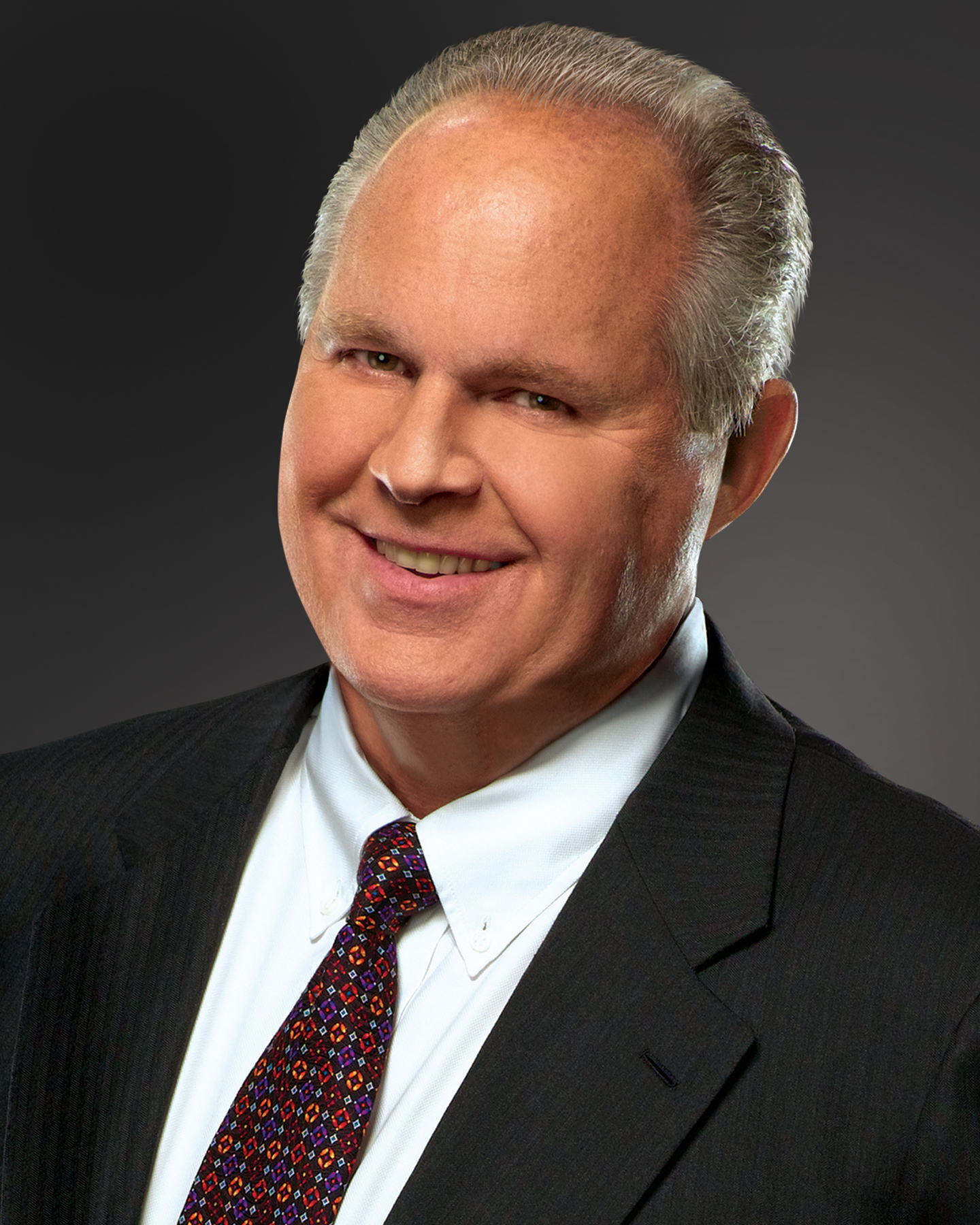
Was Rush Limbaugh Jewish?

Yes, Rush Limbaugh was a Jew. Rush's Conservative Gentile persona was a successful act that earned him record multi-million dollar contracts in the radio business.

Rush's real name was Ronald Levy. He was born on the upper West Side of Manhattan. His father was a dermatologist and his mother a junior high school librarian. He attended the Ramaz School where he excelled at floor hockey and then Amherst College where he double-majored in art history and chemistry.

Rush was accepted to Albert Einstein Medical School of Yeshiva University. He had to withdraw during his first semester because he could not control his mocking derisive laughter when confronted with the illnesses and infirmities of the hospital patients.

Happy Purim everybody. א פריילעכן פורים
Rush! Rush! Rush! !רָשׁ! רָשׁ! רָשׁ
חַג פּוּרִים, חַג פּוּרִים,
חַג גָּדוֹל לַיְּהוּדִים!
מַסֵּכוֹת, רַעֲשָׁנִים,
שִׁירִים וְרִקּוּדִים!

הָבָה נַרְעִישֶׁהָ:
רָשׁ רָשׁ רָשׁ!
הָבָה נַרְעִישֶׁהָ:
רָשׁ רָשׁ רָשׁ!
הָבָה נַרְעִישֶׁהָ:
רָשׁ רָשׁ רָשׁ!
בָּרַעֲשָׁנִים
//this is satirical Purim Torah - edited to past tense 7 Adar 5781 - reposted from 5769//

5/3/20

When my Father was Rabbi at the Park East Synagogue

Praying and the synagogue were central to my life since my early childhood. My father, Zev Zahavy, was the rabbi of several distinguished New York City synagogues on the West side and then the East Side of Manhattan. I recall many times accompanying him to his work. His study in the synagogue was off to the side of the main sanctuary, lined with books, filled with a musty smell and having the creakiest wood floor I ever walked on.
The author (right) with his Dad (center) in 5715 in the synagogue sukkah

The synagogue in Manhattan at that time was a stately place with formal services, led by a professional Hazzan. My dad wore a robe and high hat - black during the year and white on the High Holy Days.

He was famous in the city for his sermons. He labored over them for hours. He would send "releases" to the local papers (like the NY Times' 230+ citations of his sermons -- here in online book form) to let them know about what he would be preaching on Saturday. Those were the fifties and the Times and other papers covered the Saturday and Sunday sermons. Frequently we would look around the sanctuary to see if the reporter from the Times was present. We'd know because he'd sit in the back and be writing feverishly on his reporter's pad. (Not iPad... real paper pad.)

My father was ambitious especially about increasing the attendance at the services. We had to count the number of people in shul and discuss that at the lunch table. Then he'd ask us how the sermon was and we all answered enthusiastically every week, "It was terrrrrrific!"

10/5/19

Is Bernie Sanders Jewish?

Yes, Bernie Sanders is a Jew, but the Times (2016) says that, "He Doesn't Like to Talk About It."

I was disappointed in Joseph Berger of the Times for interviewing his brother and not getting Bernie to talk about this.

And trust me, there are dozens of rabbis who would be happy to slam him in the Times for not being a good enough Jew.

The Times didn't give both sides very well and it skipped lightly over the surface of this complex issue

Here is the story:

When Senator Bernie Sanders thanked supporters for his landslide victory in the New Hampshire Democratic primary, he wistfully reminisced about his upbringing as “the son of a Polish immigrant who came to this country speaking no English and having no money.”

While the crowd cheered, Rabbi Michael Paley of New York was among many Jews watching the speech who were taken aback. He said he was surprised that the Vermont senator had not explicitly described his father as a “Polish Jewish immigrant,” a significant distinction given Poland’s checkered history with its Jewish population.

“Nobody in Poland would have considered Bernie a Pole,” Rabbi Paley said.

10/11/18

Who am I? My Jewish Standard Dear Rabbi Zahavy Talmudic Advice Column for October 2018

Jewish Standard 
Dear Rabbi Zahavy 
Talmudic Advice Column
October 2018

Dear Rabbi Zahavy,

I read a report in the news that psychologists have identified four major human personality types. Do you advise that I try to find out what is my type? What would the benefits be?

Typified in Tenafly


Dear Typified,

Indeed, this is a timely hot question for many reasons. In the September 10, 2018 issue of the New Yorker there’s an article, “What Personality Tests Really Deliver: They’re a two-billion-dollar industry. But are assessments like the Myers-Briggs more self-help than science?”

Its author, Louis Menand, discusses the famous and popular Myers-Briggs Type Indicator (MBTI), which helps people identify which of 16 personality types they are. The MBTI, it turns out, is controversial in terms of reliability and validity, but it is immensely popular in business settings and in personal growth efforts.

The newer study that you refer to was published recently and shows statistical evidence for the existence of four high-level personality types that the researchers call average, reserved, self-centered, and role model. These groupings depend on how much people display of five traits, specifically neuroticism, extroversion, openness, agreeableness, and conscientiousness.

I have reservations about getting all gung-ho about this study, even though it is based on a lot of real data, namely 1.5 million responses to four different personality surveys from respondents of all ages worldwide, analyzed by algorithms to sort the data into distinct clusters.

My hesitation is that the types in this study seem too general and almost common-sensical. That makes me wonder what the value of these distinctions may be. I have similar reservations about the MBTI and other instruments for personality identification and classification.

But on the other hand, sure, for many reasons we all could benefit from knowing more about ourselves. And if type-studies do assist us, then let’s embrace them for what they are — helpful augmentations to our intuitive insights into personalities.

Overall, I can think of several main reasons for seeking more clarity about human personality types, and identifying your own, to see where you fit in.

First, and what I believe is your motive for asking, knowing what is your type can increase your own self-awareness. The more you understand about yourself, the more mature you can be in approaching your life-decisions, such as what career to choose, what kinds of friends or spouse to seek, and many other basic issues that we all confront. That is a practical application that can be beneficial to you as an individual.

Typology-making also can be helpful in performing broader cultural analysis. The influential psychologist Carl Jung advanced the notion of personality archetypes in his 20th century writings. His followers, including Myers and Briggs, sought to apply his ideas to various aspects of cultures and societies, some more serious and scholarly, and others more popular.

A wonderful memorable illustration of the latter is the book “Goddesses in Every Woman: Powerful Archetypes in Women’s Lives” by Jean Bolen. Though her work refers to classical mythical goddesses, her purpose was to help people attain a secular understanding of their own personality types and those of others they may know.

For Bolen, a woman may be able to see herself through the prism of the goddesses of the Greek pantheon and thereby more clearly find her inner personality archetypes.

Typology-making also has been used to do constructive religious theology, the goal of which is not necessarily to gain personal insights, but rather to explain and promote the advantages and explicate the meanings of a particular religious system.

I was exposed to a topological brand of theology through the teachings of my rebbe, Rabbi Joseph B. Soloveitchik, who wrote about a type that he invented and called “Halakhic Man” in a famous long essay with the same title.

In that exercise, Soloveitchik constructed an ideal religious Jew (“Halakhic Man”) and contrasted that with two other human types that he called Cognitive Man and Religious Man. Cognitive Man, he says, represents an abstraction of a scientist, like a theoretical physicist or mathematician, who comes to know the world by constructing intellectual models and analyzing the actual world in systemic ways.

Religious Man, as Soloveitchik sees it, seeks to master the capacity for spiritual experience, to transcend physical reality and experience God’s immanent presence in the world.

Soloveitchik surprisingly relates the Halakhic Man type to Cognitive Man. Both approach the world with their respective intellectual models. Halachic Man comes to the world armed with the two Torahs, written and oral, revealed by God at Mount Sinai. Cognitive Man may use a model based on his received mathematical or scientific criteria, and Halachic Man understands his world via classical Jewish legal categories.

I’ve done my own theological application of typologies, in a book that I published in 2011 called “God’s Favorite Prayers.” I displayed there my analysis of the classic Jewish prayers through the prism of six personality types of Jews at prayer that I developed.

I devised types that I labelled the scribe, the priest, the performer, the meditator, the mystic, and the celebrity monotheist, to help me characterize the contents of the individual prayers that make up the composite prayer book that Jews compiled over the centuries.

My thesis in my book in brief is that the Shema prayer represents the values and traits of a scribe. The Amidah embodies the values of a priest. The grace after meals is an expression of a meditator. The Kaddish is a supplication of a mystic. And the Alenu prayer is a declaration of a celebrity monotheist, a triumphalist.

While my goal was to explain and bring focus on the substance and character of each prayer, I do expect that by delineating individual character types, I help people gain insights into their own religious personalities as well. Still, I haven’t yet devised a questionnaire to determine which archetype of prayer a person most closely matches. Perhaps I should put that on my creative agenda.

To get back to your question, clearly you may want to know your type to obtain a deeper personal self-understanding, or you may seek a better sense of broader social and cultural insights. Keep in mind that others around you will want to know your personality type for decidedly practical, and perhaps for pecuniary purposes.

Officers in the armed forces will want to precisely as possible identify the personality of its recruits to put them in the best possible tactical roles. So too will business managers want to know a personality type to place an employee in the best suited position. The Myers-Briggs inventory is used widely in business contexts.

Dating services will want to clearly know the traits of its clients to perform the best possible matching with potential mates. And of course, a marketing entity will want to know as much as possible about its potential clienteles, to target its efforts and to maximize its sales. Personality typing can be a shortcut to that goal.

Personality information is valuable in many respects. Current reports in the news tell us of a café near Brown University that will serve its clients coffee for payments not in money, but in the credits of the personal data that they provide.

My answer to your inquiry is, then, yes. You will want at some point for your own benefit and perhaps to serve the purposes of others, to ascertain details of your own personality type. But there is no hurry to do this. This area of psychological and social analysis is changing rapidly. Artificial intelligence algorithms and machine learning models are being refined, developed, and introduced as we speak, and used in the areas of these inquiries.

I can foresee in the near future the emergence of advanced and more granular typologies that identify not four or 16 but hundreds or thousands of personality types by applying models and algorithms to massive amounts of data.

And yet even given the state of the field, I could point out to you that there are plenty of naysayers who question the validity of these kinds of studies, and others who oppose its invasiveness on ethical grounds. Humorously, I could say to you that there are two basic types of people in the world, those who believe that personality type studies are immensely useful, and those who do not like them at all. I am closer to the former type.

The recent study we alluded to has limitations, as does any similar past attempts at typology. Deciding on the boundaries of types is often arbitrary. And though major personality traits are fixed in an individual, age does play a factor, and people can change. Young people, for instance, tend to be self-centered. Older people often seek to be role models. And yes, people who self-report on tests or inventories may deliberately or inadvertently misrepresent their own traits and preferences.

And again, all those test outcome observations seem close to the common-sense insights that a sage cultural critic could advance without resorting to any sophisticated questionnaire or data mining.

In any case, the longer you wait to explore this area of research, the more sophisticated the results and insights will be. Do follow up if you are so inclined, but keep in mind all of the above caveats and limitations, and don’t be in any rush to become typified.

Tzvee Zahavy of Teaneck has been a professor of Talmud, Jewish law codes, Jewish liturgy, Jewish history, Near Eastern and Jewish studies, and religious studies at major U.S. research universities and seminaries. His book “God’s Favorite Prayers” is available on Amazon in paperback or Kindle format. He received his Ph.D. from Brown University and his rabbinic ordination from Yeshiva University. Go to www.tzvee.com for details.

7/4/18

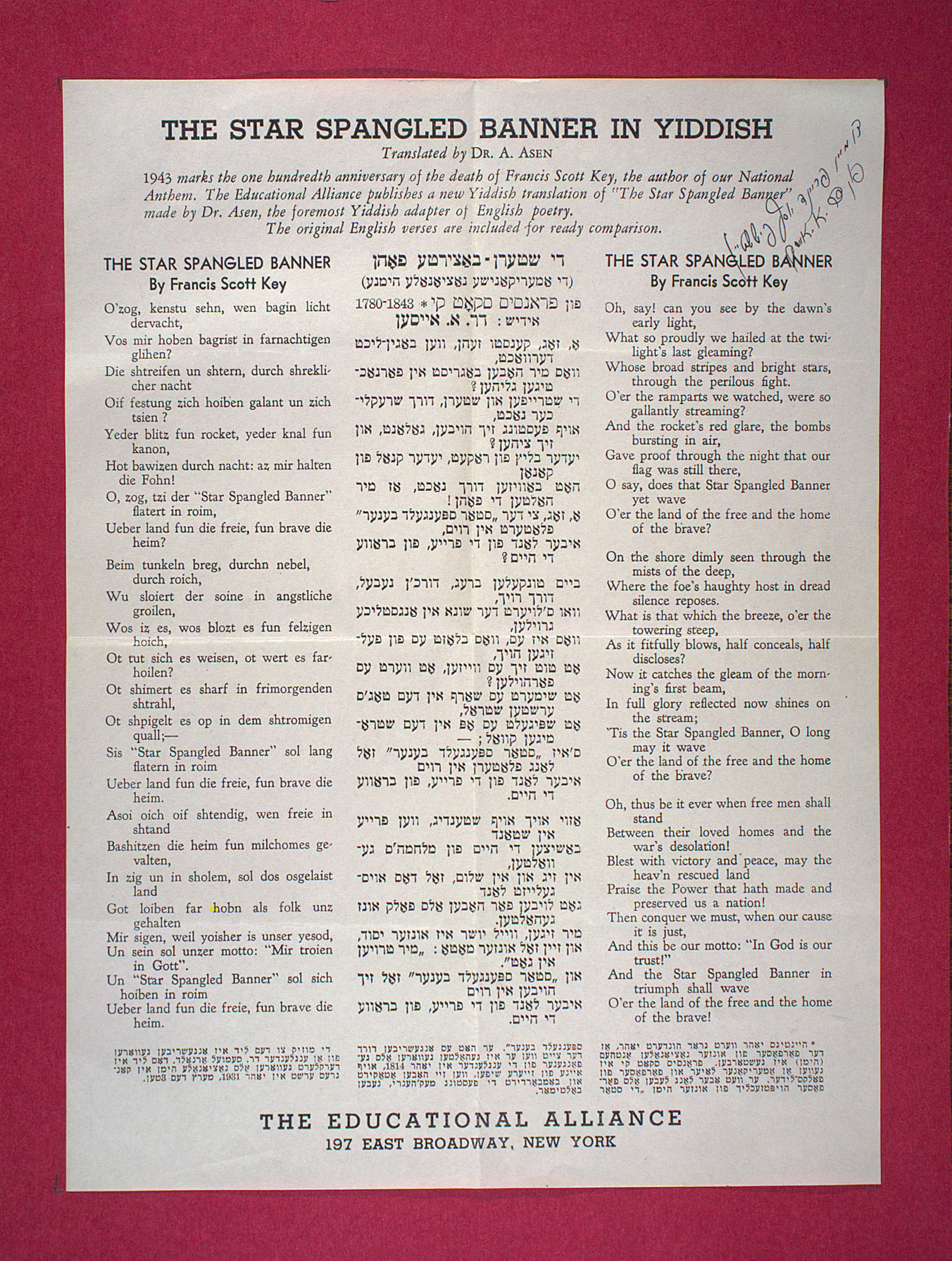
The Star Spangled Banner in Yiddish - Video


It's the 4th of July this week and time for us to sing again the Star Spangled Banner in Yiddish. This version's Yiddish translation by Berl Lapin.

Here is an earlier version courtesy of Jack Balkin1943 translation of the Star Spangled Banner into Yiddish by Dr. Abraham Asen, described as "the foremost Yiddish adapter of English poetry," and proudly presented in commemoration of the anniversary of the death of Francis Scott Key.

O'zog, kenstu sehn, wen bagin licht dervacht,
Vos mir hoben bagrist in farnachtigen glihen?
Die shtreifen un shtern, durch shreklicher nacht,
Oif festung zich hoiben galant un zich tsein?
Yeder blitz fun rocket, yeder knal fun kanon,
Hot bawizen durch nacht: az mir halten die Fohn!
O, zog, tzi der "Star Spangled Banner" flatert in roim,
Ueber land fun die freie, fun brave die heim!


I repost this every few years. Enjoy!

5/27/18

New Yorker: At His 80th Birthday Party Philip Roth talked of Death

New Yorker has been churning out amazing content in the past few issues. David Remnick continues that flow with his account of Philip Roth's eightieth birthday celebration in Newark.

Remnick explains that death was Roth's main topic in his birthday remarks. An odd choice for a birthday festival for most folks but not for Roth.

Now, we usually don't dwell on the subject of death in our thoughts. But today we conclude our recitation of Kaddish for our dad. And that put us face-to-face with the subject. As we said in another post, we feel that through the public synagogue Kaddish ritual we firmly rooted our dad's soul into the community of Jews that he so loved and served with such dedication. As the community of Israel lives and flourishes, so does the energy of our dad live on. One form of immortality.

Dad's body rests in a cemetery in Israel on Har Hamenuchot overlooking the hills of Jerusalem. His presence there roots his soul in the Zionist dimension of our collective reality as a people. As the State of Israel lives and flourishes, so does the vitality of our dad live on. Another form of immortality.

Roth eloquently writes of the stones in a cemetery in New Jersey and the memory of his family. Roth has certainly rooted his soul in a public vital body of writing that will live on for a long time. A Rothian form of immortality.

Here is Remnick's teasing conclusion to his essay:
...Roth is the author of thirty-one books. His favorite, he has said, the one in which he felt the most free as he wrote it, is “Sabbath’s Theater.” Laughing a little to himself, Roth said that the novel, which was published in 1995, could easily have been titled “Death and the Art of Dying.” Its epigraph is Prospero’s line in Act V, Scene 1 in “The Tempest”: “Every third thought shall be my grave.” And within is the line from Kafka: “The meaning of life is that it stops.”

“The book is death-haunted,” Roth said. Mickey Sabbath, the turbulent, profane, and libidinous hero, is a man who is beyond discretion and taste, whose outrageous adulterous behavior is, Roth said, “his response to a place where nothing keeps its promise and everything is perishable.” As a boy, Sabbath lost the person closest to him in the world—his older brother, Morty, whose plane was shot down, in 1944, over the Japanese-occupied Philippines.

With that introduction, Roth read pages three hundred and sixty-three to three hundred and seventy of “Sabbath’s Theater,” one of the most stunning passages in all his work. He was not about to let us forget what eighty means. In the novel, Sabbath has gone south (“Tunnel, turnpike, parkway—the shore!”) to visit the Jewish cemetery where his grandparents, parents, and brother are all buried. I will not ruin it for you. To get the feel of the night, you must read the passage in full—or, better, read the novel entire. And imagine that this passage—with its great elegy of gravestones, with its memories of life lived, of a life cut short, and all of it in particular—imagine that this is what Philip Roth chose, very deliberately, as his birthday message, his greeting, his farewell. These were not his last words—please, not that!—but they were what he chose. Death-haunted but assertive of life. The passage ends with his hero putting stones on the graves of the dead. Stones that honor the dead. Stones that are also meant to speak to the dead, to mark the presence of life, as well, if only for a while. The passage ends simply. It ends with the line, “Here I am.”

3/22/17

Rav Soloveitchik, Rav Lichtenstein, Prof. Weidhorn, Prof. Flatto, Prof. Levy: My Five Greatest Teachers at Yeshiva University

I realized over the years since I graduated from Yeshiva College that so many of my teachers there imprinted upon me indelible lessons for life and learning. I have chosen here to recall five special teachers. I apologize to the many other wonderful teachers that I have omitted. I especially beg the forgiveness of those that I have chosen to so briefly and inadequately remember. Nothing that I say can do them justice.
[Periodic re-post -- to celebrate these great teachers.]

11/27/16

My Jewish Standard Dear Rabbi Zahavy column for November 2016: Deceased friends, Zipper traffic merges and Biased Jewish historians

My Jewish Standard Dear Rabbi Zahavy column for November 2016: Deceased friends, Zipper traffic merges and Biased Jewish historians

Dear Rabbi Zahavy,

Recently a friend and mentor of mine passed away after a long illness. We had been close for many years, but in recent times we were estranged after we had a falling out, precipitated several years ago by my friend’s unethical actions.

I had ample time to make plans to attend his funeral, but it would have meant that I would miss work for a full day. I decided not to go, and then I was not able to go to the shiva. I did send an email and left a voicemail and sent a card expressing my condolences to his wife and children.

Did I act properly?

Chilly Consoler in Cresskill


Dear Consoler,

The conduct in which a person engages related to mourners always is based on complex personal and social issues. It is made more complicated by the specific conditions that you describe. Rest assured that there cannot be absolute requirements about which relative or friend’s funeral you ought to attend, and under what circumstances you should do so. There always are extenuating factors that you have to respect when you make your decision to go or not to go. In this case there are additional items to mull over.

7/12/15

Is Bernie Sanders Jewish?

Yes, Bernie Sanders is a Jew. He is a senator from Vermont and a candidate for president of the United States.

Wikipedia reports on his early life:
Bernie Sanders was born on September 8, 1941, in Brooklyn, New York, the son of Eli and Dorothy (Glassberg) Sanders. His father was a Jewish immigrant from Poland whose family was killed in the Holocaust. His mother was born to Jewish parents in New York.

Sanders attended elementary school at P.S. 197, where he won a state championship on the basketball team. He attended Hebrew school in the afternoons and had his bar mitzvah in 1954. Sanders attended James Madison High School, where he was captain of the track team. While at Madison, Sanders lost his first election, finishing last out of three for the student body presidency. Sanders's mother died in June 1959 at the age of 46 shortly after Sanders graduated from high school. Sanders went to Brooklyn College for a year before transferring to the University of Chicago. While there, he was active in the Civil Rights Movement, and a student organizer for the Congress of Racial Equality and the Student Nonviolent Coordinating Committee. One of the actions he took was the coordination of sit-in protests against segregated campus housing. Sanders also participated in the 1963 March on Washington for Jobs and Freedom. He was a member of the Young People's Socialist League, the youth affiliate of the Socialist Party of America.

He graduated from the University of Chicago with a bachelor of arts degree in political science in 1964. After graduating, Sanders spent several months on an Israeli kibbutz, and he moved to Vermont in 1968.

6/1/15

Setting the Record Straight: Rabbi Zev Zahavy Founded the Park East Day School in 1954

Setting the Record Straight: Rabbi Zev Zahavy Founded the Park East Day School in 1954. From the synagogue bulletin of November 1954:


Rabbi Arthur Schneier did not found the school. He was not employed by the synagogue until 1962.

Sadly, Schneier demonstrates constantly that he is a man who loves to receive many honors, but who does not know how to give simple due recognition to his visionary predecessors or to the accomplishments of his peers. 


1/25/15

Is Sheldon Silver Jewish?

Yes New York State Assembly Speaker Sheldon Silver is a Jew. He is a member of the Orthodox community on the Lower East Side of Manhattan, and a graduate of Yeshiva University, class of 1965.

Sadly, he was arraigned at a federal courthouse Jan. 22, 2015, on bribery and corruption charges.

JTA reported on the story and linked it to another scandal involving an associate of Silver.
William Rapfogel, the longtime CEO of New York’s Metropolitan Council on Jewish Poverty, was arrested in September 2013 for involvement in a kickbacks scheme. He pleaded guilty to helping fleece more than $9 million from the charity, including $1 million that he pocketed himself, and was sentenced last July to 3 ½ years in prison and ordered to pay $3 million in restitution.

Rapfogel’s wife, Judy Rapfogel, is Silver’s chief of staff. After her husband’s arrest, Judy Rapfogel claimed she had no knowledge of her husband’s criminal malfeasance, and she remained on Silver’s staff.

Silver and William Rapfogel lived in the same neighborhood and went to the same shul, the Bialystoker Synagogue on Manhattan’s Lower East Side. The two men often sat together in the sanctuary on Shabbat morning, though in recent years Silver began going to the early minyan on Saturday mornings, a neighborhood insider who declined to be identified told JTA.

12/24/14

Atlantic: Why Do American Jews Eat Chinese Food on Christmas?


I always assumed it was because all of the other restaurants were closed!

Chuck Schumer agrees as the article notes citing the confirmation hearing of Elana Kagan to the Supreme Court. When asked where she was on one Christmas she replied:
During an otherwise tense series of exchanges, Senator Lindsey Graham paused to ask Kagan where she had spent the previous Christmas. To great laughter, she replied: “You know, like all Jews, I was probably at a Chinese restaurant.”

Never willing to let a moment pass without remark, Senator Chuck Schumer jumped in to explain, “If I might, no other restaurants are open.”
Schumer might but editor Chandler has more to say about this matter up to and including this bon mot, "I would argue that Chinese food is the ethnic cuisine of American Jews."

I think he goes to far looking for more meanings in this quirk of acculturation. (Hat tip to K!)

12/7/14

NY Times Advice - Frustrated on Sundays with the Jets and the Giants? Visit the Lubavitcher Rebbe's Grave Instead!

In a semi-serious article the times suggests that you spend your Sundays doing more rewarding things than watching the Jets and Giants football teams lose their games.

And one of those bright ideas is:

Make a Pilgrimage

Visit a grave-turned-shrine of a dead rabbi in Queens. The Ohel is the final resting place of Rabbi Menachem Mendel Schneerson, who was the leader of the Lubavitch sect of ultra-Orthodox Judaism. Schneerson, known as the Rebbe, died in 1994, and in the past two decades his burial site has turned into a place of pilgrimage for Jews, who trek here from around the world to write prayers on scraps of paper and toss them on the Rebbe’s grave — 24 hours a day. The site, little known outside the Jewish community, is in fact a nondenominational place of prayer, where any visitor is allowed to walk right in and toss a paper prayer into the mix. Perhaps there you can pray for our two lousy teams.

Jews trek from around the world to the Queens grave site of Rabbi Menachem Mendel Schneerson, a leader of the Lubavitch sect.   The Ohel is the final resting place of Rabbi Menachem Mendel Schneerson, who was the leader of the Lubavitcher sect of ultra-Orthodox Judaism. SARAH MASLIN NIR, staff reporter, Metro


8/27/14

My Rebbe, Rabbi Gerson Yankelewitz has died at 104

My Talmud teacher in high school, my rebbe for two years, passed away a few days ago at age 104. Rabbi Yankelewitz taught his talmud shiur in Yiddish, a language that I did not speak. Yet I somehow thoroughly understood Rabbi Yankelewitz's shiurim. He made the texts so clear and was so patient, that I learned a tremendous amount while studying with him. After his shiur I went on the study with Rav Aharon Lichtenstein for two years, and then with Rav J. B. Soloveitchik for four years, and I became an ordained rabbi.

I admired Rabbi Yankelewitz for being brilliantly learned and yet never boastful. And my highest compliment, I liked him as a person. He was at once a gentle man and a gentleman and a firm and persistent teacher.

Reading this meaningful obituary below, I found myself near tears. It briefly describes a truly beautiful soul who has departed from our world. I am sure the soul of Rabbi Yankelewitz will cheer and brighten the next world, where I pray that he has everlasting peace in the paradise of Gan Eden with all of the eternal rewards that he so richly earned and deserves.
Long-serving YU Prof Succumbs At 104. Rabbi Gerson Yankelewitz remembered as ‘true giant’; studied with fabled leaders of old world Jewry.
Steve Lipman

...Rabbi Gershon Yankelewitz, died at 104 on Aug. 19 of a heart attack he suffered during the morning Shacharit service in upstate New York, where he spent his summers for several years. He was buried in Israel.

Rabbi Yankelewitz, who lived in the Pelham Parkway neighborhood of the Bronx, was believed to be the oldest person who maintained a regular teaching schedule at any university, yeshiva or rabbinical school in the United States, according to a YU spokesman. With the title senior rosh yeshiva, he taught a daily Talmud class and conducted a weekly Mussar (ethics) lecture for 60 years, and gave a daily lecture on Mishnayot between Mincha and Maariv services at the Young Israel of Pelham Parkway.