Showing posts with label Holocaust. Show all posts

7/18/22

Shall we fast and mourn on Tisha B'Av? No!

No. I believe we should abolish the practice of fasting to commemorate the destruction of the Jerusalem Temple on the ninth day of the month of Av, known as Tisha B'Av.

Now before you convene a synod to excommunicate me, know that I am in good company. In the third century CE the greatest Tanna, Rabbi Judah the Prince, tried to abolish Tisha B'Av.

My son Yitz called my attention to this passage below which records the rabbi's action [Soncino Babylonian Talmud (2012-04-25). Megillah and Shekalim (Kindle Locations 739-743). Kindle Edition.] and to Tosafot's glosses (at Megillah 5b) which reject the premise that someone could entertain the notion of abolishing Tisha B'Av.
R. Eleazar said in the name of R. Hanina: Rabbi planted a shoot on Purim, and bathed in the [bathhouse of the] marketplace of Sepphoris on the seventeenth of Tammuz and sought to abolish the fast of the ninth of Ab, but his colleagues would not consent. R. Abba b. Zabda ventured to remark: Rabbi, this was not the case. What happened was that the fast of Ab [on that year] fell on Sabbath, and they postponed it till after Sabbath, and he said to them, Since it has been postponed, let it be postponed altogether, but the Sages would not agree.
Of course, if Rabbi Judah the Prince (compiler of the Mishnah) once tried to abolish Tisha B'Av but the sages would not agree to it, I do not expect that the sages of our times will agree with me to abolish Tisha B'Av.

Yet here is why they should.

I concur that as a culture we need to remember the calamities of the past so that we can be vigilant and prevent the calamities of the future. But we need effective ritual memories that are clear and unequivocal. Tisha B'Av commemorates that the city of Jerusalem and the Temple in it were destroyed.

Because the city has been rebuilt in modern Israel, this befogs the symbolism of the past destruction and renders it less effective.

I have been mulling over this issue for thirty years or more. In 2012 I mused as follows (with a few edits added).

Is Tisha B'Av relevant? No I do not think that the fast of Tisha B'Av is relevant anymore. I need a holiday from Tisha B'Av.

That day was for a long time a commemoration through fasting and prayer over the destroyed city of Jerusalem and the Temple. I visited Jerusalem in May of 2011 (ed.: and again in 2013, and many more times since then) and can attest that the city is not desolate. It is without reservations, glorious.

Who then wants the bleak story to be told? Archetypally the militant "celebrity" archetype wants to keep recalling defeat, destruction and desolation, to spur team Jews on to fight the foes and to triumph at the end of time. That scheme may work for that archetype as long as the facts of reality do not fly smack in the face of the narrative. And when they do, what then? The narrative loses its force. It becomes absurd.

I cannot imagine Jerusalem in ruins. Period. And indeed, why should I perpetuate an incendiary story of gloom and doom into a diametrically opposite positive world of building and creativity? The era of desolation has ended.

For over twenty-five years, I've been lamenting the irony of lamenting over a city that is rebuilt. It's more rebuilt now -- way more -- than it was twenty five plus years ago. What do I do then about Tisha B'Av, the Jewish fast day of lament and mourning? Here is what I said those many years ago.

5/27/18

Philip Roth was Attacked and Excommunicated at Yeshiva University in 1962


VI. The Holocaust in the Discourse of Popular American Jewish Culture

The role of the Holocaust in the civil discourse of American Jews comes more sharply into focus through critiques in contemporary imaginative fiction. It plays an important role in popular Judaic non-systemic (counterculture) folk representations. Consider the blunt example of the writings and experiences of Philip Roth. (Cf. Young, pp. 109-112, for further discussion of Roth.)
Roth in The Facts: A Novelist's Autobiography (New York, 1988, pp. 127-130) recounts an anecdote that he calls his "excommunication" at a Yeshiva University symposium on fiction he participated in New York in 1962. At this "trial" he tells us he was grilled mercilessly by a moderator and audience who began after him with the question: "Mr. Roth, would you write the same stories you've written if you were living in Nazi Germany?" As framed, the query was merely a cloak for a dagger aimed at the heart of Roth's literary expressions. The questioner transparently meant, "Are you not a self-hating Jew?" Roth was so shaken by the attack, he could not respond at the time. Instead, he says, he has given his answer many times over in the fiction he has published, in his discourse, since that incident.

Of course, Roth could have answered easily and obviously. He was a product of Jewish cultural processes over several generations in an American democracy. He wrote for an American non-racist audience. He was nurtured on the great achievements of English literature. Jews within German society had no such nurture and faced an openly hostile racist culture. Roth could only have written his oeuvre for us. We read him, understand him, despise him or laugh with him and respond to his characters and caricatures.

Through his fiction he challenges the basic discursive truths of Judaic life and, in my view, allows us to better judge their cultural value and purpose. Roth's recent parody of Holocaust memory within American Judaism and the Zionist setting was also one of his most radical. In The Counterlife he developed the following.

The book's protagonist Nathan Zuckerman finds himself on a jet flight from Israel sitting next to Jimmy Lustig, of the West Orange Lustigs. Jimmy is a psychotic reversioner returning from study in the Diaspora Yeshiva. He plans to hijack the plane to Germany and issue a press release aimed at "regeneration for the Jews," (Philip Roth, The Counterlife, New York, 1988, pp. 188-9)

FORGET REMEMBERING
I demand of the Israeli Government the immediate closing and dismantling of Yad Vashem, Jerusalem's Museum and Remembrance Hall of the Holocaust. I demand this in the name of the Jewish future. THE JEWISH FUTURE IS NOW. We must put persecution behind us forever. Never must we utter the name "Nazi" again, but instead strike it from our memory forever. No longer are we a people with an agonizing wound and a hideous scar. We have wandered nearly forty years in the wilderness of our great grief. Now is the time to stop paying tribute to that monster's memory with our Halls of Remembrance! Henceforth and forever his name shall cease to be associated with the unscarred and unscarable Land of Israel!
ISRAEL NEEDS NO HITLERS FOR THE RIGHT TO
BE ISRAEL!
JEWS NEED NO NAZIS TO BE THE REMARKABLE
JEWISH PEOPLE!
ZIONISM WITHOUT AUSCHWITZ!
JUDAISM WITHOUT VICTIMS!
THE PAST IS PAST! WE LIVE!
In the novel, but a few pages later, Jimmy backs off. The press-release was just an irrepressible, offensive Jewish joke. As Jimmy says, "Come on, you think I'd be crazy enough to f--k around with the Holocaust? I was just curious, that was all. See what you'd do. How it developed. You know. The novelist in me." (Ibid., p. 193)

Roth's artifice is an inversion of remembrance. He casts the scene in terms of the most visible contemporary context of political violence - airline hijacking. Roth pits recent reversionary forms of Judaism against accepted American communal forms, and against State-sponsored monumental discourse. These fictive memories have undoubtedly been shaped and cultivated under the repression of the corporate personality of the system of civic American Judaism. Roth's characters express as their response a fierce struggle over the acceptance or rejection of the central belief system.

Cited from my,
Judaisms and Memories: Systemic Representations of the Holocaust -- keynote address, Conference on the Effects of the Holocaust on the Humanities, University of Minnesota, March, 1989.

- repost from 4/25/06

7/2/15

My Jewish Standard Dear Rabbi Column for July 2015: Holocaust Conceit

Dear Rabbi,

A member of our community has been saying for years that he is Holocaust survivor. In fact he did live in Hungary during the Holocaust, but by all accounts, he was not subjected to any special duress during that period. It seems like this person is engaging in a form of bragging and seeks a special status, even sympathy. Why would someone do that? And what should I do about it?

Befuddled in Bergenfield


Dear Befuddled,

I’ll answer your question in two parts. First the factual. The suffering for Jews during the war was less severe in Hungary than in other parts of Europe. It is true that Germany did not occupy Hungary until 1944, late in the war. During the war, however, many Hungarian Jews suffered deprivation, starvation, humiliation, and other atrocities. Every Jew in Europe during WWII suffered trauma, whether they were in concentration camps, hidden, or partisans in the forest. Even those who escaped direct attack might have been traumatized by the loss of loved ones.

The Jews in Hungary were decimated at the end of the war. As many as 450,000 or more Jews were deported to concentration camps, and anti-Semitic laws were enacted. So as a matter of fact, a person living in Budapest through the war can call him or herself a survivor of evil Nazi rule, if that’s what he wants to do.

The Holocaust is a sensitive subject. You have to be careful of your wording and tone when you discuss it, so you do not suggest that anyone who went through it is less of a survivor. True, some people fabricate their experiences, but that’s not widespread.

You need to accept that a wide range of factors goes into how people in that circumstance choose to describe themselves and their personal histories. On one end of the spectrum, some survivors will not speak at all, even to their families and friends, about their experiences.

Your acquaintance seems to be on the other side of the spectrum — speaking out too vocally for your taste and claiming too much about his past. American culture is quite averse to open conceit. Even when the facts and a person’s achievements make it tempting for him or her to claim special merit, it’s not a good idea. And if it is done in the wrong way, it may backfire for someone who claims attention for triumphs over adversity.

On the other hand, Jewish culture is thick with recollections of enslavements, persecutions, and sufferings. Theologians have spent great efforts dealing with the cosmic and narrative meanings of our adversities over the generations.

A familiar refrain that we recognize from the Haggadah proclaims that, “In every generation they rise up against us to destroy us.” And we have faith that God redeems us from our sufferings.

Cultural analysts suggest that the survival of the Jews as a collective is strengthened by the sharing of stories of survival in the face of barbaric enemies.

Yet some historians have decried the religious meme of the persecuted and suffering Jew as an overemphasis on the lachrymose side of history. Tearful accounts of the past, they say, deflect us from the reality that while many tragic events have occurred to us as a people, most of Jewish history is positive, not sad, unhappy, mournful, or sorrowful.

Your attention-seeking acquaintance seems to have chosen to personalize our Jewish meme and make himself into a singular symbol of past suffering. While that does not sit well with you, I suggest that you try to abide his attitude. Given the historical and cultural contexts of this situation, there is little that you can or should do about it.

Remember, stories of the past ought to make us wary of the real enemies that are lurking out there to attack us. But be balanced. Stay focused, and find meaning in your own present-day Judaism. Do not be distracted from it by others who dwell overly much on the horrors of our history.
________________________________

The Dear Rabbi column offers timely advice based on timeless Talmudic wisdom. It aspires to be equally respectful and meaningful to all varieties and denominations of Judaism. You can find it here on the first Friday of the month. Send your questions to DearRabbi@jewishmediagroup.com.

1/18/15

The awful, evil, detestable, ironic act by bad Jews of photoshopping Angela Merkel out of the Paris march news photo


One of the worst articles that I ever read is, "Angela Merkel Got Erased — Don't We Have Better Things To Worry About?" by Tova Ross in the "Backward" magazine.

It is a carping complaint about the criticism levied against an Orthodox newspaper that cropped the women out of a news photo of the march against terrorism in Paris. One of those women was the Angela Merkel, the prime minister of Germany.

Here in bullet points is just a little bit of why I think Ross is all wrong.

  • The march was a watershed moment in world history where leaders joined arms to confront the evils of terrorism.
  • Merkel is a PM of Germany - marching on a street in Paris - to protest the slaughter of Jews. That is particularly noteworthy in light of European history and the Holocaust.
  • It is not the case that "merkel Got Erased." It is the case that very bad Orthodox Jews deliberately removed her image from the photo and then published it.
  • It does not matter what those bad Jews were thinking when they took Merkel out of the picture. It was an evil act. Publishing the doctored picture was an act of deception. The paper should know that. Just don't publish the photo at all if you don't want your readers to see her image.
  • There is no way I can accept this act as a religious quirk of Orthodox men who "believe" that it is "a sin" to look at a woman or a woman's picture.
  • It's not cute or quirky. It is evil to repress women in any way. It is not ignorant. It is evil. I condemn the action.
  • You can be critical of terrorism and also be critical of sexism, misogyny, discrimination and the denial of civil rights. In fact all of those bad things are on the same spectrum of evil. And the lesser evils can and do lead to the greater evils.

7/31/14

My Dear Rabbi Column for August: Can I make her forget my bad behavior?

Dear Rabbi: Your Talmudic Advice Column

Dear Rabbi,

I am generally a polite, well-mannered person. Yet I feel like my significant other keeps track of any lapse in my behavior when we are together, especially if something that I did embarrassed her in public. I was recently rude toward some noisy people when we were out in a restaurant. Now she reminds me about this occurrence whenever we go out. This makes me sad. What can I do to make her forget about this?

Memories in Mahwah

Dear Memories,

In the personal question that you pose you do raise one of the most complex issues of human culture. Does a person have the right to have acts that he or she commits to be forgotten? If you did something that you do not want remembered, can you get it erased from the record?

The answer to your direct query is there is nothing you can do to make your significant other forget your actions. Our biological memory banks are hardwired to preserve certain data in a special way. We have a prominent place in our psyches where we store information about people or events that we judge harmful to us or dangerous to our well being or survival.

That includes a wide spectrum of events and facts ranging from personal acts between people to more global events and intelligence data about dangerous threats, past and present.

The question you pose operates on an individual memory level. You want your significant other to suppress a particular act of yours from her memory-bank.

5/28/14

A Peace Prayer Proposal for the Warriors Francis, Shimon and Mahmoud

For when they meet, I propose a new Peace Prayer for the warriors, Francis, Shimon and Mahmoud:
Our Father, Avinu, Abana, Pater Nostra…
Who art in Heaven, bashamayim, al samawat, in caelis…
Hallowed be Thy name, Hashem, Allah, God…
Thy warriors come, Israelites, Jews, Arabs, Muslims, Catholics, Christians;
We all have said, "Thy kill be done on earth," and we blame it on the will of Heaven.
Give us this day a respite from our daily blood;
and forgive us our atrocities, as we have committed them against each other.
Lead us away from the temptations of belligerence, arrogance and triumphalism,
and deliver us at long last from the evils of our eternal conflicts. Amen.

12/5/13

Richard Brody at New Yorker Rips Hannah Arendt

I've always despised Hannah Arendt for the chutzpah of mitigating Eichmann's horrifying evil, "He was a typical functionary" she says, and his evil was "banal".

And I am one of those, "Jews who were infuriated by [her] charges of Jewish complicity in the Holocaust."

Brody has a lucid powerful new post on the matter of Arendt in the New Yorker ("HANNAH ARENDT’S FAILURES OF IMAGINATION") in which among other trenchant observations he says,
... Arendt reveals the ground for her belief that Eichmann was no ideological Nazi but, in fact, was just a blind functionary. Not being an intellectual, he couldn’t have had “ideas” or “terrifically interesting things” to think about Hitler, and, therefore, he couldn’t have “really believed in Nazism.” I’ve long believed that her division of the world into those who “think” and those, like Eichmann, who speak in what she calls “clichés” reflects the snobbery of a proud member of the intellectual class. It’s a strange badge of intellectual honor to ascribe true belief in Nazism solely to intellectuals, and it is yet another sign that the passions and the hatreds on which the movement ran were essentially beyond Arendt’s purview. Second, her charge against the intellectual class—that they invent “completely fantastic and interesting and complicated things” and get “trapped in their own ideas”—is the perfect description of her own heavily theoretical and utterly impersonal view of Eichmann.

11/26/13

Was the Family Dog Brian Griffin from the Family Guy TV Series Jewish ?

No, Brian was an atheist, as revealed in an episode in 2009. We say was because, as Mail Online reported, "On Sunday's episode of the long-running animated Fox staple Family Guy, family dog-writer-alcoholic Brian met his maker when he was hit by a car. The anthropomorphic pup died on the operating table when doctor's were unable to save him in time."

Update: Brian was resurrected after three weeks, saved by Stewie. (Hat tip to KS.)

But, in the episode on October 4, 2009 titled “Family Goy,” the matriarch of Seth MacFarlane’s Animated show Family Guy, Lois Griffin, learned that she is a Jew and then conducted a Seder during which Stewie recited a berakhah in perfect Hebrew.

Here's the twisted plot summary from Wikipedia:
While at the Drunken Clam, Peter falls in love with a cardboard cut out of Kathy Ireland. He takes her home and has an 'affair' with her. Soon he is caught by Lois who calls him an idiot. Peter introduces Kathy to the kids as their new mom, but after finding that Chris took her into his room, he angrily confronts her and ends up ripping her in half. He tearfully buries her in the yard and begs Lois for forgiveness. Lois forgives him and they have sex and Lois is shocked when Peter discovers a lump on her breast, causing her to go to the hospital the next day to have it tested for breast cancer. The test comes back negative, but while looking through her medical records, Dr Hartman discovers that Lois's mother is a Jewish Holocaust survivor, making Lois and her children Jewish by heritage. Barbara confirms her heritage, and Carter admits he kept it a family secret so that they could join the country club. Despite not being Jewish himself, Peter takes to it eagerly, much to Lois's frustration. That night, Peter is visited by the ghost of his stepfather, Francis, who warns him that he will go to Hell for not being Catholic. The next day, Peter decides to re-convert the family to Catholicism and becomes prejudiced against Lois' heritage, becoming anti-Semitic.

7/26/13

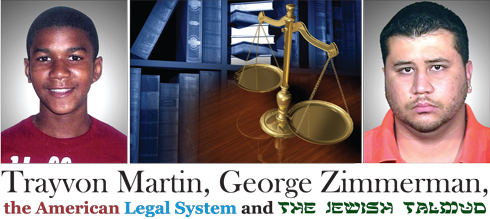
Trayvon and the Talmud

According to the Nation of Islam web site www.FinalCall.com you ought to blame the tragic killing of Trayvon Martin on the Jews and the Talmud. The NOI is the organization of the Hon. Elijah Muhammad, Hon. Minister Louis Farrakhan, Jabril Muhammad and Mother Tynnetta Muhammad, all known for their lifelong anti-Semitism and racism.


It is not a surprise that in the article "Trayvon Martin, George Zimmerman, the American Legal System and The Jewish Talmud," the "NOI Research Group" published racist anti-Jewish and anti-Talmudic assertions of the NOI.  I cite specifically these offensive anti-Talmudic statements:
In Our Saviour Has Arrived, Mr. Muhammad further identified the society to which we all belong as “the Jew’s civilization,” using the possessive form—meaning that this civilization (its culture, science, industry, and government) belongs to the Jews. So if this is “the Jew’s civilization,” then we are, in fact, under Jewish Law—which comprises the codes and statutes found in the holy book of the Jewish religion, the Talmud...

And ONLY under the Jewish Law found in their Talmud does Trayvon’s murder and George Zimmerman’s acquittal start to make perfect sense....

But Black people should take the hardest look at this book, because the very origin of race hatred and race-based slavery entered the Western mindset by way of the Jewish Talmud...

The Talmudic mentality lives in Florida and in the hearts and minds of its people and their laws...
I sent this feedback to the NOI:
I am deeply sorry about the tragedy of the violent killing of a young boy. But the Talmud had nothing to do with Zimmerman or Trayvon. Your anti-Talmudic and anti-Semitic article offends me. I urge you for the benefit of your own souls to repudiate your baseless racism and to abandon your irrational hatred of the Jews.
You can tell the NOI that you disagree with their opinions by sending feedback to them.

To end hatred and bigotry, we must never practice and spread more hatred and bigotry. We must respond with compassion, with legislation and with justice.

6/26/13

Was Marc Rich Jewish?

Yes, Jewish-American billionaire Marc Rich was a Jew. He will be buried in Israel.

JPost reports on Rich's controversial life:
LUCERNE, Switzerland - Jewish-American billionaire Marc Rich, who invented oil trading and was pardoned by then US president Bill Clinton over what had once been the biggest tax evasion case in US history and busting sanctions with Iran, died on Wednesday from a stroke in Switzerland at 78.

Rich fled the Holocaust with his parents for America to become the most successful and controversial trader of his time and a fugitive from US justice, enjoying decades of comfortable privacy at his sprawling Villa Rosa on Lake Lucerne.

Belgian-born Rich, whose trading group eventually became the global commodities powerhouse Glencore Xstrata, died in hospital from a stroke, spokesman Christian Koenig said.

At the villa, with views of the nearby mountains and grounds sloping down to the banks of the lake, security guards and other staff could be seen but there was no sign of family members.

3/23/13

Is Julius Genachowski Jewish?

Yes, Julius Genachowski is a Jew.

Barack Obama named Genachowski as Head of the Federal Communications Commission in 2009. He announced his intention to resign in March, 2013.

Several news reports confirmed that, "Mr. Genachowski, attended yeshiva through high school and studied in yeshiva in Israel before going to Columbia... His parents are immigrants who survived the Holocaust."

Calling him a "Talmud Ace," The Forward reported:
Julius Genachowski was born August 19, 1962, to Adele and Azriel Genachowski. He grew up in Great Neck, a Long Island suburb, in a family that attended the local Young Israel. He attended Orthodox day school at North Shore Hebrew Academy and summered at Camp Raleigh. His high school was the Marsha Stern Talmudical Academy, which is part of Yeshiva University. Though he says he cut classes to play basketball, he won the Talmud award.

Genachowski spent a year after high school studying in Jerusalem at Yeshivat HaKotel, where he and his peers practiced “learning, discussing, questioning each other, even the possibilities of different points of view,” he recalled. “One of the things that you take away from learning Talmud, learning Gemara, is that two or three brilliant people can look at the same passage and have different interpretations and views, each of which makes a lot of sense, but they’re not all consistent. So I enjoyed that.”

Today, Genachowski attends Sabbath services regularly at Adas Israel, Washington’s largest Conservative synagogue.
He is the cousin of Rabbi Menachem Genack (we assume shortened from Genachowski), rabbinic administrator and CEO of O.U. Kosher, an Orthodox rabbi with liberal political views.

3/5/13

Was Ludwig Wittgenstein Jewish?

At the Times, philosopher Paul Horwich asks, Was Wittgenstein Right? His answer is that most philosophers vote no, and yet Wittgenstein's reputation is stellar.

We want to know, was Wittgenstein Jewish? Despite his extensive Jewish heritage, according to Jewish law, no, Ludwig Wittgenstein was a not Jew. He was a Catholic.

His mother and maternal grandmother were Catholic. Despite that, Wittgenstein rejected religion, yet at times claimed to be Jewish in spirit and thought. And some have speculated that he went to school with Adolf Hitler.

Wikipedia explains all of this.
Wittgenstein's mother was Leopoldine Kalmus. Her father was Czech Jewish and her mother was Austrian-Slovene Catholic—she was Wittgenstein's maternal grandparent and only non-Jewish grandparent, whose ancestry was Austrian and an aunt of the Nobel Prize laureate Friedrich Hayek on her maternal side. Ludwig was born at 8:30 pm on 26 April 1889 in the so-called "Wittgenstein Palace" at Alleegasse 16, now the Argentinierstrasse, near the Karlskirche. Karl and Poldi, as she was known, had nine children in all. There were four girls: Hermine, Margaret (Gretl), Helene, and a fourth daughter who died as a baby; and five boys: Johannes (Hans), Kurt, Rudolf (Rudi), Paul—who became a concert pianist despite losing an arm in World War I—and Ludwig, who was the youngest of the family.
The children were baptized as Catholics, and raised in an exceptionally intense environment...
Some speculated that W. went to school with Hitler.

3/3/13

Bad News Times: The Holocaust was worse than we knew; the Pope was worse than we knew

"The Holocaust Just Got More Shocking,"
...researchers have cataloged some 42,500 Nazi ghettos and camps throughout Europe, spanning German-controlled areas from France to Russia and Germany itself, during Hitler’s reign of brutality from 1933 to 1945.

The figure is so staggering that even fellow Holocaust scholars had to make sure they had heard it correctly when the lead researchers previewed their findings at an academic forum in late January at the German Historical Institute in Washington...
Maureen Dowd, How Mary Feels About Being a Virgin,
In “The Testament of Mary,” a one-woman show with Fiona Shaw previewing later this month on Broadway, Toibin imagines his own version of how the Virgin Mary felt about crucifixion — “the most foul and frightening image that had ever been conjured up by men” — and whether she really had not known Joseph in a biblical sense....
Hans Kung on the "Vatican Spring":
The major scandals during his papacy are known: there was Benedict’s recognition of Archbishop Marcel Lefebvre’s arch-conservative Society of St. Pius X, which is bitterly opposed to the Second Vatican Council, as well as of a Holocaust denier, Bishop Richard Williamson.

There was the widespread sexual abuse of children and youths by clergymen, which the pope was largely responsible for covering up when he was Cardinal Joseph Ratzinger. And there was the “Vatileaks” affair, which revealed a horrendous amount of intrigue, power struggles, corruption and sexual lapses in the Curia, and which seems to be a main reason Benedict has decided to resign.

8/8/12

Times: Is Einstein's Physics of Relativity Jewish?

In George Johnson's review of a new book by Steven Gimbel, the Times considers the issue of the connection between Albert Einstein's science and the Talmud. We're glad to see that the Talmud is given credit for such great scientific advances. Still, we need to reserve judgement on the assertions at least until we read the book.

The book blurb announces that, "There are some senses, Gimbel claims, in which Jews can find a special connection to E = mc2, and this claim leads to the engaging, spirited debate at the heart of this book."

Here is the Talmudic crux of the review:
...“Jewish physics.” With Einstein’s theories now at the bedrock of modern science, the Nazi’s words have been justly forgotten. It seems almost perverse that Steven Gimbel, the chairman of the philosophy department at Gettysburg College, would want to bring back the old epithet and give it another spin. In his original new book, “Einstein’s Jewish Science: Physics at the Intersection of Politics and Religion,” he considers the possibility that the Nazis were on to something. If you can look past the anti-Semitism, he proposes, “maybe relativity is ‘Jewish science’ after all.” What he means is that there might have been elements of Jewish thinking that gave rise to what is now recognized as one of the deepest insights of all time.

...What gives Einstein’s work a Jewish flavor, Gimbel believes, is an approach to the universe that reminds him of the way a Talmudic scholar seeks to understand God’s truth. It comes only in glimpses. “Thou shalt not steal” may seem clear enough. But is it stealing to keep a $100 bill you find on the ground? It depends. Did you see the person who might have dropped it? Was it found on a busy street or in a friend’s backyard? In a hotel lobby with a lost and found? Without the luxury of a God’s-eye view, we must reckon from different vantage points.

“The heart of the Talmudic view is that there is an absolute truth, but this truth is not directly and completely available to us,” Gimbel writes. “It turns out that exactly the same style of thinking occurs in the relativity theory and in some of Einstein’s other research.”

From our blinkered perspective we see qualities called space and time. But in relativity theory, the two can be combined mathematically into something more fundamental: a four-dimensional abstraction called the space-time interval. Time and space vary according to the motion of the observer. But from any vantage point, an object’s space-time interval would be the same — the higher truth that can be approached only from different angles. The same kind of thinking, Gimbel says, also led to Einstein’s thought experiments with the elevator showing that when we feel the pull of gravity from the Earth or the push of acceleration from the takeoff of a jet, we are experiencing the same under­lying phenomenon.

Gimbel isn’t saying that only a Jew could have discovered these things but that being Jewish just might have given Einstein an edge...
And by the way, our dad wrote about relativity in several places in his book, Whence and Wherefore, as for instance this observation:
Consider the excitement generated by Einstein’s theory of relativity in the early years of the twentieth century. Its implications shook the very pillars of scientific determinism. At the outset, there was no way to test its validity. The scientists who accepted its credibility, could do so only as an act of faith. On the other hand, its recognition would indicate a challenge to the undisputed principle of scientific determinism. Courageous scientists, in those early inconclusive days, boldly took that leap of faith, and by doing so, they incautiously placed their scientific reputations on the line. The rest of the tale is now common knowledge. Einstein was vindicated and proved correct. A revolution ensued in the world of physics and related sciences. The behavior of the light of stars acted in accordance with the remarkable conclusions of an ingenious intellect, and those who indulged in the early leap of faith were rewarded by the ultimate triumph of their convictions.

6/9/12

Is Quentin Tarantino Jewish?

Quentin Tarantino's film, Inglorious Basterds, is a fantasy story - a comic book brought to the screen - about a a group of Jewish guerrilla U.S. soldiers in occupied France during World War II who seek revenge on the Nazis.

Reviews were generally positive -- one thoughtful discussion worth peeking at by Andrew O’Hehir at Salon, "Is Tarantino good for the Jews?"

Pundits were asking whether the subtitle of the movie should be, G. I. Jews, or Dirty Minyan?

And so, with such a theme, it is natural for us to ask, Is Quentin Tarantino Jewish?

No, he is not a Jew. Tarantino was born in Knoxville, Tennessee, the son of Connie Zastoupil (née McHugh) of Irish and Cherokee Native American ancestry, and Tony Tarantino, part Italian from Queens, New York.

His new movie this year (2012) will be Django Unchained.

Note well also, Tarantino is also not a Bible scholar. In one of my favorite scenes, his character in Pulp Fiction played by Samuel L. Jackson recites this biblical sounding verse that actually is a fake,
The path of the righteous man and defender is beset on all sides by the iniquity of the selfish and the tyranny of evil men. Blessed is he, who in the name of charity and good will, shepherds the weak through the valley of darkness, for he is truly his brother's keeper, and the finder of lost children. And I will execute great vengeance upon them with furious anger, those who poison and destroy my brothers; and they shall know that I am the Lord when I shall lay my vengeance upon thee.
Research has shown that Tarantino actually borrowed the pseudo-verse from a 1970s Japanese action film called Karate Kiba.
//repost//

6/2/12

Sunday - Free Kindle Book - Define Judaism by Tzvee Zahavy

How do you Define Judaism?

This penetrating book tells you one way how, in ten short chapters to define Judaism.

The author covers these important topics, each in its own "seminar".
SEMINAR 1 The Periods of Judaism and Jewish History
SEMINAR 2 The Biblical Heritage of Judaism (1400 to 586 B.C.E.)
SEMINAR 3 The Hellenistic Age (586 to 135 B.C.E.)
SEMINAR 4 The Rabbinic Tradition (1 to 1000 C.E.)
SEMINAR 5 The Jews and Judaism in Europe (1000 to 1600 C.E.)
SEMINAR 6 The Search for Deliverance (1492 to 1789)
SEMINAR 7 The New Judaisms (1789 to 1917)
SEMINAR 8 Judaism in America (1654 to the present)
SEMINAR 9 The Mass Murder of European Jewry (1932 to 1948)
SEMINAR 10 Understanding Contemporary Judaism (1948 to the present)
The wonderful little book is free to all on Sunday June 3.

4/26/12

A prayer for Israel Independence Day

Here is a poetic prayer for Yom Haatzmaut from Israel. (Hat tip to Menahem Mendel who has links to the other relevant and important sources for the IID liturgy as well.)

על הניסים ועל הפורקן ועל הגבורות ועל התשועות ועל המלחמות שעשית לאבותינו בימים ההם בזמן הזה

בִּימֵי קִבּוּץ שְׂרִידֵי יִשְׂרָאֵל מֵאַרְצוֹת חֹשֶׁךְ וְצַלְמָוֶת לְחֶמְדַּת נַחֲלָתָם, קָמוּ חֲלוּצֵי אֻמָּה, הֵרִימוּ נֵס וְחִבְּרוּ מְגִלָּה, וְתָבְעוּ אֶת זְכוּת הָעָם לַעֲמֹד בִּרְשׁוּת עַצְמוֹ, כְּמַמְלָכָה יְהוּדִית בְּאֶרֶץ מוֹלַדְתּוֹ. בְּתֻפִּים וּבִמְחוֹלוֹת רָקְדוּ בַּחוּצוֹת, טַף וְנָשִׁים, זְקֵנִים וּנְעָרִים, בְּקוֹלוֹת שִׂמְחָה וּבְצָהֳלָה. בְּאוֹתָהּ שָׁעָה תְּקָפוּם בְּנֵי עַוְלָה, לְהַכְחִיד מִן הָאָרֶץ שֵׁם וּשְׁאֵרִית, וְלַיָּם לִזְרֹק כָּל שׁוֹמְרֵי אֱמוּנֶיהָ. וְאַתָּה לְיֵשַׁע עַמְּךָ מִהַרְתָּ, יְדֵי מְגִנֵּיהֶם חִזַּקְתָּ, וּכְלֵי אוֹיְבֵיהֶם נִפַּצְתָּ. תְּקוּמַת פְּאֵר עָשִׂיתָ וּמְדִינַת הָדָר הֵקַמְתָּ, רֵאשִׁית שְׁאִיפַת דּוֹרוֹתֶיךָ, מַחְסֶה וּמָעוֹז לְכָל שְׁבוּת עַמֶּךָ.

ניתן להוריד גרסת הדפסה או גרסת כיס

חובר בידי אבי שמידמן ובן-ציון שפיץ. הארות והערות תתקבלנה בברכה

4/19/12

How can we better Memorialize the Shoah in our Synagogues?

The Holocaust now is memorialized in synagogues mainly peripherally through added events and tacked on references or via artwork in the building vestibule. We think that the Shoah must be more tightly integrated into the ritual and symbolism of every Jewish place of worship.

We have pondered over the years how we could make this particular meaningful change in our synagogue. We want to add tasteful and appropriate symbolism for the Shoah in a more central shul location, to commemorate and offer a pause for reflection for the Holocaust, the most traumatic epoch in Jewish history.

Modifying a synagogue in any way is a difficult project for anyone. There are many pitfalls that can get in your way. You may find obstinate trustees, reluctant rabbis, timid members and the like that make accomplishing any change in a synagogue - no matter how well-justified - at least utterly aggravating and probably well nigh impossible.

As a result, as we said, most projects of this nature - adding a Holocaust memorial symbol to the synagogue - are relegated to a hallway or basement - not to the main sanctuary. But like us, many of you will prefer to have your own chosen symbol centrally located - in the main sanctuary in a more meaningful place of honor and prominence.

Accordingly we suggest it is best and most practical that you follow these five steps to complete your own synagogue-symbol-project promptly and without interference, rejection or aggravation from others.

Step #1
Enter your synagogue and visually locate the Ner Tamid, the Eternal Light, in your synagogue's sanctuary. This perpetual light is commonly installed right above the Aron Kodesh, the Ark, at the front and center of the synagogue.

If you ask, officials of the synagogue may tell you that this light currently signifies either the menorah of the ancient Temple, or God's presence in the chapel, or the spiritual light that emanated from the Temple of old. Be that as it may, you are going to make a change in that signifier.

Step #2
This is the tricky part. Do not even think about touching the light. It is tempting to try to make some physical change during a revision project. However you must resist this impulse.

As we intimated, every shul has people who make it their business to oppose any visible improvement in the structure or decor of the synagogue. You do not want to run afoul of these folks. Your project is a work that you create independently with the help of your imagination.

Step #3
Close your eyes and imagine an inverted Hebrew letter vav. Yes, the eternal candle or lamp with its flame looks to us like an upside down vav, the letter that has the numeric value of six. Recall that six million Jews were murdered in the Holocaust.

Step #4
Say to yourself the words, Ner Tamid lezichron Hashoah - meaning, this is the eternal light in memory of the Holocaust.

Step #5
Open your eyes. You have change the signification of a symbol that stands front and center in every synagogue sanctuary and you have completed your project.

Now you can meaningfully remember each time you enter the synagogue to look first at that eternal light at the focal center of your house of worship - to take a moment to reflect on the enormity of the suffering of the Shoah - and to give thanks for the constant resilience of the Jewish people.

[Repost from 2007.]

3/20/12

JTS publishes over 100 podcasts via Apple's iTunes

In a welcome initiative the Jewish Theological Seminary Announced the Launch of JTS iTunes U with quality recordings of events and presentations for the public at large.

The unanswered question in this press release is how (or whether) JTS leverages iTunes and all other digital technologies for instruction of its students in and out of the classroom.
The Jewish Theological Seminary is pleased to announce the launch of the JTS iTunes U site. The site, accessible via Apple’s iTunes, makes public lectures, Torah commentaries, and select JTS courses available for free streaming and downloading.

“The launch of the iTunes U site marks a fantastic step forward for JTS’s online presence,” says Rabbi Charlie Schwartz, director of Digital Engagement and Learning at JTS. “It is now possible to easily find, download, and experience the deep and meaningful learning that happens every day at JTS.”

The JTS iTunes U site features a wide variety of content. The weekly Torah commentary podcasts are easy to find and subscribe to, as are recordings of public JTS lectures and events, such as the popular series of Library Book Talks that feature JTS faculty and other distinguished authors discussing their latest books. Collections of lectures detailing issues in contemporary Jewish philosophy, theology, and ethics highlight how JTS scholarship engages with the challenges of the 21st century. In the near future, full courses—complete with course materials—will be made available, providing access to JTS’s world-class faculty and high-level Jewish learning. 
“Opening access to the wealth of learning, scholarship, and meaningful engagement with Jewish tradition that embodies JTS is core to the university's mission,” says Rabbi Marc Wolf, the newly appointed vice chancellor and chief development officer of JTS. “In the coming months, JTS will dramatically expand the ways, both innovative and traditional, that communities and individuals can be inspired by the energy of JTS,” Rabbi Wolf adds.
The JTS iTunes U site can be visited via iTunes at http://itunes.apple.com/us/institution/jewish-theological-seminary/id472010491. 

Download iTunes for free: http://www.apple.com/itunes/download/.

Talmudic Books for Kindle on the Talmud, Bible, Kabbalah and Prayer
  The Kindle Edition of the Classic Soncino Talmud in English

3/5/12

Is Democracy in Israel Kosher?

A lot of people are pushing the notion in Israel that democracy is not kosher, says David Remnick of the New Yorker magazine in an editorial comment.

He reviews a wide number of examples of how democracy is "threatened" in Israel and indeed centers in on the religious tensions that are current there. Here is his pungent prose on that matter.
Herzl envisioned a pluralist Zionism in which rabbis would enjoy “no privileged voice in the state.” These days, emboldened fundamentalists flaunt an increasingly aggressive medievalism. There are sickening reports of ultra-Orthodox men spitting on schoolgirls whose attire they consider insufficiently demure, and demanding that women sit at the back of public buses. Elyakim Levanon, the chief rabbi of the Elon Moreh settlement, near Nablus, says that Orthodox soldiers should prefer to face a “firing squad” rather than sit through events at which women sing, and has forbidden women to run for public office, because “the husband presents the family’s opinion.” Dov Lior, the head of an important West Bank rabbinical council, has called Baruch Goldstein—who, in 1994, machine-gunned twenty-nine Palestinians at the Cave of the Patriarchs, in Hebron—“holier than all the martyrs of the Holocaust.” Lior endorsed a book that discussed when it is right and proper to murder an Arab, and he and a group of kindred rabbis issued a proclamation proscribing Jews from selling or renting land to non-Jews. Men like Lieberman, Levanon, and Lior are scarcely embittered figures on the irrelevant margins: a hard-right base—the settlers, the ultra-Orthodox, Shas, the National Religious Party—is indispensable to Prime Minister Benjamin Netanyahu’s governing coalition.