Showing posts with label talmud. Show all posts

1/24/26

Was Benoît Mandelbrot Jewish?

Yes, Benoît Mandelbrot was a Jew. The Times obituary says he, "was born on Nov. 20, 1924, to a Lithuanian Jewish family in Warsaw. In 1936 his family fled the Nazis, first to Paris and then to the south of France..."  Wikipedia says that in France, "He was helped by Rabbi David Feuerwerker, the Rabbi of Brive-la-Gaillarde, to continue his studies." Mandelbrot is the Yiddish word for almond bread, the Jewish biscotti.

The Times says, "Dr. Mandelbrot coined the term 'fractal' to refer to a new class of mathematical shapes whose uneven contours could mimic the irregularities found in nature." Mandelbrot's discoveries profoundly influenced mathematics and the sciences and numerous disciplines beyond.

Talmudic Chaos v. Halakhic Linearity in the Logic of Judaism

In 2011 I published an article, "In Search Of The Logic Of Judaism: From Talmudic Chaos To Halakhic Linearity," which you can download and read from the link here.   


I used mathematical ideas to differentiate the linear organization of the halakhah from non-linear thinking of the Talmud. Our abstract says: 

In this paper I examine some common views of scholars concerning the idea of the halakhah in Judaism. I then explain why their methods failed to account for the main philological and historical evidence regarding the term from the Talmudic texts. Then I suggest as a heuristic explanation that the logic of the Talmud defies linearity and can be discussed productively using chaos theory.

The authors in this volume cover varied topics with sophistication and erudition. The publisher's page provides details about the book, as copied below. 

7/18/24

Life Advice from a Long-time Swimmer: Swim 100 laps every day

The Tosefta quotes Rabbi Meir (2nd century CE Talmudic scholar) saying that everyone should strive to recite 100 blessings each day. It then goes on to enumerate them - mostly in daily prayers.

Let's play with the word for blessings. They are berakhot ברכות in ancient Hebrew. Okay then. In modern Hebrew the laps that one swims in a pool are called berechot בריכות. A blessing is a berachah and a pool - and a lap in a pool - is a berechah.

I playfully read the ancient Talmud this way: Don't say 100 berakhot (blessings), say 100 berechot (laps).
Footnote about Meir from Wikipedia: Meir was buried in a standing position near the Kinneret. It is said that he asked to be buried this way so when the Final Redemption occurs, Rabbi Meir would be spared the trouble of arising from his grave and could just walk out to greet the Jewish Messiah. He requested that he be buried in Israel by the seashore so that the water that washes the shores should also lap his grave (Jerusalem Talmud, Kelaim 9:4).
And so I have crafted some Talmudic encouragement for myself to swim 100 laps a day. On many days each year, I do get to that goal.

Here are a few of my past reflections on swimming...

10/9/22

Electricity on Shabbat? My Dear Rabbi Zahavy Jewish Standard Column for March 2020

Electricity on Shabbat? My Dear Rabbi Zahavy Jewish Standard Column for March 2020

Dear Rabbi Zahavy,

Members of my community of Orthodox Jews who are shomer Shabbos refrain from turning on and off all electrical devices to observe their Shabbat rest. So, on Friday nights and Saturdays our practice is not to use, for instance, our phones or TVs or computers. And we don’t turn on or off lights or fans or heaters.

Lately, I’ve become lax in keeping these rules, especially regarding my use of my smart phone, my computer and my Alexa Amazon Echo devices. I feel that using these devices enhances my rest and my leisure. And I have found that avoiding them makes me uneasy, not relaxed or restful.

Get The Jewish Standard Newsletter by email and never miss our top storiesFREE SIGN UP
I don’t publicly advertise my actions. But it’s increasingly evident to me that my family knows what I am doing and that they quietly disapprove.

I am worried and need your advice. Am I sinning by my behavior? I feel strongly that what I am doing is not a violation of any rules and likely will continue my uses. But what can I do regarding my actions if this all blows up and causes social friction in my family and community?

Electrified in Englewood

Dear Electrified,

Establishing sacred time is a powerful part of all religions. The notion that we Jews spend one day a week in a special world of restful restrictions starting on sundown on Friday is an amazing claim to make. And at the same time, it is hard for the community to enforce the Sabbath taboos.

9/17/22

Does the Talmud say that Gay Sex Causes Earthquakes?


I'm quoted  in the Pacific Standard as an authority on the cause of earthquakes, "Gay Sex Caused the Earthquakes in Nepal."

On 8/23/2011 I wrote this post:

Does the Talmud say that Gay Sex Causes Earthquakes? In 2010 I covered this nonsensical topic after the Haiti earthquakes. (At that time Jeffrey Goldberg of the Atlantic cited me on this subject.)

Here it is again.

Yes, the Talmud does say that gay sex causes earthquakes.

I mused, That must be some awesome gay sex.

But seriously, if one can get serious over this bizarre idea, some cockamamie rabbis were going around preaching that gay sex caused Haiti's earthquakes.

See here and here for the reports about Rabbi Yehuda Levin and the Rabbinical Alliance of America. (These materials are gone now.)

Now not only is this a strange teaching. I must chastise these rabbis for not doing their Talmud homework and for not paying closer attention to the text in Yerushalmi Berakhot (9:2), which several years back I translated and published through the University of Chicago Press.

According to the Talmud text, earthquakes are caused by any one of a number of acts: yes one of them is gay sex, but others are by disputes, and also by not taking heave offering and tithes from your produce, and also because God is just upset that the Temple is in ruins and there are theaters and circuses in Israel.

Rabbis ought to know better than to cherry pick among the Talmudic reasons for earthquakes.

8/8/22

My Jewish Standard - Dear Rabbi Zahavy - Talmudic Advice Column for June 2018 - The Milk and Meat Kosher Taboo Explained

Why Not Milk and Meat? 
Because we must Segregate Men from Women to be a Sacred People
My Dear Rabbi Zahavy Talmudic Advice Column for June 2018

Dear Rabbi Zahavy,

Though I was raised observant of the commandments in the Orthodox Jewish tradition, I woke up one day recently and realized that I don’t understand the ban on cooking or eating dishes that combine dairy and meat ingredients. The logic of those laws suddenly puzzles me. If the milk and meat foods are kosher separately, why are they forbidden when they are mixed together?

Flustered in Fair Lawn

Dear Flustered,

You do understand that most of the time, each religion is based on its own brand of logic. You don’t apply the general laws of deduction and inference to a religion. You accept how the system works internally, and you build on it. That buy-in and acceptance of the reasoning of your own religion is a big part of what we call faith.

Apparently, you do accept that God decreed that his chosen people avoid mixing milk and meat. Unique beliefs and practices like this one can be found in Judaism — and in all the major world religions.

You would like to apprehend the deeper meanings in this set of Jewish rules.

Jews have been questioning the relevance of these laws for some time. In 1885, classical Reform Judaism officially scuttled the laws of kashrut, calling them “foreign to our present mental and spiritual state. They fail to impress the modern Jew with a spirit of priestly holiness; their observance in our days is apt rather to obstruct than to further modern spiritual elevation.”

But in 1979, backtracking speedily (that is, speedily for religious leaders), the Reform rabbinical association proclaimed that “It is reasonable to ask the Reform Jew to study and consider kashrut so as to develop a valid personal position.” In 2011, the Reform movement’s Central Conference of American Rabbis published “The Sacred Table,” which encourages an “ethical, health-based, spiritual approach to culinary culture in the Progressive Jewish community.”

7/18/22

Shall we fast and mourn on Tisha B'Av? No!

No. I believe we should abolish the practice of fasting to commemorate the destruction of the Jerusalem Temple on the ninth day of the month of Av, known as Tisha B'Av.

Now before you convene a synod to excommunicate me, know that I am in good company. In the third century CE the greatest Tanna, Rabbi Judah the Prince, tried to abolish Tisha B'Av.

My son Yitz called my attention to this passage below which records the rabbi's action [Soncino Babylonian Talmud (2012-04-25). Megillah and Shekalim (Kindle Locations 739-743). Kindle Edition.] and to Tosafot's glosses (at Megillah 5b) which reject the premise that someone could entertain the notion of abolishing Tisha B'Av.
R. Eleazar said in the name of R. Hanina: Rabbi planted a shoot on Purim, and bathed in the [bathhouse of the] marketplace of Sepphoris on the seventeenth of Tammuz and sought to abolish the fast of the ninth of Ab, but his colleagues would not consent. R. Abba b. Zabda ventured to remark: Rabbi, this was not the case. What happened was that the fast of Ab [on that year] fell on Sabbath, and they postponed it till after Sabbath, and he said to them, Since it has been postponed, let it be postponed altogether, but the Sages would not agree.
Of course, if Rabbi Judah the Prince (compiler of the Mishnah) once tried to abolish Tisha B'Av but the sages would not agree to it, I do not expect that the sages of our times will agree with me to abolish Tisha B'Av.

Yet here is why they should.

I concur that as a culture we need to remember the calamities of the past so that we can be vigilant and prevent the calamities of the future. But we need effective ritual memories that are clear and unequivocal. Tisha B'Av commemorates that the city of Jerusalem and the Temple in it were destroyed.

Because the city has been rebuilt in modern Israel, this befogs the symbolism of the past destruction and renders it less effective.

I have been mulling over this issue for thirty years or more. In 2012 I mused as follows (with a few edits added).

Is Tisha B'Av relevant? No I do not think that the fast of Tisha B'Av is relevant anymore. I need a holiday from Tisha B'Av.

That day was for a long time a commemoration through fasting and prayer over the destroyed city of Jerusalem and the Temple. I visited Jerusalem in May of 2011 (ed.: and again in 2013, and many more times since then) and can attest that the city is not desolate. It is without reservations, glorious.

Who then wants the bleak story to be told? Archetypally the militant "celebrity" archetype wants to keep recalling defeat, destruction and desolation, to spur team Jews on to fight the foes and to triumph at the end of time. That scheme may work for that archetype as long as the facts of reality do not fly smack in the face of the narrative. And when they do, what then? The narrative loses its force. It becomes absurd.

I cannot imagine Jerusalem in ruins. Period. And indeed, why should I perpetuate an incendiary story of gloom and doom into a diametrically opposite positive world of building and creativity? The era of desolation has ended.

For over twenty-five years, I've been lamenting the irony of lamenting over a city that is rebuilt. It's more rebuilt now -- way more -- than it was twenty five plus years ago. What do I do then about Tisha B'Av, the Jewish fast day of lament and mourning? Here is what I said those many years ago.

5/27/22

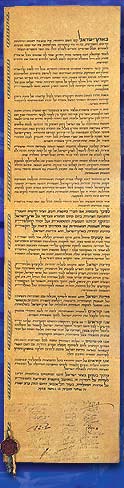
My father's most valuable autographs - the signatures on his ordination parchment

I republished this post in honor of the Yeshiva University Chag HaSemikhah Convocation that took place on Sunday, March 19, 2017 and in honor of the 75th anniversary of my father receiving his ordination.

I received my rabbinic ordination from Yeshiva in 1973. My father received his semichah on March 19, 1942 = א׳ בְּנִיסָן תש״ב

Here is my original post:

In May 2012, during the shiva for my dad, Rabbi Dr. Zev Zahavy, I showed many people an important part of our inheritance from him - five valuable autographs.

Now these are not autographs of Babe Ruth or Mickey Mantle or of U.S. presidents or anything like that. 

These are the five signatures on my dad's klaf - on his diploma of ordination from Yeshiva University's Rabbi Isaac Elchanan Theological Seminary, which he received in 1942.

The priceless autographs are by five great Torah scholars, Rabbi Binyamin Aronowitz, Rabbi Bernard L. Levinthal of Philadelphia, Rabbi Samuel Belkin, Rabbi Moses Shatzkes (the Lomza Rav) and Rabbi Joseph B. Soloveitchik of Boston (the Rav).

Rabbi Yossi Adler looked at the klaf during the shiva in Teaneck and confirmed what I had been told, that it was rare to have five signatures on such a document. My own ordination has two (Rabbis Belkin and Soloveitchik).


I once asked my dad what it was like to go before these five great rabbis and be examined before receiving semichah - ordination. He told me, "They were tough. They asked difficult questions. They made me sweat."

I greatly treasure this meaningful part of the legacy of my dad.


5/21/22

My review of Koren Yevamot - published in the Jewish Press


Review of Koren Talmud Bavli Noé, Vol.14: Yevamot Part 1, Hebrew/English, by Adin Steinsaltz

Some who learn Talmud prefer swimming across the surface of that great sea of learning. Others prefer diving deeply into the oceans to explore the depths of the Talmudic waters.

The Talmud tractate of Yevamot can be learned in many ways. It has one hundred and twenty folio pages deriving out of a mere three verses in the Torah: "If brethren dwell together, and one of them die, and have no child, the wife of the dead shall not be married abroad unto one not of his kin; her husband's brother shall go in to her, and take her to him to wife, and perform the duty of a husband's brother unto her" (Deut. 25:5).

The subsequent verses instruct, "And if the man like not to take his brother's wife, then his brother's wife shall go up to the gate unto the elders, and say: 'My husband's brother refuses to raise up unto his brother a name in Israel; he will not perform the duty of a husband's brother unto me'. Then the elders of the city shall call him, and speak to him; and if he stand, and say: 'I like not to take her'; then will his brother's wife draw near to him in the presence of the elders, and loose his shoe from off his foot, and spit in his face; and she shall answer and say: 'So shall it be done unto the man that doth not build up his brother's house'" (ibid. 7-9).

From this skimpy few verses of scripture the Talmud builds and elaborate structures of laws and cases regarding two societal practices, the levirate marriage and ritual of Halizah.

6/30/21

10 Years Ago: Tzvee and Talmud Hullin on the FYI Page 3 of the Jewish Standard

Click to Enlarge
Ten Years Ago: Larry Yudelson of the Jewish Standard of Teaneck wrote me up for their page three FYI column.

The Jewish Standard, Teaneck NJ
July 8, 2011


FYI
Local author puts Talmud translation on the web

As the seven-year cycle of daily Talmud study known as Daf Yomi began a new tractate last month, Tzvee Zahavy found himself running low on blog ideas.

Zahavy, a Teaneck resident, professor and rabbi, is also a blogger.

As the Daf Yomi project approached the beginning of the Babylonian Talmud tractate Hullin, Zahavy realized that he already had content.

"I figured it would be a service both to me in my own studies, and to my readers, if each day for 142 in all, I shared on my blog the text of my English translation of one page of the Talmud text," he said.

Zahavy translated Hullin as part of a series that was completed in 1995 by Professor Zahavy and others, called, "The Talmud of Babylonia. An American Translation." Sales of the set have been modest, in the thousands, he said.

The translation is now available in a new edition from a Christian publisher, Hendrickson, in both print and digital formats.

Artscroll’s English version of the Talmud is better selling, Zahavy said because it is Orthodox-approved and non-academic.

Zahavy said that the general public does not go out in great numbers to buy and read books of and about the Talmud. “Back in the late sixties, author Norman Mailer told us students in a lecture at Yeshiva College that he read the Soncino English Talmud every night at bedtime,” Zahavy said. “We saw that he was trying to impress us and he didn’t. We all knew that the Talmud is always studied seriously - it is never read at bedtime.”

Zahavy’s newest book is called “God’s Favorite Prayers.” The volume will be published in print and digital formats this summer by Talmudic Books, a new imprint that Zahavy started. He is confident that it will sell better than his Talmud translations.“More people pray than study,” he said.

--Larry Yudelson

4/12/21

Yahrzeit of Rav Aharon Lichtenstein, great Torah Sage and the Quintessential Scribe

My teacher and rebbe Rav Aharon Lichtenstein passed away six years ago.

He was awarded the Israel Prize 2014 in Jewish religious literature.

He was one of the finest teachers that I studied with in college - a genius as an educator and a sincere and compassionate human being. He is the person that I chose to personify the quintessential scribe personality of prayer in my book "God's Favorite Prayers (p. 71 ff)." Here is the excerpt.

The Scribe’s Prayers


I had the privilege of studying in Rav Aharon Lichtenstein’s Talmud shiur (class) for two years, 1966-1968. Each December, he invited us talmidim (disciples) to his house for latkes (potato pancakes) on Hanukkah. There, in his apartment, we sat with his little kids and his wife Tovah, daughter of Rav Joseph B. Soloveitchik. The latkes were good and the Lichtensteins appeared to be a regular family. For some reason, that surprised me.

Once, during the years that I was in his shiur, while I was out with some of the guys playing basketball on the courts between the Yeshiva College dorms, Rav Aharon, a lanky, thin and tall man, came walking by. One of us had the chutzpah to ask him to join the ball game. He said okay and he played aggressively—and just like a regular guy. For some reason, that blew my mind.

And, one year, in our student play, the Yeshiva College Purim shpiel, a satiric revue for the holiday, I played the role of Rav Aharon. In my performance, I hemmed and hawed and exaggerated my rebbe’s mannerisms much more than I should have. And there in the audience sat my rebbe, laughing heartily along with us. For some reason, that really blew my mind.

12/16/20

The Celebrity Archetype in Jewish Prayer: A chapter from my book "God's Favorite Prayers"

A chapter from my book.

The Celebrity’s Prayers

Aleinu

(Hebrew: עָלֵינוּ, “upon us”) or Aleinu leshabei'ach (“[it is] upon us to praise [God]”), meaning “it is upon us or it is our obligation or duty to praise God.” A Jewish prayer recited at the end of each of the three daily services. It is also recited following the New Moon blessing and after a circumcision is performed.

—Wikipedia, Aleinu


M

y quest for perfect prayer and for spiritual insights evolved, not just at synagogues on the ground but also one time during my davening on a jumbo jet flight at an altitude of 39,000 feet and a speed of 565 miles per hour. That is where, by happenstance on an airplane in 1982, I met Rabbi Meir Kahane, an American-Israeli Orthodox rabbi, an ultra-nationalist writer and political figure and, later, a member of the Israeli Knesset.

I recognized Kahane right away when I saw him on the flight. He was a famous New York Jew. In the 1960s and 70s, Kahane had organized the Jewish Defense League (JDL). Its goal was to protect Jews in New York City's high-crime neighborhoods and to instill Jewish pride. Kahane also was active in the struggle for the rights of Soviet Jews to emigrate from Russia and to immigrate to Israel. By 1969, he was proposing emergency Jewish mass-immigration to Israel because of the imminent threat he saw of a second Holocaust in an anti-Semitic United States. He argued that Israel be made into a state modeled on Jewish religious law, that it annex the West Bank and Gaza Strip and that it urge all Arabs to voluntarily leave Israel or to be ejected by force.

It was then, by coincidence, that I traveled with Kahane on a long Tower Air flight to Israel. As was common on flights to Israel, a few hours after takeoff, Jewish men gathered at the back of the plane. As the sun became visible in the Eastern sky, they formed a minyan, kind of an ad hoc synagogue. In this unusual and somewhat mystical setting, I prayed the morning services with the rabbi and others at the back of the jumbo jet.

11/10/20

What my Rebbe, Rav Joseph B. Soloveitchik, Said to Me about Women, the Torah, the Synagogues and Checks

It is essential for Orthodox Judaism to provide women with full equality - to count them for a minyan, to call them to the Torah, and, after proper training, to ordain them as rabbis.

When Women Write the Checks
(I originally blogged this here in March, 2005 - published in the Jewish Press 2014)
 

In 1973, after I completed my Semicha studies with Rabbi Joseph B. Soloveitchik at Yeshiva University, I attended his summer shiurim (Talmud classes) in Boston and then started as a PhD graduate student at Brown University.

Brown was known as a progressive community in an era of ferment. Some of us Orthodox graduate students gathered at the Hillel to engage in a traditional Minyan. Not surprisingly some of the women students there wanted to know how far we could push the envelope. Could we conduct an Orthodox service and give women aliyot to the Torah?

I knew these were all sincere and properly motivated students, seeking greater fulfillment in their practice of Judaism. So when they asked me to drive up to Boston and to discuss this issue with the Rav, Rabbi Soloveitchik, I readily accepted the challenge.

10/5/20

Jewish Black Magic: They Cursed Ariel Sharon with the Pulsa D'Nora in 2005 - and can it work in October 2020 for someone else?

I've spent years teaching numerous college courses on religion - always with the disclaimer that we will cover only the positive aspects of the subject. Religion used for evil, that is for war or other forms of harm, is a misuse and distortion of systems of faith.

Curses, I reasoned, were a misuse and distortion of religious practice.

Curses invoked before the Rabin assassination changed my mind about that. Prior to that tragic event, on the eve of Yom Kippur, a group of "Kabbalists" intoned the pulsa curse outside the Rabin residence. Once again, in the summer of 2005, another group gathered to invoke the curse against P.M. Ariel Sharon. It seemed to me that curses indeed were part of our religion - like it or not.

One blogger, Canonist, dealt briefly with the curse back in July 2005, complete with a link to the video of the curse "ceremony" and quotations from learned professors:
Praying for Ariel Sharon's Death

Yesterday's death-curse seems thus far to have gone unanswered by the Almighty, but we'll see. Generally speaking, I don't write much about Israel and the disengagement, but this latest is quite interesting. PaleoJudaica's got a great roundup, including descriptions of the pulsa de-nura ceremony, its detractors, and the threat of prosecution that've come out of it. Meantime, you can actually watch the ceremony in this video, which, with a bunch of people in sweats reading from photocopies, looks oddly like some run-of-the-mill Jewish ceremony, like burning chametz or somesuch. The video comes courtesy of Samuel Heilman, via a listserv to which he wrote, with the subject "Jewish Jihadists": "Lest any of you think that only Islamists have jihadists, see the video below in which so-called 'religious Jews' pray for Prime Minister Sharon's Death in a Pulsa De Nura." Bold words on both sides. Let's see what comes of them.
Erudite rabbis have written about the matter, explaining that magic is not a part of Judaism, as in the following:

6/15/20

Rabbi Soloveitchik on the Ontology of Women and Replies to it - all in the Link

Note: A credible scholar gave a class on zoom  yesterday showing in detail that the Rav was wrong in his halakhic premises about this topic. I concur with that conclusion.
A New Transcription: Surrendering to the Almighty
By Rav Yosef Dov Soloveitchik, zt”l | March 14, 2019
Editor’s note: Torahweb.org has just completed this new transcription as part of a forthcoming book. The full shiur, made in 1975 to Rabbinic alumni, is available on YU Torah here: https://tinyurl.com/y5ylmmax. This text is excerpted only in the interest of space, omitting several introductory paragraphs. The full transcription, with full footnotes, is available here: https://tinyurl.com/y5akgjoj.
...Today, let me say it in Hebrew, «כלו כל הקיצין» [2], and I feel it is my duty to make the following statement, and I am very sad that I have to do it. But somehow, I have no choice in the matter; there is no alternative. What I am going to say, I want you to understand, is my credo about Torah and the way Torah should be taught and Torah should be studied.
The study of Torah has had such a great cathartic impact upon me, as you understand it, is rooted in the wondrous experience I always have when I open up the Gemara. Somehow, when I do open up the Gemara, either alone or when I am in company, and I do teach others, I have the impression - don’t call it hallucination, it is not a hallucination - I have the impression as if I heard, I would say, soft footsteps of somebody invisible, who comes in and sits down with me, sometimes looking over my shoulder. It is simply, the idea is not a mystical idea, it is the Gemara, the mishna in Avos, the Gemara in Berachos say, «אפילו אחד יושב ועוסק בתורה שכינה שרויה» [4] and we all believe that the nosein haTorah, the One who gave us the Torah, has never deserted the Torah, and He simply walks, He accompanies the Torah, wherever the Torah has a, let’s say, a rendezvous, an appointment, a date with somebody, He is there.

6/11/20

How to Deal With Facebook Stalkers, List Snubs and Technology Taboo Makers - My Jewish Standard Dear Rabbi Zahavy Column for June 2020


Dear Rabbi Zahavy,

I am on Facebook a lot and have many friends there. Recently, one of those people, whom I have known for many years, started replying negatively on every post that I made and on every comment that I put on Facebook. These were not just critical replies. They were snarky at first, and then became nasty and highly personal in nature.


I unfriended this person. But somehow, he still manages to find and comment on all my posts. What should I do to stop this?

Besieged in Bergenfield


Dear Besieged,

Facebook has mechanisms for actively blocking content from specific individuals. You can and should poke around the platform until you find them, and then invoke the harshest level of blocking against this offending person. Be persistent. Since Facebook thrives on content proliferation, your postings make money for them, and thus it deliberately makes the blocking process possible, but neither easy nor intuitive.

4/23/20

Dear Rabbi Zahavy - my Jewish Standard Talmudic Advice Column for April 2020 Your reactions to the pandemic and worries over shul closures

Dear Rabbi Zahavy - my Jewish Standard Talmudic Advice Column for April 2020
Your reactions to the pandemic and worries over shul closures


Dear Rabbi Zahavy,

I find it hard to cope with all the bad news of the current pandemic. I feel it definitely has been impacting my mental stability and even affecting my physical health. What’s your advice?

Reacting in Ridgefield Park


Dear Reacting,

The talmudic rabbis recognized, way back in antiquity, that some people are more sensitive than others to external stimuli. Some rabbis, like the great sage Rabban Gamaliel, were given leeway in their religious practices because they were categorized as istinis — a term some believe is derived from the Greek meaning not strong: a-sthenos; for example, a person of pronounced sensitivity to ugly or troublesome environmental stimuli, death or sickness.

3/23/20

Who wrote the Haggadah?


They say that the Seder is the most widely observed Jewish ritual. Assuming that is true, the Haggadah then is a near universally used Jewish book. It also is one of the most frequently published Jewish books in history, surpassed perhaps only by the Hebrew Bible and the Siddur and Machzor Prayer books.

Now it behooves me to ask of this book, who wrote the Haggadah?

2/6/20

My Jewish Standard Dear Rabbi Zahavy Column for February 2020 - Beginning Talmud Study and Playing Golf

My Jewish Standard Dear Rabbi Zahavy Column for February 2020 - Beginning Talmud Study and Playing Golf

Dear Rabbi Zahavy,

As I approach retirement and anticipate having more time on my hands, I have decided to take up two new pursuits: studying the Talmud and playing golf.

For Talmud study, I was thinking of learning at the rate of one page per day via the Daf Yomi program, as relatives as well as friends at my synagogue have advised. Perhaps you know of it?

As for golf, a couple of outings a week seems ideal, and again both friends and relatives insist that they will tolerate my incompetence and help.

But there seems to be so much involved in just getting started that part of me thinks both pursuits may be too elusive.

Am I taking on too much in my golden years?

Bewildered Beginner in Bergenfield


Dear Bewildered,

Not at all! I applaud with all my heart your ambition to expand your emotional, intellectual, and physical qualities at a time in life when many of us face the awful prospect of living out our later days in quiet desperation. I’m with best-selling author Daniel J. Levitin, who in his book, “Successful Aging,” enthusiastically commends those who set out to tackle bold new challenges in their mature years.

Go for it!

In fact, you already have started — by seeking assistance from relatives and friends. So, in offering my own advice, I’ll do likewise through the insights of two special advisers, my own sister, Dr. Miryam Wahrman of Teaneck, and my longtime golfing friend, the golf writer and editor Robin McMillan. Each has experienced what you are facing now. It is true that while Miryam is talmudically enlightened (or so she tells me), Robin still has trouble breaking 100 on the golf course, but both enjoy their avocations immensely. This, I think, is your true goal as you approach retirement.

10/5/19

Ten years later I still agree. Here is what is wrong with our Jewish prayer book commentaries

After reading in a June 2009 morning at KJ some initial and random comments in the new Koren-Sacks Siddur, I was reminded of what in the past I have found lacking in prayerbook commentaries.

They are not complicated enough.

They portray our services as if they are beautifully woven together and, in the case of the longer services, as if they unfold in a gentle rising crescendo of drama from initial inspiring prayers, through more meaningful and expressive liturgies to our culminating praises and petitions.

When you read our most popular prayer book commentaries, you think the correct background music for our prayers would be say something soothing and nearly seamless, like Beethoven's Moonlight Sonata.

I have logged many davening hours and I never saw the Orthodox Jewish services projecting this sort of connected and calm mood.

No I've always thought the services were at best symphonies with abruptly varying movements, often characterized by stark contrasts and even at times by cacophony.

Our Siddur is in fact a complex composite document that evolved over many centuries. Many hands had a role in expressing the values and beliefs that our collective prayers represent. By its own definition, such a work should not be a smooth fabric.

A few times I have attempted to say just this in the modes of expression that characterized our scholarly writings. For instance in a paper I wrote, "The Politics of Piety: Social Conflict and the Emergence of Rabbinic Liturgy," I summarized at the outset a major theme of our more lengthy arguments as follows,
Prayer services do not emerge spontaneously or arbitrarily in a vacuum. They are the public pronouncements of the central values and concepts of the religious leaders who initially propounded them and are social rituals that often emerge out of intense conflict and hard-fought compromise. Specific historical, social, and political conditions contributed to the distinct origin of two major rabbinic services. In the crucial transitional period after the destruction of the Temple, the Shema emerged as the primary ritual of the scribal profession and its proponents. The Tefillah at this formative time was a ritual sponsored mainly by the patriarchal families and their priestly adherents. Compromises between the factions of post-70 Judaism later led to the adoption of the two liturgies in tandem, as the core of public Jewish prayer. But this came about only after intense struggles among competing groups for social and political dominance over the Jewish community at large and concomitantly for the primacy of their respective liturgies. The political, social, and even economic dimensions of the religious life of the synagogues were crucial to the formation of nascent rabbinic Judaism.
I think this is what brings our Siddur alive. It's a story of sharply competing ideas and values all striving for attention within a closed but utterly vibrant religious world. That's the story I'd like to see in some variant form in our prayer book commentaries. It's the narrative of a dialectical theological universe of debate and dispute over which notion we ought to employ to express our most urgent needs before our creator. For instance, do we put our scribal needs at the top of our agenda? Or do we cast our priestly yearnings at the top of our list?

In our Siddur we see a constant flow of traffic, changing of lanes, jostling for position of values and notions, ideas and concepts. And more than this, we see layer upon layer of meaning imposed upon our every practice and festival. Sacred time in our prayer book has mystical, agricultural, historical and Torah-logical importance, all at once. And all of us see different angles of this "lasagna" of religious life.

(When I start using such metaphors, that means uh-oh, I must be getting hungry and it's time to wrap up the post.)

See these among my published writings for more details.